The relationship between gut bacteria and mental health has generated enormous public interest — and a fair amount of overstatement. "Fix your gut, fix your mood" is a tempting narrative, but the science is both more interesting and more cautious than the headlines suggest.
The Gut-Brain Axis: A Quick Recap
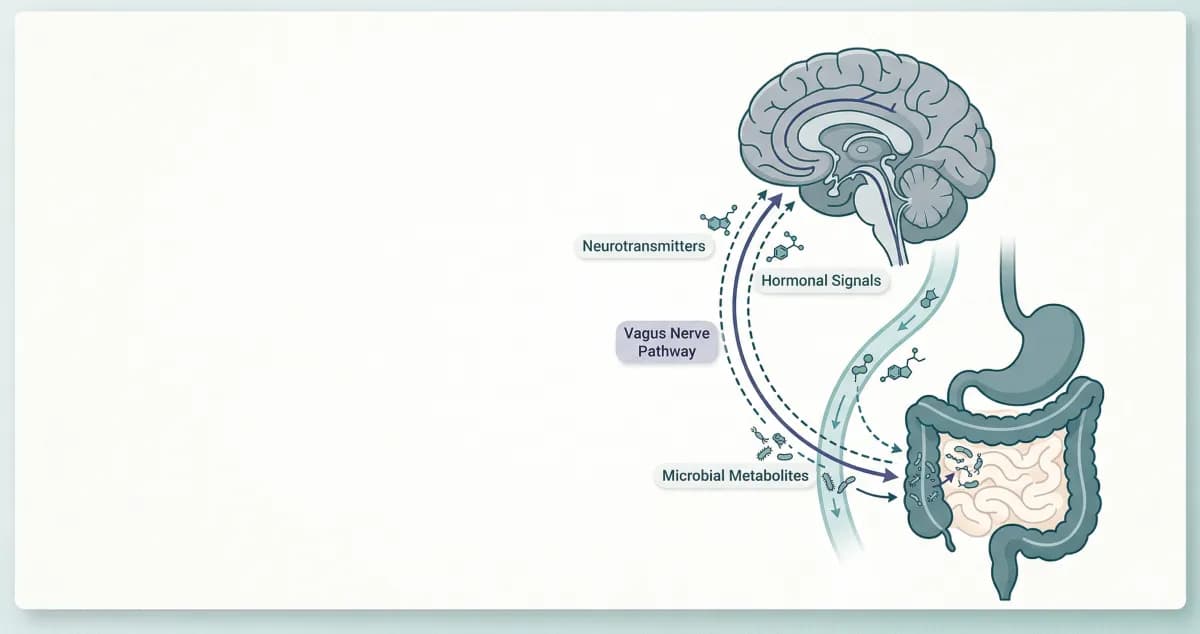
As explored in detail in our article on the gut-brain connection, your gut communicates with your brain through multiple channels:
- The vagus nerve — a direct neural highway carrying signals in both directions (80% gut-to-brain)
- The immune system — gut-derived inflammation can cross the blood-brain barrier
- Microbial metabolites — short-chain fatty acids, tryptophan metabolites, and neurotransmitters produced by gut bacteria
- The hypothalamic-pituitary-adrenal (HPA) axis — the body's central stress response system, which is influenced by the microbiome
This is not speculative — the communication pathways are well-documented. The question is: how much influence does the microbiome actually have on mental health conditions in humans?
What the Research Shows
Depression
The most cited human study is Valles-Colomer et al. (2019, Nature Microbiology), which analysed microbiome data from 1,054 participants in the Flemish Gut Flora Project. The researchers found that people diagnosed with depression had consistently lower levels of Coprococcus and Dialister bacteria, even after controlling for antidepressant use.
Critically, the researchers also identified bacterial pathways for producing DOPAC (a dopamine metabolite) and butyrate that correlated with quality-of-life indicators, suggesting a plausible mechanism: certain bacteria may influence mood through their metabolic outputs.
However, this was an observational study. It cannot tell us whether the bacterial differences caused the depression, resulted from it (through changes in diet, activity, or medication), or were coincidental.
A meta-analysis by Nikolova et al. (2021, JAMA Psychiatry) reviewed 34 studies comparing the gut microbiomes of people with depression to healthy controls. They found consistent differences — reduced diversity and altered composition — but noted that no single bacterial signature reliably distinguished depressed individuals from controls across all studies.
Anxiety
The evidence for anxiety is less developed than for depression but points in the same direction. A systematic review by Simpson et al. (2021, BMJ Open) examined studies linking the gut microbiome to anxiety and found that interventions improving gut health (dietary changes and probiotics) reduced anxiety symptoms in roughly 50% of studies reviewed. Notably, dietary interventions were more consistently effective than probiotic supplements.
Stress Resilience
Some of the most interesting research involves the microbiome's role in stress responses. The Irish APC Microbiome Institute has produced compelling work showing that germ-free mice (raised without any gut bacteria) have exaggerated cortisol responses to stress, which can be normalised by introducing specific bacterial strains during early life — but not in adulthood (Sudo et al., 2004, Journal of Physiology).
In humans, a randomised controlled trial by Allen et al. (2016, Psychopharmacology) found that Bifidobacterium longum 1714 reduced cortisol output and self-reported stress in healthy volunteers compared to placebo. The effects were modest but statistically significant.
Psychobiotics: Promise and Reality
The term psychobiotics was coined by Dinan et al. (2013, Biological Psychiatry) to describe probiotics that produce mental health benefits. It is an appealing concept, but here is an honest assessment of where things stand:
What has been shown: - Certain probiotic strains can modestly reduce self-reported stress and anxiety in healthy volunteers - Some multi-strain preparations have shown benefit in people with mild to moderate depressive symptoms - Dietary patterns (particularly the Mediterranean diet) that promote microbial diversity are consistently associated with lower rates of depression
What has not been shown: - No probiotic has demonstrated efficacy comparable to established antidepressants in clinical depression - No specific strain or combination can be reliably recommended for any diagnosed psychiatric condition - The effects in healthy volunteers may not translate to people with clinical disorders
What remains unknown: - Whether microbial changes are a cause or consequence of mental health conditions - Which specific strains, doses, and durations are optimal - Why some individuals respond and others do not
The Mediterranean Diet Connection
If you take one practical message from this article, it should be about diet rather than supplements. The SMILES trial (Jacka et al., 2017, BMC Medicine) was a landmark randomised controlled trial that assigned people with moderate to severe depression to either dietary counselling (Mediterranean-style diet) or social support. After 12 weeks, 32% of the dietary group achieved remission, compared to 8% in the social support group.
The Mediterranean diet is rich in vegetables, fruits, wholegrains, legumes, nuts, olive oil, and fish — all of which feed beneficial gut bacteria and promote microbial diversity. See our article on the best foods for gut health for a UK-focused practical guide.
A subsequent analysis of the SMILES trial by Parletta et al. (2019) found that the dietary intervention increased levels of key gut bacteria associated with SCFA production, suggesting the gut microbiome was a mediating pathway.
Where the Hype Outstrips the Science
It is important to be clear about what we do not yet know:
- Headlines claiming "gut bacteria cause depression" are premature. The evidence shows association, not causation, in humans.
- Probiotic supplements are not a replacement for mental health treatment. If you are experiencing depression or anxiety, evidence-based treatments (therapy, medication where appropriate) should be your first line of support.
- The microbiome is one piece of a complex puzzle. Genetics, life circumstances, sleep, exercise, social connection, and trauma all play significant roles in mental health that cannot be addressed by gut health alone.
- Individual variation is enormous. What works for one person's microbiome may not work for another's.
Practical Steps
Based on the current evidence, here are reasonable actions:
- Prioritise dietary diversity — aim for 30+ different plant foods per week, as discussed in our guide to fibre and the microbiome
- Follow a Mediterranean-style eating pattern — the strongest dietary evidence for both gut and mental health
- Include fermented foods regularly — kefir, live yoghurt, sauerkraut, kimchi
- Reduce ultra-processed food — associated with both poorer gut health and higher rates of depression (see our article on ultra-processed food and gut health)
- Manage stress through established methods — exercise, sleep, social connection, therapy if needed
- Do not self-prescribe psychobiotics for clinical conditions — discuss with a healthcare professional
Key Takeaways
- The gut-brain axis is a genuine biological communication system with well-documented pathways
- People with depression show consistent gut microbiome differences (Valles-Colomer et al., 2019), but causation is not established
- Psychobiotics show modest benefits in healthy volunteers but are not validated treatments for clinical mental health conditions
- The Mediterranean diet has the strongest evidence for improving both gut health and mental health outcomes (SMILES trial, Jacka et al., 2017)
- Dietary interventions are more consistently effective than probiotic supplements for anxiety (Simpson et al., 2021)
- The microbiome is one factor among many — it does not override genetics, life circumstances, or the need for professional mental health support
Medical disclaimer: This article is for educational purposes only and does not constitute medical advice. Always consult a qualified healthcare professional before making changes to your diet, starting supplements, or making decisions about your health.
Related Articles
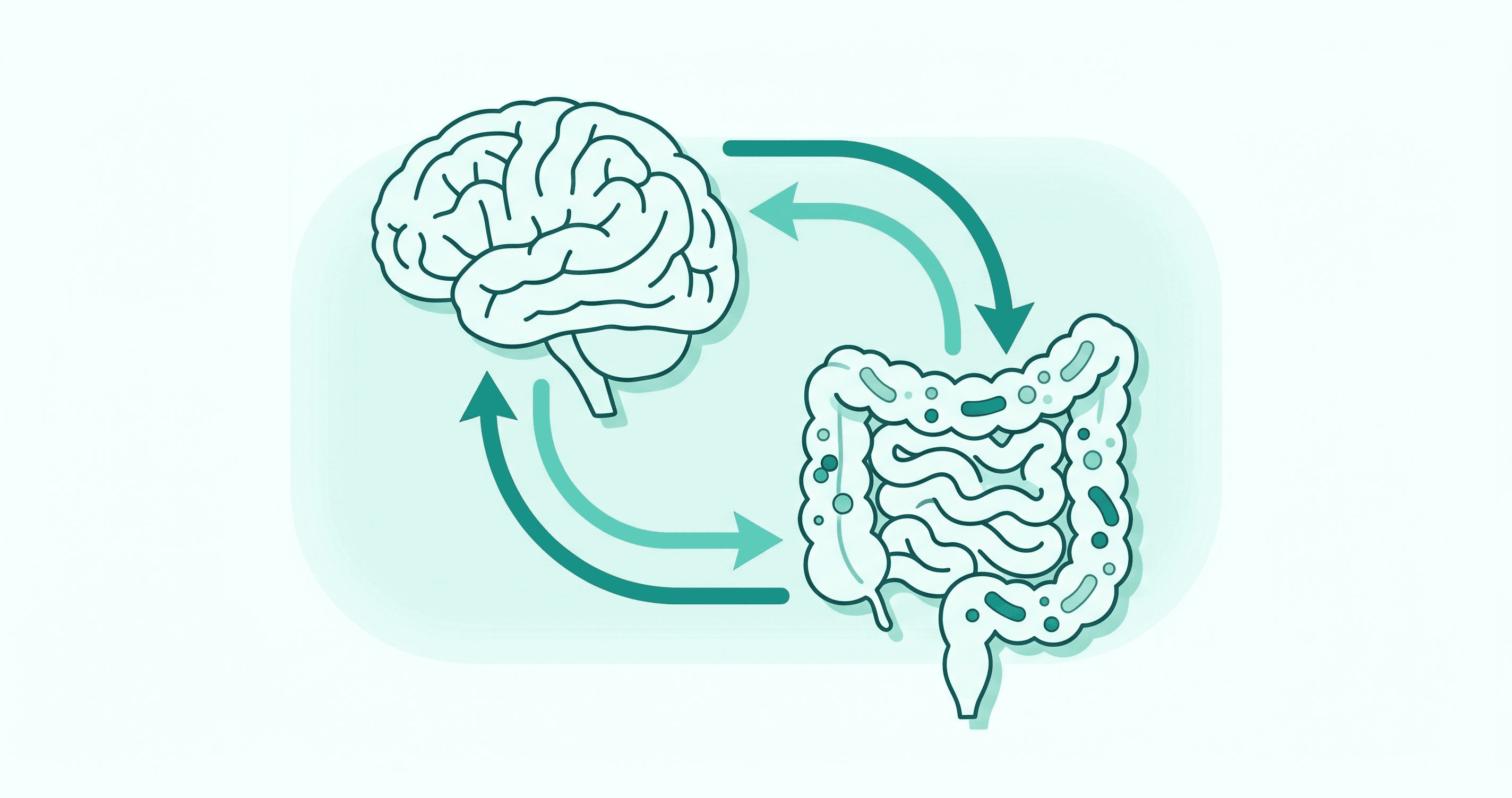
How Stress Affects Your Gut: The Two-Way Street
Stress does not just feel bad — it physically alters your gut microbiome. The HPA axis, vagus nerve, and intestinal barrier are all involved in a bidirectional stress-gut loop that research is only beginning to untangle.
Gut Bacteria and Anxiety: What Does the Evidence Say?
Headlines claim probiotics can treat anxiety. The reality is more nuanced — animal studies are compelling, but human evidence is still catching up. Here is a balanced look at the psychobiotics field.
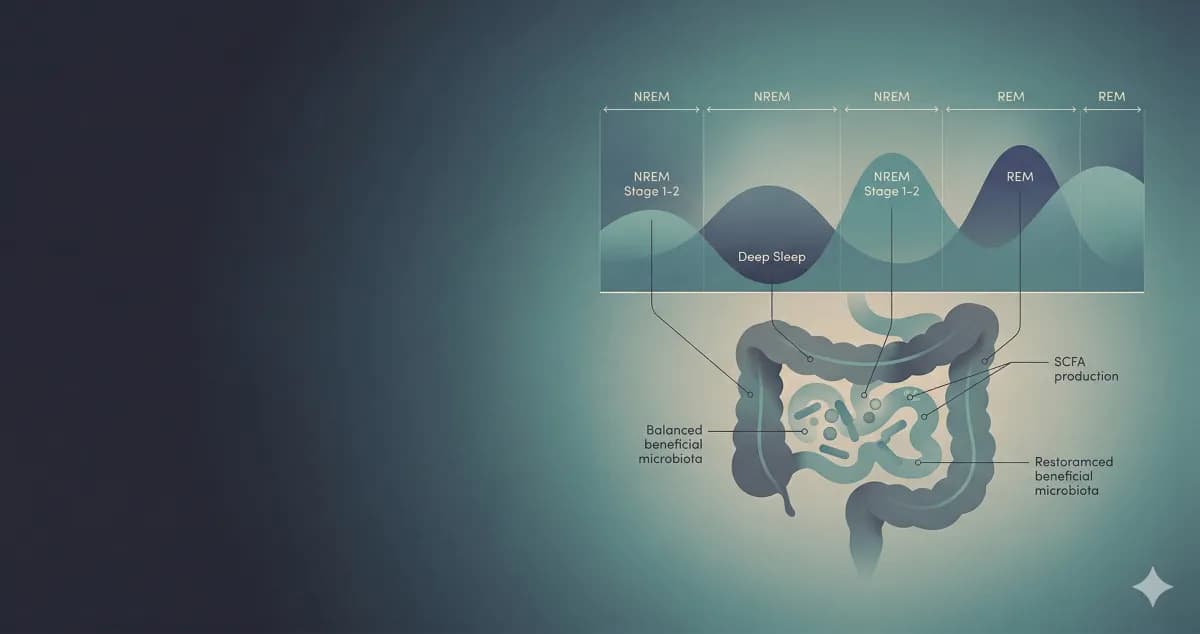
Sleep and the Microbiome: A Two-Way Relationship
Poor sleep disrupts your gut bacteria, and an imbalanced microbiome disrupts your sleep. Here's what the research reveals about this bidirectional connection.
Explore Other Topics
Related articles from across mbiome
Microbiome Myths vs Reality: Separating Science from Hype
The microbiome is genuinely one of the most exciting frontiers in health science, but it has also attracted an extraordinary amount of hype, oversimplification, and outright misinformation. Here is what we actually know.
Microbiome TestingGut Microbiome Tests: Are They Worth It?
Commercial microbiome tests promise personalised health insights from a stool sample. But how reliable are they, what do they actually measure, and should you spend £100–300 on one? We examine the science and the limitations.
Skin MicrobiomeThe Gut-Skin Axis: How Your Microbiome Affects Your Skin
Acne, eczema, rosacea, and psoriasis have all been linked to gut health. The emerging science of the gut-skin axis suggests that what happens in your digestive tract can show up on your face.
Key Terms
Glossary terms mentioned in this article
Bifidobacterium longum
A beneficial bacterial species naturally abundant in the human gut from infancy. The strain B. longum 1714 has been studied for its effects on stress and cognitive function, showing modest benefits in human trials. B. longum subsp. infantis is particularly important for infant gut health and breast milk digestion.
Mediterranean Diet
A dietary pattern emphasising vegetables, fruits, wholegrains, legumes, nuts, olive oil, and fish, with moderate dairy and limited red meat. It is the most studied dietary pattern in microbiome research, consistently linked to greater microbial diversity, higher SCFA production, and reduced inflammation.
Bifidobacterium
A genus of beneficial bacteria that dominates the infant gut and remains important throughout life. Various species (B. longum, B. infantis, B. breve) are among the most studied probiotics, with evidence for IBS, immunity, and infant health.
Gut-Brain Axis
The bidirectional communication system between the gastrointestinal tract and the central nervous system, involving neural, hormonal, and immune pathways. The microbiome plays a central role in this communication.
Psychobiotic
A live organism (probiotic) that, when ingested in adequate amounts, produces a health benefit in patients suffering from psychiatric illness. A term coined by Dinan et al. in 2013.
Vagus Nerve
The longest cranial nerve, connecting the brainstem to the abdomen. It is the primary communication channel of the gut-brain axis, with approximately 80% of its fibres carrying signals from the gut to the brain.
Microbiome
The complete collection of microorganisms (bacteria, viruses, fungi, archaea) and their genetic material within a specific environment, such as the human gut.
Probiotic
Live microorganisms which, when administered in adequate amounts, confer a health benefit on the host. Benefits are strain-specific, not species-wide.