
Commercial gut microbiome testing has exploded in popularity over the past five years. Companies like Zoe, Atlas Biomed, BIOHM, and Viome now offer direct-to-consumer kits that promise to decode your gut health from a single stool sample. But what exactly are these tests measuring, and can they genuinely guide your health decisions?
What Microbiome Tests Measure
Most consumer tests fall into two broad categories based on the technology they use:
16S rRNA Gene Sequencing — This method targets a specific gene found in all bacteria, using variable regions to identify which bacterial families and genera are present. It is relatively cheap, well-established, and used by many consumer kits. However, it typically identifies bacteria only to the genus level (e.g., Lactobacillus) rather than the species or strain level, and it cannot detect viruses, fungi, or archaea.
Shotgun Metagenomics — This approach sequences all the DNA in a sample, providing a far more comprehensive picture. It can identify bacteria to the species and sometimes strain level, detect viruses and fungi, and even predict functional capacity — what the microbes are doing, not just which ones are there. Zoe and Viome use variations of this approach. It is more expensive but considerably more informative.
What Tests Can Tell You
At their best, microbiome tests can provide:
- A snapshot of your microbial diversity — generally, higher diversity is associated with better health outcomes (Lozupone et al., 2012, Nature)
- The relative abundance of major bacterial groups
- Presence or absence of certain well-studied species (e.g., Akkermansia muciniphila, associated with metabolic health)
- An indication of your short-chain fatty acid (SCFA) production potential, linked to gut barrier integrity and immune function
What Tests Cannot Tell You
This is where honesty matters. Current commercial tests have significant limitations:
Lack of clinical reference ranges. Unlike a blood test where we know that a fasting glucose above 7 mmol/L indicates diabetes, there is no established "healthy" microbiome composition. A 2018 study in Nature Medicine (Falony et al.) analysed over 3,000 microbiome samples and found that the variation between healthy individuals was so large that defining a "normal" microbiome remains impossible.
Poor reproducibility. A widely cited investigation by the American Gastroenterological Association (AGA) in 2024 found that when the same stool sample was sent to multiple testing companies, the results varied considerably — different bacterial proportions, different dietary recommendations.
Snapshot, not trajectory. Your microbiome shifts daily based on what you ate, how you slept, your stress levels, and dozens of other variables. A single test captures one moment, which may not be representative.
Correlation is not causation. Tests may flag that you have low levels of a particular bacterium associated with a health condition, but that does not mean the bacterium caused the condition or that increasing it will help.
The Expert View
The scientific community remains cautious. A position statement from the AGA (Gail Hecht et al., 2020) concluded that microbiome testing "should not be used in clinical practice to diagnose or manage disease" outside of specific, validated assays such as testing for Clostridioides difficile infection.
Professor Tim Spector, who co-founded Zoe, has argued that the value lies not in diagnosis but in personalised nutrition — using your microbial profile alongside blood sugar and blood fat responses to tailor dietary advice. The Zoe PREDICT study (Berry et al., 2020, Nature Medicine) demonstrated significant individual variation in metabolic responses to identical foods, suggesting personalisation has merit. However, critics note that simply eating more plants, fibre, and fermented foods would benefit almost everyone, regardless of test results.
Dr Will Bulsiewicz, a gastroenterologist and microbiome researcher, has noted that "the science is not yet at the point where we can look at a test result and make confident clinical decisions for an individual patient."
Which Tests Are Worth Considering?
If you do decide to test, here is a realistic assessment:
- Zoe — Uses shotgun metagenomics combined with blood sugar and blood fat monitoring. The most comprehensive consumer offering. Best suited for those genuinely interested in personalised nutrition. Costs around £300.
- Atlas Biomed — 16S rRNA-based, provides microbiome diversity scores and dietary recommendations. UK-based. Around £100–150.
- BIOHM — Includes fungal analysis alongside bacteria, which is relatively unusual. US-based.
- Viome — Uses metatranscriptomics (analysing active gene expression rather than DNA), which in theory shows what your microbes are actually doing. Bold claims, but independent validation is limited.
Should You Take One?
A microbiome test might be worthwhile if you are genuinely curious about your gut ecology and understand the limitations. It is not worthwhile if you expect a diagnostic result or a precise prescription for fixing a health problem.
The most evidence-based actions for improving your gut health — eating 30+ different plants per week, consuming adequate fibre (see our guide to fibre and the microbiome), including fermented foods, managing stress, and sleeping well — do not require a test. As discussed in our article on the gut-brain connection, the fundamentals of gut health are well established even if personalised testing is still maturing. For a detailed review of the most popular UK testing service, see our ZOE review.
Key Takeaways
- Commercial microbiome tests use either 16S rRNA or shotgun metagenomics to profile your gut bacteria
- There are no established clinical reference ranges for a "healthy" microbiome
- Reproducibility between testing companies is poor — the same sample can yield different results
- The AGA does not recommend microbiome testing for clinical diagnosis outside of specific infections
- Personalised nutrition based on microbiome data shows promise (Zoe PREDICT study) but is still early-stage
- The most effective gut health interventions — diverse diet, fibre, fermented foods — do not require testing
Medical disclaimer: This article is for educational purposes only and does not constitute medical advice. Always consult a qualified healthcare professional before making changes to your diet, starting supplements, or making decisions about your health.
Related Articles
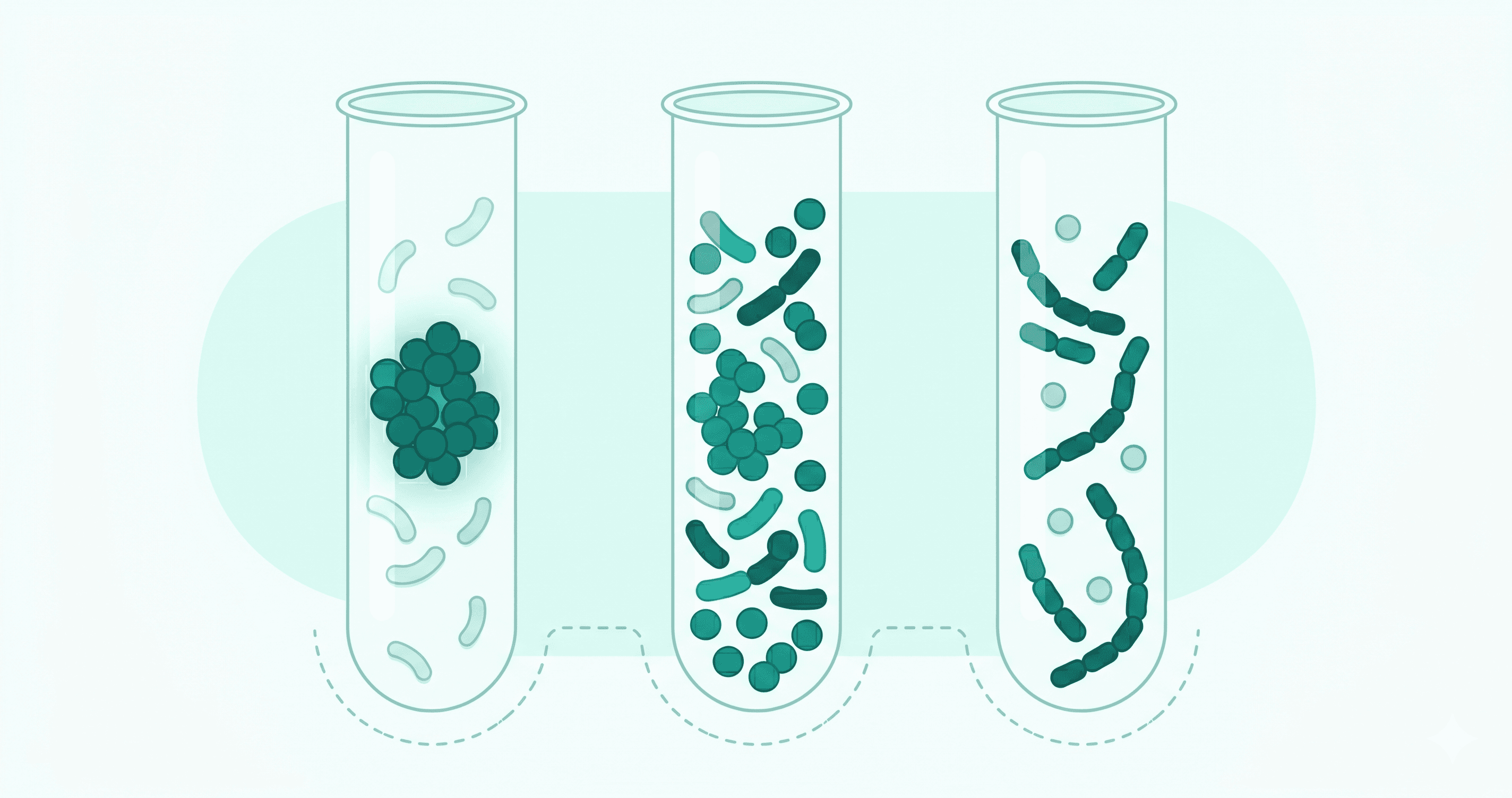
How Accurate Are Gut Microbiome Tests? What the Science Says
Commercial microbiome tests promise personalised insights, but how reproducible are the results? We examine inter-lab variation, sequencing methods, and what the science says about accuracy.
Zoe Gut Health Test: What You Get and Is It Worth It?
Zoe is the UK's most popular personalised nutrition programme, combining gut microbiome, blood sugar, and blood fat testing. We assess the science, the experience, and whether it delivers value for the price.
A Practical Guide to Microbiome Testing in the UK
From Zoe to Atlas Biomed and Thriva, the UK market for microbiome tests is growing. Here is what each test measures, what it costs, and whether you actually need one.
Explore Other Topics
Related articles from across mbiome
Microbiome Myths vs Reality: Separating Science from Hype
The microbiome is genuinely one of the most exciting frontiers in health science, but it has also attracted an extraordinary amount of hype, oversimplification, and outright misinformation. Here is what we actually know.
Gut-Brain AxisMicrobiome and Mental Health: Separating Science from Hype
Headlines claim gut bacteria can cure depression and anxiety. The reality is more nuanced — but the science connecting the microbiome to mental health is genuine, growing, and worth understanding properly.
Gut HealthHow to Improve Gut Health Naturally: Evidence-Based Guide
Your gut microbiome responds remarkably quickly to lifestyle changes. Here is what the research says about diet, sleep, exercise, and stress — and which interventions have the strongest evidence behind them.
Key Terms
Glossary terms mentioned in this article
Clostridioides difficile
A bacterium that can cause severe diarrhoea and colitis, typically after antibiotic use disrupts the normal gut flora. C. difficile infection is one of the clearest examples of how microbiome disruption leads to disease.
Microbiome Diversity
The variety and abundance of different microbial species in a given environment. Greater diversity is consistently associated with better health outcomes, while reduced diversity is linked to obesity, inflammatory bowel disease, and other chronic conditions.
Shotgun Metagenomics
A sequencing approach that reads all DNA in a sample, not just bacterial marker genes. Provides higher resolution than 16S rRNA sequencing, including strain-level identification, functional gene analysis, and detection of viruses and fungi.
16S rRNA Sequencing
A molecular technique that identifies bacteria by sequencing a specific gene (16S ribosomal RNA) present in all bacteria. Used in most commercial microbiome tests. Can identify bacteria to genus level but often lacks strain-level resolution.
Lactobacillus
A genus of lactic acid-producing bacteria found naturally in the gut, mouth, and vaginal tract. Certain strains (L. rhamnosus GG, L. plantarum 299v) have strong clinical evidence for specific health benefits. Now reclassified into multiple genera including Lacticaseibacillus and Limosilactobacillus.
Akkermansia
Akkermansia muciniphila is a mucin-degrading bacterium that lives in the intestinal mucus layer. Higher abundance is associated with improved metabolic health, lower inflammation, and better gut barrier function. It thrives on polyphenol-rich foods.
Microbiome
The complete collection of microorganisms (bacteria, viruses, fungi, archaea) and their genetic material within a specific environment, such as the human gut.
Mucin
Glycoproteins produced by goblet cells in the intestinal lining that form the protective mucus layer. This layer provides a habitat for beneficial bacteria like Akkermansia and acts as a physical barrier against pathogens.