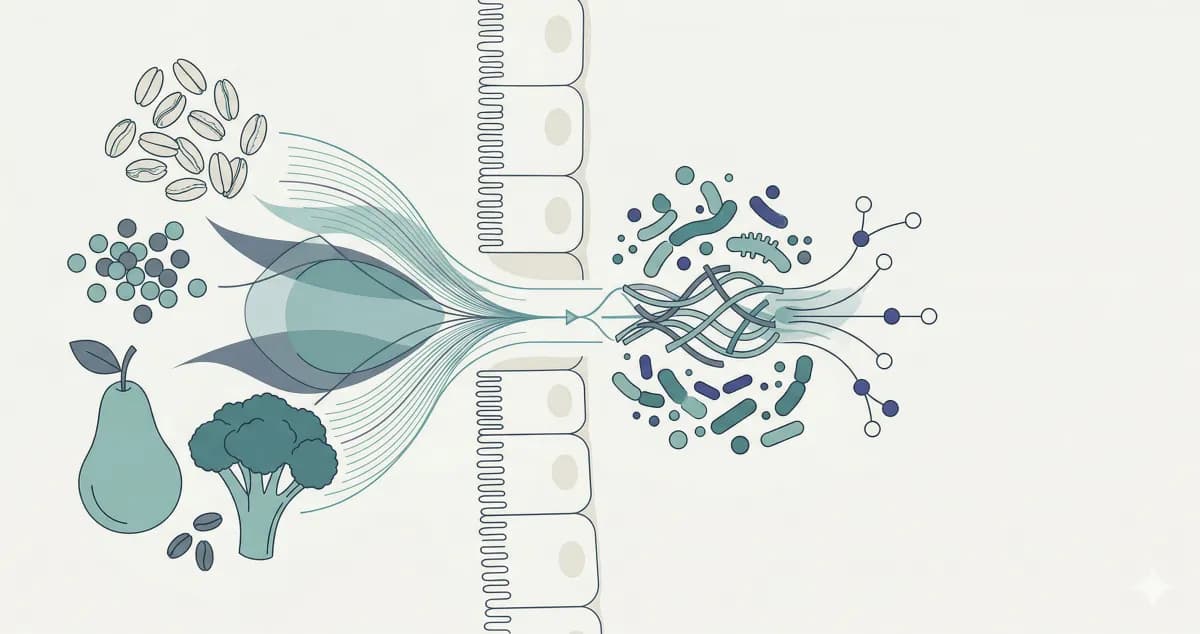
If there is one single dietary change that the gut microbiome research community agrees on, it is this: eat more fibre. While probiotics get the headlines, fibre is the fundamental fuel that keeps your gut ecosystem functioning. Without it, even the most expensive probiotic supplement has limited impact.
Why Fibre Matters for the Microbiome
Your gut bacteria cannot survive on the nutrients you absorb in the small intestine — those are for you. The bacteria in your large intestine rely primarily on the indigestible carbohydrates that reach them intact: dietary fibre.
When bacteria ferment fibre, they produce short-chain fatty acids (SCFAs) — principally butyrate, propionate, and acetate. These SCFAs are not waste products; they are profoundly important:
- Butyrate is the primary energy source for colonocytes (the cells lining the colon) and is essential for maintaining gut barrier integrity
- Propionate travels to the liver where it helps regulate cholesterol synthesis and gluconeogenesis
- Acetate enters the bloodstream and influences appetite regulation, fat metabolism, and immune function
A landmark study by Sonnenburg et al. (2016, Nature) demonstrated that a low-fibre diet does not just reduce SCFA production — it causes the permanent extinction of bacterial species over generations. The researchers called this "microbiota extinction," and it may help explain the rising rates of gut-related diseases in industrialised nations.
The UK Fibre Gap
The Scientific Advisory Committee on Nutrition (SACN) recommends 30g of fibre per day for UK adults. The actual average intake is approximately 18g per day — a 40% shortfall. According to the National Diet and Nutrition Survey (NDNS), fewer than 9% of UK adults meet the 30g target.
This is not a minor nutritional oversight. It represents a chronic, population-wide starvation of the gut microbiome.
Types of Fibre and What They Do
Not all fibre is equal from a microbiome perspective:
Soluble Fibre
Dissolves in water to form a gel-like substance. Found in oats, barley, beans, lentils, apples, and citrus fruits. Soluble fibre is readily fermented by gut bacteria and is the primary driver of SCFA production. It also slows glucose absorption, helping regulate blood sugar.
Insoluble Fibre
Does not dissolve in water. Found in whole wheat, bran, vegetables, and nuts. It adds bulk to stool and promotes regular bowel movements. While less directly fermentable, it still supports a healthy gut environment by reducing transit time and preventing stagnation.
Resistant Starch
A form of starch that resists digestion in the small intestine and reaches the colon intact, where it acts as a prebiotic. Found in cooled cooked potatoes, green bananas, oats, and legumes. A study by Maier et al. (2017, Cell Host & Microbe) found that resistant starch selectively promoted the growth of Bifidobacterium adolescentis and increased butyrate production.
Prebiotic Fibre
Specific fibres that selectively feed beneficial bacteria. The best-studied include:
- Inulin — found in chicory root, garlic, onions, leeks, and artichokes
- Fructo-oligosaccharides (FOS) — found in bananas, asparagus, and wheat
- Galacto-oligosaccharides (GOS) — found in legumes and some root vegetables
- Beta-glucans — found in oats and barley
These are discussed further in our article on prebiotics vs probiotics, where we explain why feeding existing bacteria (prebiotics) can be more effective than adding new ones (probiotics). For a complete shopping list of gut-friendly foods, see our UK shopping guide.
Best UK Food Sources
Here are practical, widely available high-fibre foods with their approximate fibre content per serving:
- Chickpeas (80g cooked) — 5.4g
- Lentils (80g cooked) — 3.8g
- Porridge oats (40g dry) — 3.6g
- Baked beans (half a tin, 200g) — 7.4g
- Wholemeal bread (2 slices) — 5.4g
- Broccoli (80g cooked) — 2.2g
- Almonds (30g) — 3.5g
- Pear (1 medium, with skin) — 3.1g
- Sweet potato (1 medium, baked) — 3.8g
- Raspberries (80g) — 2.5g
- Chia seeds (15g) — 5.1g
- Flaxseeds (15g) — 4.1g
The "30 Plants a Week" Strategy
Professor Tim Spector and the Zoe research team have popularised the goal of eating 30 different plant foods per week. This approach prioritises diversity over volume — different plants feed different bacterial communities, promoting overall microbial diversity.
The American Gut Project (McDonald et al., 2018, mSystems) — the largest microbiome citizen science study ever conducted — found that people who ate more than 30 different plant types per week had significantly greater microbial diversity than those eating 10 or fewer, regardless of whether they identified as omnivore, vegetarian, or vegan.
"Plants" in this context includes fruits, vegetables, grains, legumes, nuts, seeds, herbs, and spices — each one counts.
How to Increase Fibre Without GI Distress
A sudden jump from 18g to 30g of fibre can cause significant bloating, gas, and discomfort. Your gut bacteria need time to adapt. Here is a practical approach:
- Increase gradually — add 3–5g per week over 4–6 weeks
- Drink more water — fibre absorbs water; without adequate hydration, it can cause constipation
- Start with soluble fibre — oats, beans, and lentils are generally better tolerated than bran
- Cook legumes well — soaking and thorough cooking reduces the oligosaccharides that cause gas
- Consider tinned pulses — the canning process breaks down some of the harder-to-digest sugars
- Spread intake throughout the day — rather than one high-fibre meal, distribute it across breakfast, lunch, and dinner
If you have irritable bowel syndrome (IBS), increasing fibre requires extra care. See our guide to probiotics for IBS for complementary strategies. Some high-FODMAP fibre sources (garlic, onions, wheat) may worsen symptoms. Working with a registered dietitian on a structured low-FODMAP reintroduction can help identify which fibres you tolerate well.
Fibre vs. Probiotic Supplements
The evidence overwhelmingly favours fibre over probiotic supplements for general gut health. A 2021 systematic review by So et al. (Lancet Gastroenterology & Hepatology) analysed 80 randomised controlled trials and found that dietary fibre consistently increased Bifidobacterium and Lactobacillus populations and SCFA production, with effects lasting as long as the dietary change was maintained.
Probiotic supplements, by contrast, typically show transient effects that disappear within weeks of stopping supplementation. They also face the challenge of surviving stomach acid and colonising a gut that may not have the right environment (i.e., enough fibre) to support them.
Key Takeaways
- Fibre is the primary fuel for beneficial gut bacteria, driving SCFA production that protects the gut barrier, reduces inflammation, and supports metabolic health
- The UK average of 18g per day is 40% below the recommended 30g
- Different types of fibre feed different bacterial communities — diversity matters
- Resistant starch and prebiotic fibres have the strongest evidence for selectively promoting beneficial bacteria
- Increase fibre gradually (3–5g per week) with adequate water to avoid GI distress
- Fibre has more consistent, lasting effects on the microbiome than probiotic supplements
Medical disclaimer: This article is for educational purposes only and does not constitute medical advice. Always consult a qualified healthcare professional before making changes to your diet, starting supplements, or making decisions about your health.
Related Articles
The Mediterranean Diet and the Microbiome: Why It Keeps Topping the Evidence
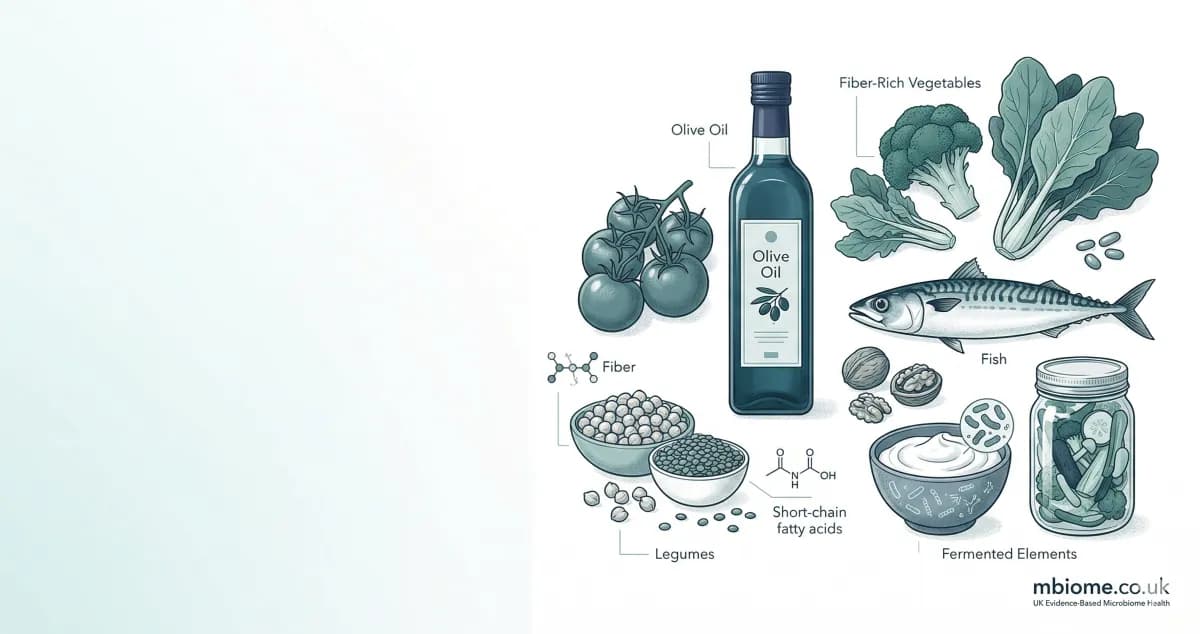
The Mediterranean diet is the most studied dietary pattern in microbiome research, consistently linked to greater microbial diversity, reduced inflammation, and better metabolic health. Here's what the science shows and how to apply it.

Fermented Foods and Gut Health: A Complete UK Guide
Fermented foods are one of the most effective ways to increase microbial diversity. Here is what the Stanford research found, which foods to choose, where to find them in the UK, and how much you actually need to eat.

Ultra-Processed Food and Gut Health: What the Science Says
The UK gets 57% of its calories from ultra-processed food — more than almost any other country. A growing body of research links this dietary pattern to gut microbiome disruption, reduced diversity, and impaired gut barrier function.
Explore Other Topics
Related articles from across mbiome
Your Skin Microbiome: What Lives on Your Skin and Why It Matters
Your skin hosts roughly one trillion microorganisms — bacteria, fungi, viruses, and mites — that form a living shield. Understanding this invisible ecosystem is changing how dermatologists think about skin health.
Gut HealthAntibiotics and Your Microbiome: How to Recover
Antibiotics save lives, but they also devastate your gut microbiome. Here is what the research shows about recovery timelines, which probiotics actually help, and what you can do to rebuild after a course.
Gut-Brain AxisMicrobiome and Mental Health: Separating Science from Hype
Headlines claim gut bacteria can cure depression and anxiety. The reality is more nuanced — but the science connecting the microbiome to mental health is genuine, growing, and worth understanding properly.
Key Terms
Glossary terms mentioned in this article
IBS (Irritable Bowel Syndrome)
A chronic functional gastrointestinal disorder characterised by abdominal pain, bloating, and altered bowel habits without identifiable structural cause. The microbiome is increasingly recognised as a contributing factor, with IBS patients typically showing reduced microbial diversity and altered bacterial composition compared to healthy controls.
GOS (Galactooligosaccharides)
Prebiotic carbohydrates structurally similar to human milk oligosaccharides. Found naturally in legumes and available as supplements. GOS has evidence for promoting Bifidobacterium growth and reducing symptoms of IBS.
FOS (Fructooligosaccharides)
Short-chain prebiotics found naturally in onions, garlic, bananas, and asparagus. Like inulin, FOS selectively promotes the growth of beneficial bacteria, particularly Bifidobacterium species.
Resistant Starch
A type of starch that resists digestion in the small intestine and reaches the colon intact, where it is fermented by bacteria to produce short-chain fatty acids. Found in cooked and cooled potatoes, green bananas, oats, and legumes.
Bifidobacterium
A genus of beneficial bacteria that dominates the infant gut and remains important throughout life. Various species (B. longum, B. infantis, B. breve) are among the most studied probiotics, with evidence for IBS, immunity, and infant health.
Lactobacillus
A genus of lactic acid-producing bacteria found naturally in the gut, mouth, and vaginal tract. Certain strains (L. rhamnosus GG, L. plantarum 299v) have strong clinical evidence for specific health benefits. Now reclassified into multiple genera including Lacticaseibacillus and Limosilactobacillus.
Microbiome
The complete collection of microorganisms (bacteria, viruses, fungi, archaea) and their genetic material within a specific environment, such as the human gut.
Microbiota
The actual living microorganisms within an environment. Often used interchangeably with microbiome, though microbiome technically includes their genes as well.