Diet & Nutrition
How what you eat shapes your microbiome. From fermented foods to fibre intake, the dietary choices that matter most for microbial diversity.

Articles in Diet & Nutrition
These articles are grouped to help readers move from overview to specifics without losing the evidence context.
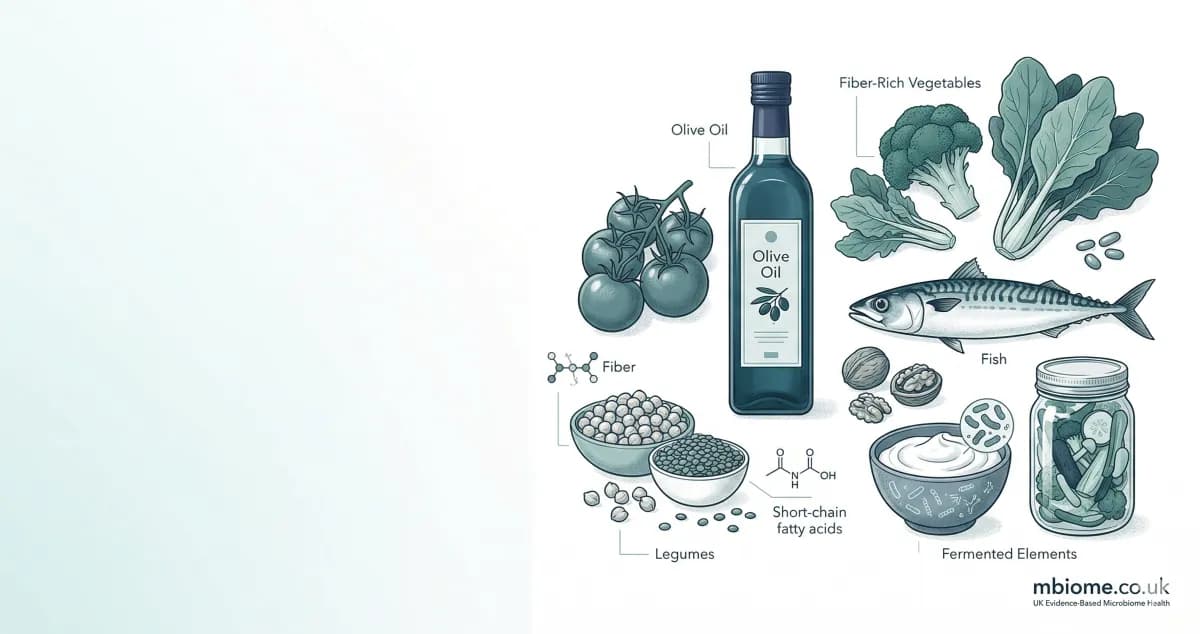
The Mediterranean Diet and the Microbiome: Why It Keeps Topping the Evidence
The Mediterranean diet is the most studied dietary pattern in microbiome research, consistently linked to greater microbial diversity, reduced inflammation, and better metabolic health. Here's what the science shows and how to apply it.

Fermented Foods and Gut Health: A Complete UK Guide
Fermented foods are one of the most effective ways to increase microbial diversity. Here is what the Stanford research found, which foods to choose, where to find them in the UK, and how much you actually need to eat.
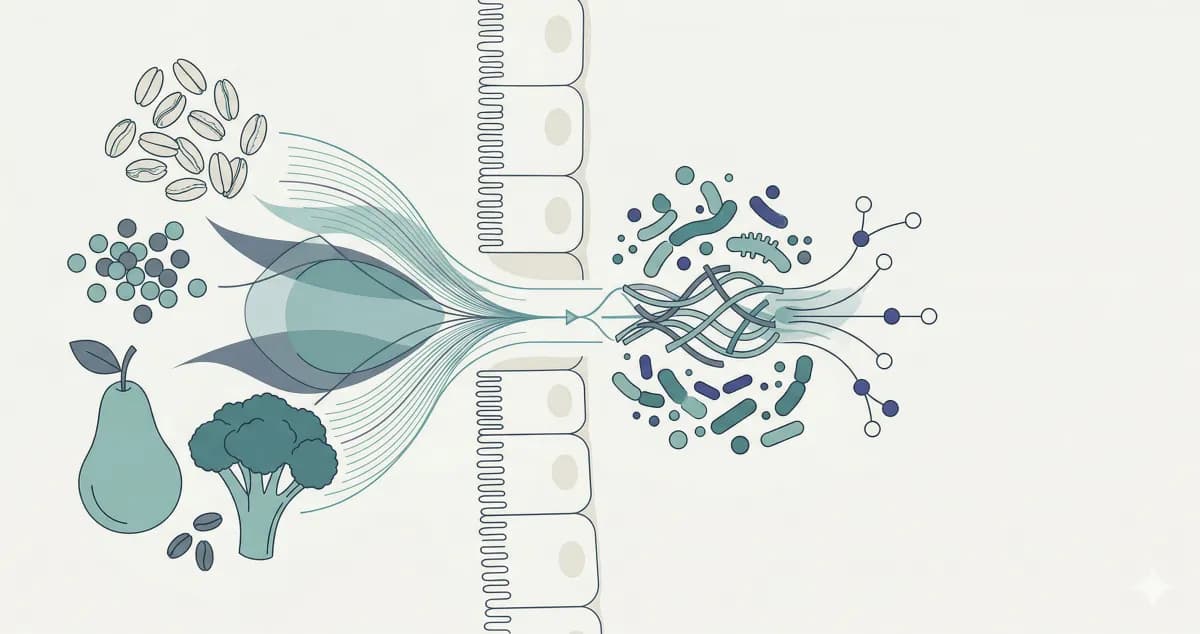
Fibre and the Microbiome: Why It Matters More Than Probiotics
The UK averages just 18g of fibre per day — far below the recommended 30g. This dietary shortfall may be starving the very bacteria your gut needs to keep you healthy.
Ultra-Processed Food and Gut Health: What the Science Says
The UK gets 57% of its calories from ultra-processed food — more than almost any other country. A growing body of research links this dietary pattern to gut microbiome disruption, reduced diversity, and impaired gut barrier function.
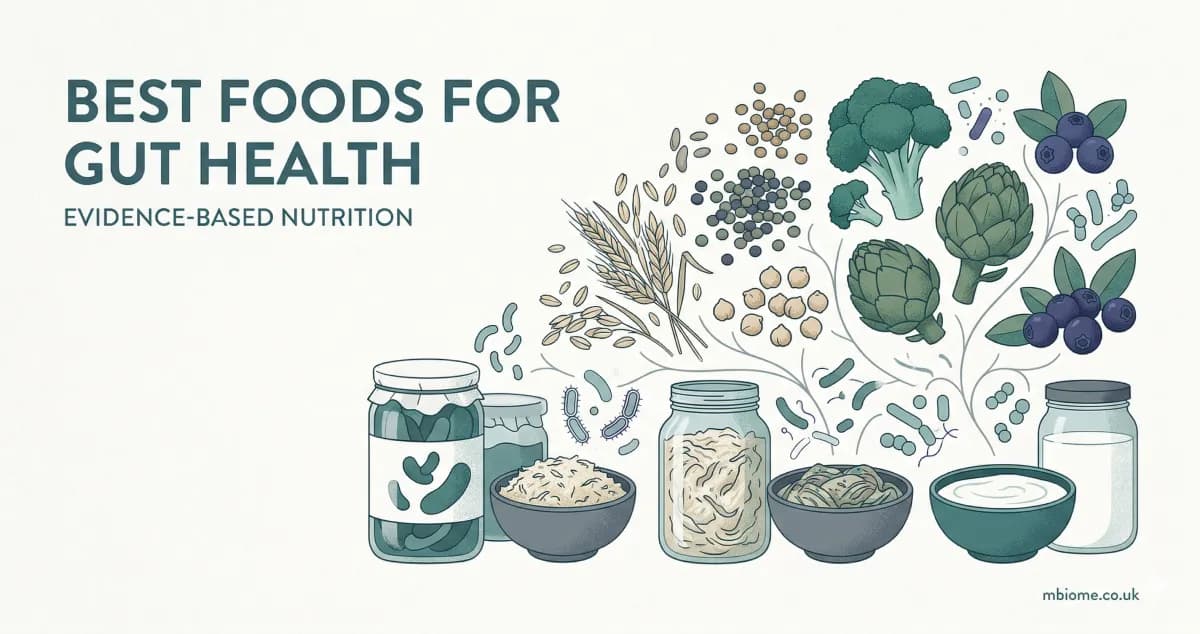
Best Foods for Gut Health: A UK Shopping Guide
A practical, supermarket-friendly guide to the best foods for your gut microbiome — grouped by fermented foods, high-fibre staples, polyphenol-rich picks, and resistant starch sources, with seasonal UK availability.
Key Terms: Diet & Nutrition
Glossary terms commonly referenced in diet & nutrition articles
Microbiome
The complete collection of microorganisms (bacteria, viruses, fungi, archaea) and their genetic material within a specific environment, such as the human gut.
Prebiotic
Non-digestible food components (typically dietary fibres) that selectively stimulate the growth or activity of beneficial gut bacteria. Common examples include inulin, FOS, and GOS.
Bifidobacterium
A genus of beneficial bacteria that dominates the infant gut and remains important throughout life. Various species (B. longum, B. infantis, B. breve) are among the most studied probiotics, with evidence for IBS, immunity, and infant health.
Lactobacillus
A genus of lactic acid-producing bacteria found naturally in the gut, mouth, and vaginal tract. Certain strains (L. rhamnosus GG, L. plantarum 299v) have strong clinical evidence for specific health benefits. Now reclassified into multiple genera including Lacticaseibacillus and Limosilactobacillus.
Butyrate
The most studied short-chain fatty acid, produced primarily by Faecalibacterium prausnitzii and other anaerobic bacteria. Butyrate is the primary energy source for colonocytes (colon lining cells) and has anti-inflammatory properties.
GOS (Galactooligosaccharides)
Prebiotic carbohydrates structurally similar to human milk oligosaccharides. Found naturally in legumes and available as supplements. GOS has evidence for promoting Bifidobacterium growth and reducing symptoms of IBS.
Mediterranean Diet
A dietary pattern emphasising vegetables, fruits, wholegrains, legumes, nuts, olive oil, and fish, with moderate dairy and limited red meat. It is the most studied dietary pattern in microbiome research, consistently linked to greater microbial diversity, higher SCFA production, and reduced inflammation.
Probiotic
Live microorganisms which, when administered in adequate amounts, confer a health benefit on the host. Benefits are strain-specific, not species-wide.
Fermentation
The metabolic process by which bacteria break down substrates (such as dietary fibre) in the absence of oxygen. In the gut, fermentation of fibre produces short-chain fatty acids, gases, and other metabolites essential for colon health.
Resistant Starch
A type of starch that resists digestion in the small intestine and reaches the colon intact, where it is fermented by bacteria to produce short-chain fatty acids. Found in cooked and cooled potatoes, green bananas, oats, and legumes.
Inulin
A naturally occurring prebiotic fibre found in chicory root, garlic, onions, leeks, and artichokes. It selectively feeds beneficial Bifidobacterium species and is one of the most studied and widely used prebiotic supplements.
FOS (Fructooligosaccharides)
Short-chain prebiotics found naturally in onions, garlic, bananas, and asparagus. Like inulin, FOS selectively promotes the growth of beneficial bacteria, particularly Bifidobacterium species.