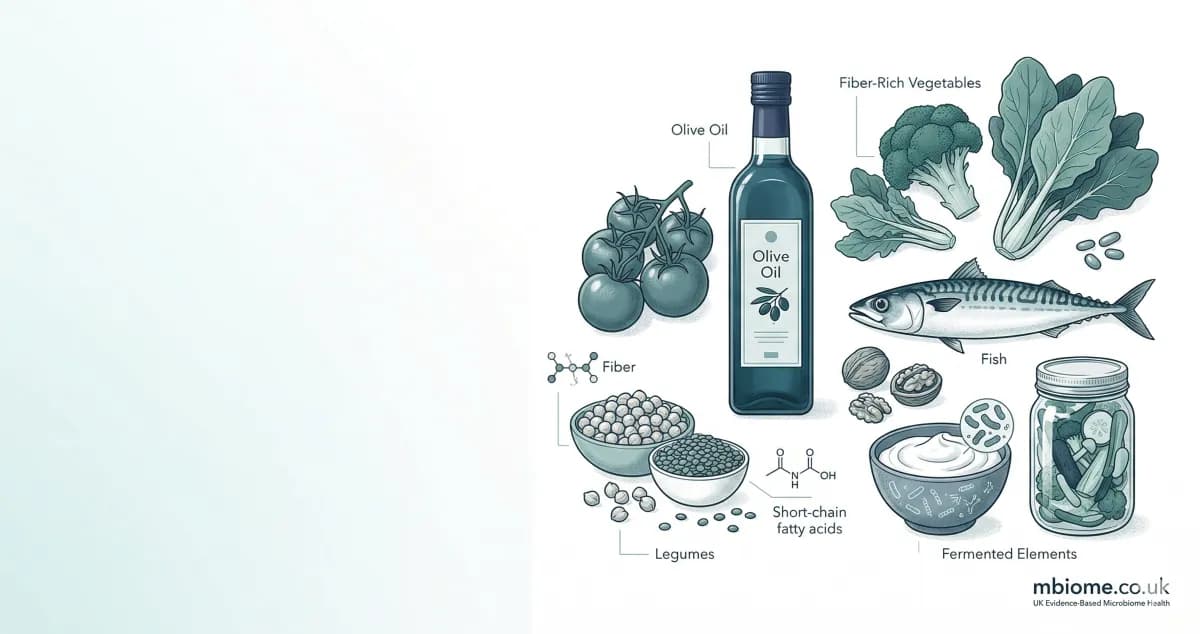
No dietary pattern has been studied more extensively — or more consistently validated — for its effects on the gut microbiome than the Mediterranean diet. From large cohort studies to randomised controlled trials, the evidence keeps pointing in the same direction: a Mediterranean-style diet promotes microbial diversity, supports anti-inflammatory bacterial species, and reduces the risk of chronic disease.
What Is the Mediterranean Diet?
The Mediterranean diet is not a single prescribed meal plan but a pattern of eating traditionally observed in countries bordering the Mediterranean Sea, particularly Greece, Italy, and Spain. Its key features include:
- High intake of fruits, vegetables, legumes, nuts, seeds, wholegrains, and olive oil
- Moderate intake of fish, poultry, eggs, dairy (especially yoghurt and cheese), and red wine
- Low intake of red meat, processed meat, refined sugars, and ultra-processed foods
- Olive oil as the primary fat source
- Herbs and spices used liberally
The pattern was first described scientifically by Ancel Keys in the 1960s during the Seven Countries Study, which linked it to lower cardiovascular mortality. Since then, it has been associated with reduced risk of cardiovascular disease, type 2 diabetes, certain cancers, neurodegenerative diseases, and all-cause mortality.
What Does the Mediterranean Diet Do to the Microbiome?
The NU-AGE Trial
The most direct evidence comes from the NU-AGE (New Dietary Strategies Addressing the Specific Needs of Elderly Population for Healthy Ageing in Europe) trial, published by Ghosh et al. (2020) in Gut. This study enrolled 612 adults aged 65-79 across five European countries (including the UK) and randomised them to either a Mediterranean diet intervention or their usual diet for one year.
Key findings: - The Mediterranean diet group showed increased abundance of bacteria associated with reduced frailty and improved cognitive function, including Faecalibacterium prausnitzii (a major butyrate producer) and Roseburia - Pro-inflammatory bacteria (including certain Ruminococcus and Collinsella species) decreased - These microbiome changes were associated with reduced inflammatory markers (C-reactive protein and IL-17) - The benefits were consistent across countries despite different baseline diets and microbiome compositions
This study is particularly significant because it was a large, multi-country RCT with a one-year duration — far longer than most dietary intervention studies.
The PREDIMED Trial
The PREDIMED (Prevención con Dieta Mediterránea) trial, one of the largest dietary intervention trials ever conducted, randomised 7,447 participants at high cardiovascular risk to a Mediterranean diet supplemented with extra-virgin olive oil, a Mediterranean diet supplemented with mixed nuts, or a control low-fat diet. While its primary outcomes were cardiovascular events, sub-studies examined microbiome effects.
Meslier et al. (2020, Gut) analysed stool samples from PREDIMED participants and found that the Mediterranean diet increased microbial diversity and enriched SCFA-producing bacteria. Polyphenol intake (from olive oil, red wine, and fruits) was particularly strongly associated with beneficial microbiome shifts.
The PREDICT Study
The UK-based PREDICT study (Berry et al., 2020, Nature Medicine), led by Tim Spector at King's College London with over 1,100 participants, found that Mediterranean diet adherence was one of the strongest dietary predictors of a favourable microbiome composition. Participants with higher Mediterranean diet scores had greater abundance of Prevotella copri and Blastocystis species — taxa associated with better metabolic health.
Why Does It Work? The Mechanisms
Fibre Diversity
The Mediterranean diet naturally provides 30-40g of fibre daily — meeting or exceeding the UK recommendation of 30g — from a wide variety of sources: legumes, wholegrains, vegetables, fruits, nuts, and seeds. This fibre diversity is critical because different bacterial species ferment different types of fibre. A diet providing multiple fibre types supports a broader range of beneficial bacteria than one reliant on a single fibre source.
Polyphenols
Polyphenols are plant-derived compounds abundant in olive oil, red wine, berries, nuts, and dark leafy vegetables. The majority of dietary polyphenols (90-95%) are not absorbed in the small intestine and reach the colon, where they serve as substrates for microbial metabolism.
Cardona et al. (2013, Journal of Nutrition) reviewed the evidence and concluded that polyphenols have significant prebiotic effects, promoting the growth of Bifidobacterium and Lactobacillus species while inhibiting pathogenic bacteria. The specific polyphenols in extra-virgin olive oil — oleocanthal and oleuropein — have demonstrated anti-inflammatory effects that may be partly mediated through microbiome modulation.
Healthy Fats
The Mediterranean diet's emphasis on monounsaturated fats (from olive oil) and omega-3 polyunsaturated fats (from fish, nuts, and seeds) contrasts with the high saturated fat content of typical Western diets. Patterson et al. (2014, Gut Microbes) showed that dietary fat type significantly influences microbiome composition — saturated fat promotes Bilophila wadsworthensis (a pro-inflammatory species), while omega-3 fats promote anti-inflammatory species.
Low Ultra-Processed Food Intake
By its nature, the Mediterranean diet is low in ultra-processed foods. Ultra-processed foods contain emulsifiers (such as carboxymethylcellulose and polysorbate 80), artificial sweeteners, and refined ingredients that have been shown to disrupt the gut microbiome and intestinal mucus layer in both animal and human studies (Chassaing et al., 2015, Nature; Suez et al., 2014, Nature).
UK-Specific Application
Adopting a Mediterranean diet in the UK does not require importing speciality ingredients. The principles translate readily:
Practical swaps: - Butter → extra-virgin olive oil (for cooking and dressing) - White bread → wholemeal or sourdough - Crisps → mixed nuts and seeds - Ready meals → simple legume-based dishes (lentil soup, bean stew, chickpea curry) - Sugary desserts → fresh fruit with live yoghurt - Processed meats → oily fish (mackerel, sardines, salmon — aim for 2 portions per week as per NHS guidance) - Fizzy drinks → water, herbal tea, or moderate red wine with meals
Weekly shopping list staples: - Tinned legumes: chickpeas, lentils, cannellini beans, kidney beans - Wholegrains: oats, brown rice, wholemeal pasta, quinoa - Fresh vegetables: onions, garlic, tomatoes, leafy greens, peppers, courgettes - Fruits: berries, apples, pears, citrus - Extra-virgin olive oil (cold-pressed for dressing; regular for cooking) - Nuts and seeds: almonds, walnuts, pumpkin seeds, flaxseeds - Oily fish: mackerel, sardines (tinned is fine), salmon - Live yoghurt (natural, unsweetened) - Herbs and spices: oregano, basil, turmeric, cumin
Budget considerations: The Mediterranean diet can be more affordable than many assume. Tinned legumes, frozen vegetables, oats, and seasonal fruit are inexpensive staples. A 2023 analysis published in the Lancet Planetary Health (Hirvonen et al.) found that the Mediterranean diet was cost-neutral or cheaper than typical Western diets in high-income countries when ultra-processed convenience foods were replaced with whole food alternatives.
How Quickly Does the Microbiome Respond?
Dietary changes can shift the microbiome within days. David et al. (2014, Nature) demonstrated that switching between a plant-based and animal-based diet caused measurable microbiome changes within 24 hours, with more substantial shifts over 5 days. However, the Stanford fermented foods trial showed that significant increases in microbial diversity required approximately 6-10 weeks of sustained dietary change.
For long-term benefits — the kind associated with reduced disease risk in the NU-AGE and PREDIMED trials — sustained adherence over months to years is necessary. The microbiome responds quickly to dietary shifts, but lasting, health-relevant changes require consistent habits.
What the Mediterranean Diet Does Not Do
It is worth noting what the evidence does not support:
- The Mediterranean diet is not a treatment for diagnosed conditions like IBS, IBD, or coeliac disease — these require specific medical management
- It is not a weight loss diet per se, though it is associated with healthier body composition over time
- Moderate red wine consumption is part of the traditional pattern, but this is not a recommendation to start drinking — the health benefits of alcohol are debated, and the NHS advises no more than 14 units per week
- It is not necessary to eat "Mediterranean food" specifically — the principles (plant-heavy, fibre-rich, minimally processed, good fats) can be applied to any cuisine
Key Takeaways
- The Mediterranean diet is the most consistently validated dietary pattern for gut microbiome health, supported by multiple large RCTs
- It increases microbial diversity and promotes SCFA-producing bacteria while reducing pro-inflammatory species
- The key mechanisms are fibre diversity, polyphenol intake, healthy fats, and low ultra-processed food consumption
- The NU-AGE trial showed benefits specifically in older adults, including reduced frailty markers and improved cognitive function
- The diet translates readily to UK food availability and can be cost-neutral or cheaper than a typical Western diet
- Microbiome changes begin within days but meaningful health benefits require sustained adherence over months to years
- It is a dietary pattern, not a prescription — the principles matter more than specific recipes. For a UK-specific shopping list, see our best foods for gut health guide
Medical disclaimer: This article is for educational purposes only and does not constitute medical advice. Always consult a qualified healthcare professional before making changes to your diet, starting supplements, or making decisions about your health.
Related Articles

Fermented Foods and Gut Health: A Complete UK Guide
Fermented foods are one of the most effective ways to increase microbial diversity. Here is what the Stanford research found, which foods to choose, where to find them in the UK, and how much you actually need to eat.
Fibre and the Microbiome: Why It Matters More Than Probiotics
The UK averages just 18g of fibre per day — far below the recommended 30g. This dietary shortfall may be starving the very bacteria your gut needs to keep you healthy.

Ultra-Processed Food and Gut Health: What the Science Says
The UK gets 57% of its calories from ultra-processed food — more than almost any other country. A growing body of research links this dietary pattern to gut microbiome disruption, reduced diversity, and impaired gut barrier function.
Explore Other Topics
Related articles from across mbiome
How to Read Microbiome Research — Understanding Evidence Strength
Not all studies are created equal. Here's how to evaluate microbiome research claims, from mouse models to randomised controlled trials, so you can separate genuine breakthroughs from hype.
Skin MicrobiomeEczema and the Skin Microbiome: The Staphylococcus Connection
Eczema flares are consistently linked to an overgrowth of Staphylococcus aureus and a collapse in skin microbial diversity. Here is what the research shows and what treatments are on the horizon.
Gut HealthThe Microbiome and Weight: What Science Really Says About Gut Bacteria and Body Weight
Research increasingly links the gut microbiome to weight regulation, but the relationship is complex. We examine the evidence — from landmark mouse studies to human trials — and separate proven mechanisms from premature claims.
Key Terms
Glossary terms mentioned in this article
IBS (Irritable Bowel Syndrome)
A chronic functional gastrointestinal disorder characterised by abdominal pain, bloating, and altered bowel habits without identifiable structural cause. The microbiome is increasingly recognised as a contributing factor, with IBS patients typically showing reduced microbial diversity and altered bacterial composition compared to healthy controls.
Faecalibacterium prausnitzii
One of the most abundant and important bacteria in the healthy human gut. A major butyrate producer with strong anti-inflammatory properties. Reduced abundance is consistently associated with Crohn's disease and other inflammatory conditions.
Omega-3 Fatty Acids
Essential polyunsaturated fatty acids found in oily fish (salmon, mackerel, sardines), walnuts, and flaxseeds. Omega-3s have anti-inflammatory properties and research suggests they may support gut microbiome diversity by increasing Bifidobacterium and Lactobacillus populations and enhancing SCFA production.
Mediterranean Diet
A dietary pattern emphasising vegetables, fruits, wholegrains, legumes, nuts, olive oil, and fish, with moderate dairy and limited red meat. It is the most studied dietary pattern in microbiome research, consistently linked to greater microbial diversity, higher SCFA production, and reduced inflammation.
Bifidobacterium
A genus of beneficial bacteria that dominates the infant gut and remains important throughout life. Various species (B. longum, B. infantis, B. breve) are among the most studied probiotics, with evidence for IBS, immunity, and infant health.
Lactobacillus
A genus of lactic acid-producing bacteria found naturally in the gut, mouth, and vaginal tract. Certain strains (L. rhamnosus GG, L. plantarum 299v) have strong clinical evidence for specific health benefits. Now reclassified into multiple genera including Lacticaseibacillus and Limosilactobacillus.
Polyphenols
Plant-derived compounds found in berries, tea, coffee, dark chocolate, red wine, and olive oil. Most polyphenols are poorly absorbed in the small intestine and reach the colon, where gut bacteria metabolise them into bioactive compounds with anti-inflammatory properties.
Microbiome
The complete collection of microorganisms (bacteria, viruses, fungi, archaea) and their genetic material within a specific environment, such as the human gut.