
Ultra-processed food (UPF) has become one of the most discussed topics in nutrition science. The UK has one of the highest UPF consumption rates in the world, and emerging evidence suggests this is having a measurable impact on our gut microbiomes.
What Is Ultra-Processed Food?
The NOVA classification system, developed by researchers at the University of São Paulo, divides food into four categories:
- Unprocessed or minimally processed — fruits, vegetables, eggs, meat, milk
- Processed culinary ingredients — oils, butter, sugar, salt, flour
- Processed foods — tinned vegetables, cheese, freshly baked bread, smoked fish
- Ultra-processed foods — industrially formulated products with five or more ingredients, typically including substances not used in home cooking: emulsifiers, stabilisers, flavour enhancers, colours, and humectants
Category 4 includes most breakfast cereals, ready meals, crisps, mass-produced bread, fizzy drinks, sausages, chicken nuggets, instant noodles, and protein bars. The defining feature is not the nutrient profile but the degree of industrial processing.
How Much UPF Are We Eating?
According to data from the National Diet and Nutrition Survey (NDNS), UK adults derive approximately 57% of their total energy intake from ultra-processed foods. Among children and adolescents, the figure is even higher — up to 65%.
This places the UK alongside the United States, Canada, and Australia as one of the heaviest consumers of UPF globally. By contrast, countries like France, Italy, and Japan derive less than 30% of their calories from UPF.
The Landmark NIH Study
The most important single study on UPF and health is the randomised controlled trial by Hall et al. (2019, Cell Metabolism), conducted at the US National Institutes of Health. Twenty participants were admitted to a clinical facility for four weeks, where they were randomly assigned to either an ultra-processed or an unprocessed diet for two weeks, then switched.
Both diets were matched for calories, sugar, fat, fibre, and macronutrients — the only difference was the degree of processing. The results were striking:
- Participants on the ultra-processed diet consumed approximately 500 more calories per day — voluntarily, despite having unlimited access to food on both diets
- They gained an average of 0.9 kg over two weeks
- On the unprocessed diet, they lost an average of 0.9 kg over two weeks
The study demonstrated that something about ultra-processing itself — beyond the nutrient content — drives overconsumption. The exact mechanism remains debated, but altered satiety signalling, faster eating speed, and disrupted gut-brain communication are leading hypotheses.
UPF and Microbiome Diversity
A growing number of observational studies link high UPF consumption to reduced gut microbial diversity. The ZOE PREDICT study (Asnicar et al., 2021, Nature Medicine) analysed diet and microbiome data from over 1,000 participants and found that ultra-processed food consumption was associated with:
- Lower overall microbial diversity
- Reduced abundance of beneficial species, particularly Faecalibacterium prausnitzii (a key butyrate producer)
- Higher abundance of species associated with metabolic dysfunction
- Poorer postprandial (after-meal) metabolic responses
The mechanisms likely involve multiple pathways: low fibre content starving beneficial bacteria, while additives and emulsifiers directly disrupt the gut environment. As explored in our article on fibre and the microbiome, the chronic fibre deficit in UPF-heavy diets may be the single largest driver of microbiome degradation.
Emulsifiers and the Gut Barrier
One of the most compelling lines of research focuses on emulsifiers — additives used to blend ingredients that would otherwise separate (such as oil and water). Common emulsifiers include polysorbate 80, carboxymethylcellulose (CMC), carrageenan, and lecithin.
Chassaing et al. (2015, Nature) demonstrated in mice that dietary emulsifiers at concentrations typical of processed food:
- Eroded the protective mucus layer that separates gut bacteria from the intestinal wall
- Increased bacterial encroachment into the gut lining
- Promoted low-grade intestinal inflammation
- Altered microbiome composition, increasing pro-inflammatory species
A follow-up human randomised controlled trial by Chassaing et al. (2022, Gastroenterology) confirmed that carboxymethylcellulose altered the gut microbiome in healthy volunteers, reducing microbial diversity and shifting bacterial populations toward pro-inflammatory species.
This is concerning because the mucus layer is a critical component of the gut barrier. When it thins, bacteria and their metabolites can trigger immune responses that contribute to intestinal permeability — commonly called leaky gut — and systemic inflammation linked to conditions from obesity to autoimmune disease.
Artificial Sweeteners
Another component of many ultra-processed foods, artificial sweeteners (aspartame, sucralose, saccharin, stevia) were long assumed to be inert in the gut. A study by Suez et al. (2022, Cell) challenged this assumption, showing that non-nutritive sweeteners altered the gut microbiome and impaired glycaemic responses in a subset of participants.
The effects were highly individual — some people were strongly affected while others showed no change — but the study demonstrated that artificial sweeteners are not the biologically inactive substances they were assumed to be.
Practical Strategies for Reducing UPF
Eliminating ultra-processed food entirely is unrealistic for most people. A more practical approach is gradual reduction:
Read ingredients lists — If a product contains ingredients you would not find in a home kitchen (emulsifiers, stabilisers, flavour enhancers with E-numbers), it is likely ultra-processed. The number of ingredients is a rough guide: more than five, and particularly more than ten, suggests heavy processing.
Swap the worst offenders first: - Sugary breakfast cereals → porridge with fruit and seeds - White sliced bread → sourdough or wholemeal from a bakery - Ready meals → batch-cooked meals frozen at home - Fizzy drinks → water, sparkling water with lemon, or herbal tea - Flavoured yoghurt → plain live yoghurt with fresh fruit - Crisps → nuts, olives, or vegetable sticks with hummus
Cook from scratch more often — Even simple meals (pasta with tinned tomatoes, garlic, and olive oil) dramatically reduce UPF intake compared to a ready meal version of the same dish.
Do not aim for perfection — Research suggests that reducing UPF from 57% to 30–40% of calories would represent a significant improvement. Some processing is fine — tinned beans, frozen vegetables, and wholegrain bread are all processed foods that benefit gut health.
See our guide to the best foods for gut health for UK-specific shopping suggestions that prioritise whole and minimally processed options. The Mediterranean diet offers a practical framework for reducing UPF while maximising gut health benefits.
The Bottom Line
- Ultra-processed food makes up 57% of UK calorie intake — one of the highest rates globally
- The Hall et al. (2019) NIH study showed UPF drives overconsumption by ~500 calories/day independent of nutrient content
- High UPF consumption is associated with reduced microbial diversity and loss of beneficial gut bacteria
- Emulsifiers in UPF can erode the gut mucus layer and promote inflammation (Chassaing et al., 2015, 2022)
- Artificial sweeteners are not biologically inert and can alter the microbiome (Suez et al., 2022)
- Gradual reduction, starting with the worst offenders, is more sustainable than attempting complete elimination
Medical disclaimer: This article is for educational purposes only and does not constitute medical advice. Always consult a qualified healthcare professional before making changes to your diet, starting supplements, or making decisions about your health.
Related Articles
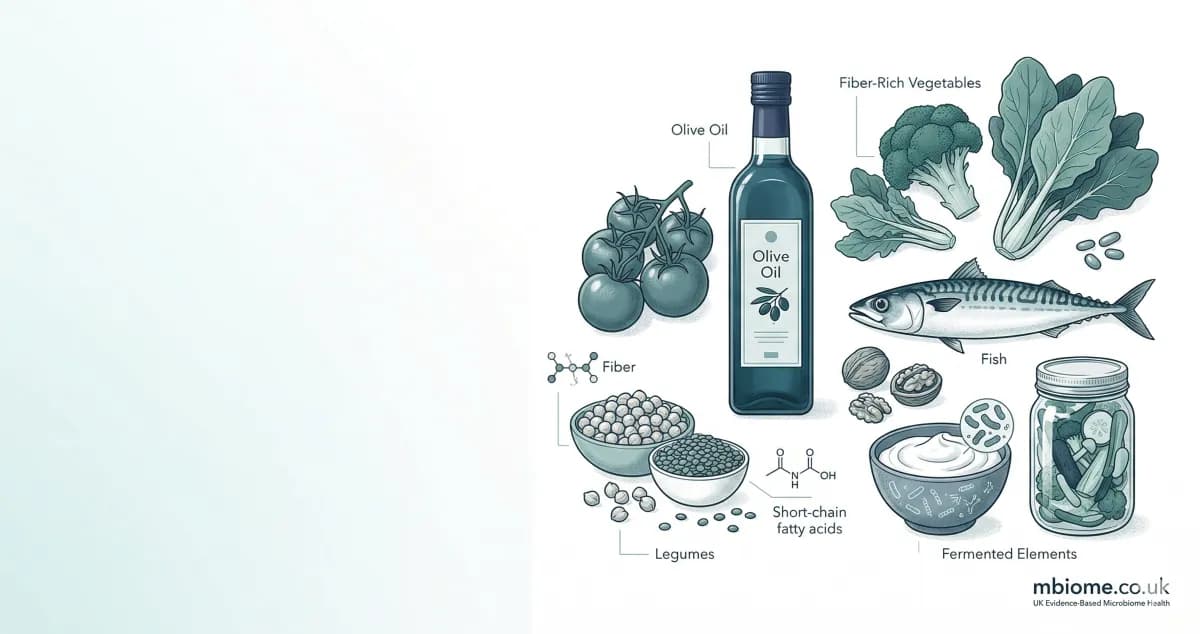
The Mediterranean Diet and the Microbiome: Why It Keeps Topping the Evidence
The Mediterranean diet is the most studied dietary pattern in microbiome research, consistently linked to greater microbial diversity, reduced inflammation, and better metabolic health. Here's what the science shows and how to apply it.

Fermented Foods and Gut Health: A Complete UK Guide
Fermented foods are one of the most effective ways to increase microbial diversity. Here is what the Stanford research found, which foods to choose, where to find them in the UK, and how much you actually need to eat.
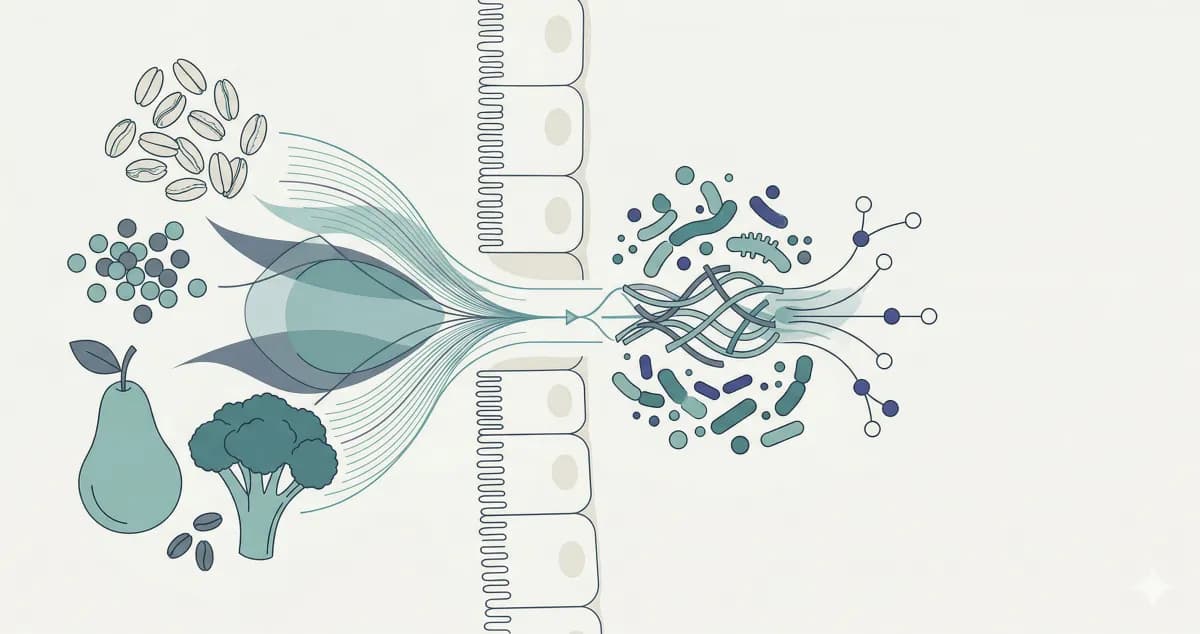
Fibre and the Microbiome: Why It Matters More Than Probiotics
The UK averages just 18g of fibre per day — far below the recommended 30g. This dietary shortfall may be starving the very bacteria your gut needs to keep you healthy.
Explore Other Topics
Related articles from across mbiome
The Microbiome and Weight: What Science Really Says About Gut Bacteria and Body Weight
Research increasingly links the gut microbiome to weight regulation, but the relationship is complex. We examine the evidence — from landmark mouse studies to human trials — and separate proven mechanisms from premature claims.
Gut HealthHow to Improve Gut Health Naturally: Evidence-Based Guide
Your gut microbiome responds remarkably quickly to lifestyle changes. Here is what the research says about diet, sleep, exercise, and stress — and which interventions have the strongest evidence behind them.
Skin MicrobiomeThe Gut-Skin Axis: How Your Microbiome Affects Your Skin
Acne, eczema, rosacea, and psoriasis have all been linked to gut health. The emerging science of the gut-skin axis suggests that what happens in your digestive tract can show up on your face.
Key Terms
Glossary terms mentioned in this article
Faecalibacterium prausnitzii
One of the most abundant and important bacteria in the healthy human gut. A major butyrate producer with strong anti-inflammatory properties. Reduced abundance is consistently associated with Crohn's disease and other inflammatory conditions.
Intestinal Permeability
The property of the intestinal lining that controls what passes from the gut into the bloodstream. Increased permeability (sometimes called "leaky gut") allows harmful substances to enter circulation, triggering immune responses.
Microbiome Diversity
The variety and abundance of different microbial species in a given environment. Greater diversity is consistently associated with better health outcomes, while reduced diversity is linked to obesity, inflammatory bowel disease, and other chronic conditions.
Mediterranean Diet
A dietary pattern emphasising vegetables, fruits, wholegrains, legumes, nuts, olive oil, and fish, with moderate dairy and limited red meat. It is the most studied dietary pattern in microbiome research, consistently linked to greater microbial diversity, higher SCFA production, and reduced inflammation.
Microbiome
The complete collection of microorganisms (bacteria, viruses, fungi, archaea) and their genetic material within a specific environment, such as the human gut.
Butyrate
The most studied short-chain fatty acid, produced primarily by Faecalibacterium prausnitzii and other anaerobic bacteria. Butyrate is the primary energy source for colonocytes (colon lining cells) and has anti-inflammatory properties.
Mucin
Glycoproteins produced by goblet cells in the intestinal lining that form the protective mucus layer. This layer provides a habitat for beneficial bacteria like Akkermansia and acts as a physical barrier against pathogens.