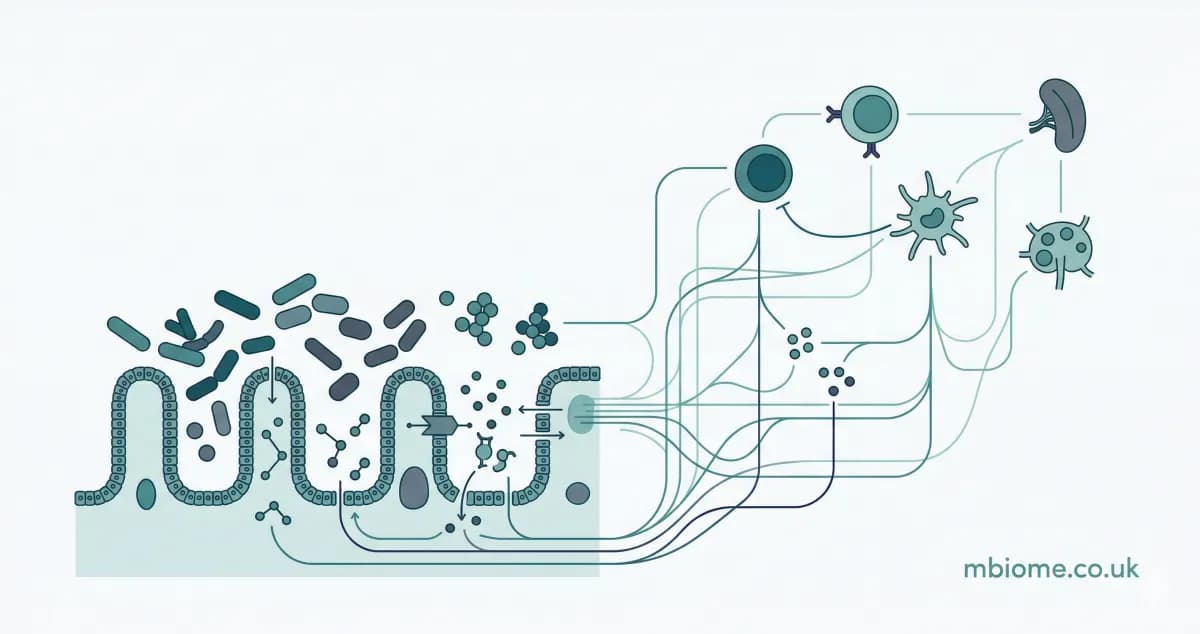
Autoimmune diseases — conditions in which the immune system attacks the body's own tissues — affect approximately 4 million people in the UK, according to the British Society for Immunology. Over the past decade, research has increasingly implicated the gut microbiome as a central player in autoimmune disease development, progression, and potentially treatment.
The Immune System Lives in the Gut
Approximately 70% of the body's immune cells reside in the gut-associated lymphoid tissue (GALT). This makes sense: the gut is the body's largest interface with the external environment, processing kilograms of foreign material (food, microbes, environmental contaminants) daily.
The GALT must perform a remarkable balancing act — mounting immune responses against genuine threats while tolerating harmless food antigens and beneficial commensal bacteria. The microbiome is integral to this calibration. From birth, microbial signals train the immune system to distinguish self from non-self, friend from foe.
When this calibration goes wrong — when the immune system loses tolerance to its own tissues — autoimmune disease results. And increasingly, evidence points to the microbiome as a critical factor in whether this loss of tolerance occurs.
Molecular Mimicry
One of the best-characterised mechanisms linking the microbiome to autoimmunity is molecular mimicry. This occurs when microbial proteins share structural similarity with human proteins, causing immune responses targeted at the microbe to cross-react with the body's own tissues.
Professor Martin Kriegel at Yale University has published extensively on this mechanism. His group demonstrated in 2018 (*Science*) that *Roseburia intestinalis* — a common gut bacterium — produces proteins that structurally mimic human beta2-glycoprotein I, a target in antiphospholipid syndrome. In susceptible individuals, immune responses against this bacterial protein can cross-react with the human protein, triggering thrombosis and pregnancy complications.
A 2022 study by Greiling et al. (published in *Science Translational Medicine*) identified molecular mimicry between gut and oral bacteria and the Ro60 autoantigen targeted in lupus and Sjogren's syndrome. Germ-free mice colonised with these bacteria developed anti-Ro60 antibodies — demonstrating a direct causal link.
Intestinal Permeability ("Leaky Gut")
Professor Alessio Fasano at Harvard Medical School has been the leading proponent of the "leaky gut" hypothesis of autoimmunity. His research has shown that increased intestinal permeability — allowing bacterial products and incompletely digested food proteins to enter the bloodstream — precedes the development of autoimmune disease in multiple conditions.
Fasano's work on zonulin, a protein that regulates tight junctions between intestinal cells, demonstrated that elevated zonulin levels are found in coeliac disease, type 1 diabetes, and inflammatory bowel disease, often before clinical symptoms appear. His group published a landmark review in *Physiological Reviews* (2011) proposing that three factors must converge for autoimmunity: genetic susceptibility, an environmental trigger, and increased intestinal permeability.
A 2020 study by Tajik et al. in *Nature Communications* provided further evidence, showing that increased intestinal permeability preceded the onset of joint inflammation in a mouse model of rheumatoid arthritis, and that sealing the gut barrier prevented disease development.
Specific Autoimmune Conditions
Rheumatoid Arthritis (RA) — One of the most extensively studied autoimmune-microbiome links. Professor Paul Bowness at the University of Oxford has contributed to research showing that RA patients have distinct gut microbial profiles, with overrepresentation of *Prevotella copri* in early disease. A 2013 study by Scher et al. in *eLife* found that *Prevotella copri* was present in 75% of new-onset RA patients compared with only 21% of healthy controls. The bacterium appears to drive inflammation through Th17 cell activation.
Type 1 Diabetes (T1D) — The TEDDY (The Environmental Determinants of Diabetes in the Young) study — one of the largest longitudinal microbiome studies ever conducted — tracked over 8,000 children from birth. Results published in *Nature* (2018) by Vatanen et al. showed that children who developed T1D had reduced microbial diversity and lower levels of SCFA-producing bacteria in the months before diagnosis. Crucially, the microbial changes preceded the appearance of autoantibodies, suggesting a causal role.
Multiple Sclerosis (MS) — The iMSMS (International MS Microbiome Study) consortium published results in 2022 showing that MS patients harbour significantly different gut microbiomes compared with household controls. Professor Sergio Baranzini at UCSF led the analysis, which found that certain gut bacteria could induce inflammatory T-cell responses relevant to MS pathology.
In the UK, Professor David Baker at Queen Mary University of London has explored the therapeutic angle, investigating whether manipulating the gut microbiome could modulate MS disease activity. Preliminary results from a small FMT trial in relapsing-remitting MS showed reduced relapse rates over 12 months.
Inflammatory Bowel Disease (IBD) — While IBD is sometimes classified separately from classical autoimmune diseases, the evidence for microbiome involvement is among the strongest. The UK IBD Genetics Consortium, led by Professor Miles Parkes at the University of Cambridge, has identified over 240 genetic loci associated with IBD, many of which affect immune responses to gut bacteria. A consistent finding across studies is reduced abundance of *Faecalibacterium prausnitzii* — a butyrate-producing anti-inflammatory bacterium — in both Crohn's disease and ulcerative colitis.
Coeliac Disease — Triggered by gluten in genetically susceptible individuals (HLA-DQ2/DQ8 carriers), coeliac disease is the autoimmune condition with the clearest environmental trigger. However, the microbiome appears to modulate whether genetically susceptible individuals actually develop the disease. A 2020 study by Caminero et al. in *Gastroenterology* showed that certain gut bacteria can cleave gluten peptides into immunogenic fragments, while others degrade them into harmless amino acids. The balance of these bacterial populations may determine whether a genetically predisposed individual develops coeliac disease.
Therapeutic Implications
Dietary intervention — The Mediterranean diet, rich in fibre, polyphenols, and omega-3 fatty acids, has been shown to increase SCFA-producing bacteria and reduce inflammatory markers in RA patients (Sköldstam et al.). Professor Tim Spector's research at King's College London has demonstrated that dietary diversity (30+ plants per week) is one of the strongest predictors of microbial diversity and anti-inflammatory microbial profiles.
Probiotics — Evidence for specific probiotics in autoimmune conditions is limited but growing. *Lactobacillus casei* Shirota has shown modest benefit in RA symptom scores in a small Japanese trial. *Bifidobacterium infantis* 35624 reduced systemic inflammatory markers (CRP, TNF-alpha) in a trial by Groeger et al. (2013). However, no probiotic has yet demonstrated disease-modifying effects in a large autoimmune RCT.
FMT — As noted above, early-stage trials are exploring FMT for MS, RA, and T1D. These are genuinely experimental and not yet available outside research settings.
Short-chain fatty acid supplementation — Butyrate supplementation has shown anti-inflammatory effects in animal models of multiple autoimmune conditions. The 2025 tributyrin trial for UC (University of Glasgow) may open the door for SCFA-based therapeutics in other autoimmune contexts.
Key Takeaways
- Approximately 70% of the immune system resides in the gut, making the microbiome a central regulator of immune tolerance
- Molecular mimicry — bacterial proteins resembling human proteins — is a well-characterised mechanism linking gut bacteria to autoimmune responses
- Increased intestinal permeability ("leaky gut") appears to precede autoimmune disease onset in multiple conditions
- RA, type 1 diabetes, MS, IBD, and coeliac disease all show distinct microbiome signatures, often detectable before clinical diagnosis
- Dietary diversity (particularly fibre and plant variety) is currently the most evidence-based strategy for maintaining a healthy immune-microbiome relationship. The Mediterranean diet has the strongest evidence base
- Therapeutic approaches (FMT, targeted probiotics, SCFA supplementation) are promising but still largely experimental for autoimmune conditions. See also our article on signs of an unhealthy gut
Medical disclaimer: This article is for educational purposes only and does not constitute medical advice. Always consult a qualified healthcare professional before making changes to your diet, starting supplements, or making decisions about your health.
Related Articles
The Baby Microbiome: Why the First 1,000 Days Shape Lifelong Health
From birth to age three, a child's microbiome undergoes the most dramatic development it will ever experience. How a baby is born, fed, and raised has lasting consequences for immune function, allergy risk, and metabolic health.

Gut Health After 50: How the Microbiome Changes with Age and What You Can Do
After 50, microbial diversity naturally declines while inflammation-associated bacteria increase. Understanding these shifts can help you protect your gut health, immunity, and cognitive function as you age.
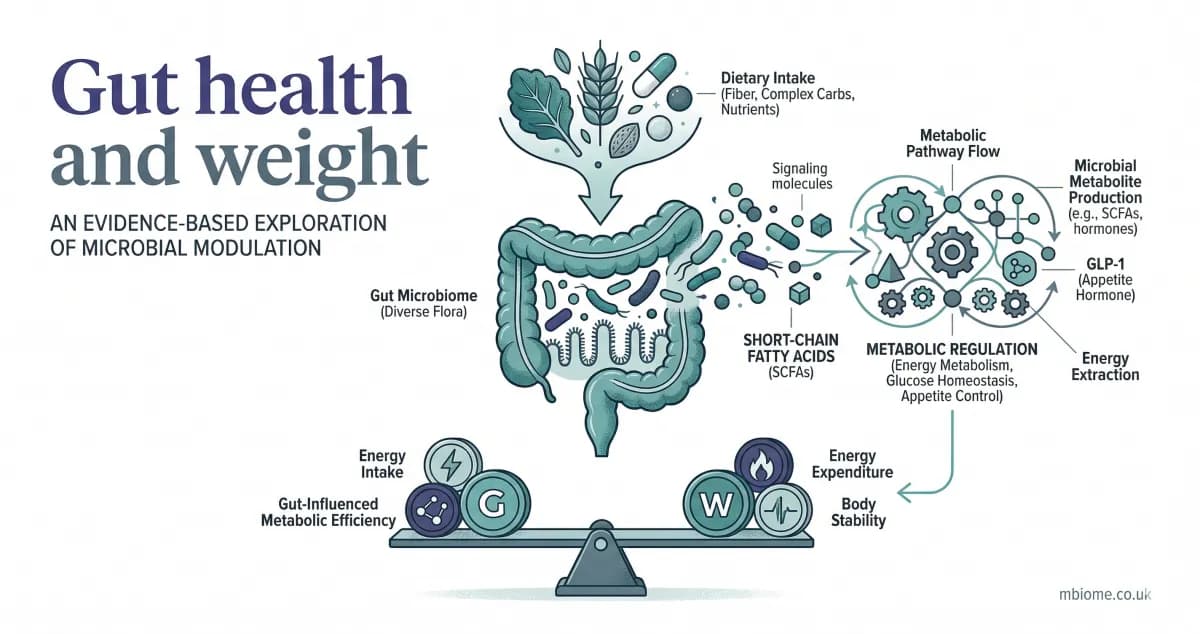
The Microbiome and Weight: What Science Really Says About Gut Bacteria and Body Weight
Research increasingly links the gut microbiome to weight regulation, but the relationship is complex. We examine the evidence — from landmark mouse studies to human trials — and separate proven mechanisms from premature claims.
Explore Other Topics
Related articles from across mbiome
Sleep and the Microbiome: A Two-Way Relationship
Poor sleep disrupts your gut bacteria, and an imbalanced microbiome disrupts your sleep. Here's what the research reveals about this bidirectional connection.
Diet & NutritionThe Mediterranean Diet and the Microbiome: Why It Keeps Topping the Evidence
The Mediterranean diet is the most studied dietary pattern in microbiome research, consistently linked to greater microbial diversity, reduced inflammation, and better metabolic health. Here's what the science shows and how to apply it.
Diet & NutritionUltra-Processed Food and Gut Health: What the Science Says
The UK gets 57% of its calories from ultra-processed food — more than almost any other country. A growing body of research links this dietary pattern to gut microbiome disruption, reduced diversity, and impaired gut barrier function.
Key Terms
Glossary terms mentioned in this article
Faecalibacterium prausnitzii
One of the most abundant and important bacteria in the healthy human gut. A major butyrate producer with strong anti-inflammatory properties. Reduced abundance is consistently associated with Crohn's disease and other inflammatory conditions.
Intestinal Permeability
The property of the intestinal lining that controls what passes from the gut into the bloodstream. Increased permeability (sometimes called "leaky gut") allows harmful substances to enter circulation, triggering immune responses.
Omega-3 Fatty Acids
Essential polyunsaturated fatty acids found in oily fish (salmon, mackerel, sardines), walnuts, and flaxseeds. Omega-3s have anti-inflammatory properties and research suggests they may support gut microbiome diversity by increasing Bifidobacterium and Lactobacillus populations and enhancing SCFA production.
Mediterranean Diet
A dietary pattern emphasising vegetables, fruits, wholegrains, legumes, nuts, olive oil, and fish, with moderate dairy and limited red meat. It is the most studied dietary pattern in microbiome research, consistently linked to greater microbial diversity, higher SCFA production, and reduced inflammation.
Bifidobacterium
A genus of beneficial bacteria that dominates the infant gut and remains important throughout life. Various species (B. longum, B. infantis, B. breve) are among the most studied probiotics, with evidence for IBS, immunity, and infant health.
Tight Junctions
Protein structures that seal the gaps between intestinal epithelial cells, controlling what passes from the gut lumen into the bloodstream. Disruption of tight junctions — by stress, certain bacteria, or dietary factors — increases intestinal permeability and is a key mechanism in gut barrier dysfunction.
Lactobacillus
A genus of lactic acid-producing bacteria found naturally in the gut, mouth, and vaginal tract. Certain strains (L. rhamnosus GG, L. plantarum 299v) have strong clinical evidence for specific health benefits. Now reclassified into multiple genera including Lacticaseibacillus and Limosilactobacillus.
Polyphenols
Plant-derived compounds found in berries, tea, coffee, dark chocolate, red wine, and olive oil. Most polyphenols are poorly absorbed in the small intestine and reach the colon, where gut bacteria metabolise them into bioactive compounds with anti-inflammatory properties.