
The gut microbiome is not static. It shifts throughout life in response to diet, environment, and ageing itself. After the age of 50, several measurable changes occur — reduced microbial diversity, altered immune signalling, and shifts in bacterial composition that can influence everything from nutrient absorption to cognitive health. The good news is that many of these changes are modifiable through diet and lifestyle.
How the Microbiome Changes with Age
Declining Diversity
Microbial diversity — the number and evenness of different bacterial species in the gut — is one of the most consistent markers of gut health. Higher diversity is associated with resilience, better immune function, and lower rates of chronic disease. After 50, diversity tends to decline.
A landmark study by Claesson et al. (2012), published in Nature, analysed the microbiomes of 178 elderly individuals in Ireland (aged 64-102) and compared them with younger adults. They found a clear association between reduced microbial diversity, increased frailty, and residential care placement. Individuals living independently in the community had significantly more diverse microbiomes than those in long-term care — and diet was identified as the primary driver.
Inflammageing
The concept of "inflammageing" — a state of chronic, low-grade inflammation that increases with age — is closely linked to the gut microbiome. Ageing is associated with an increase in pro-inflammatory bacteria (particularly Proteobacteria, including E. coli and other Enterobacteriaceae) and a decrease in anti-inflammatory species (particularly Faecalibacterium prausnitzii, a major butyrate producer).
Biagi et al. (2010, PLoS ONE) showed that centenarians had a distinctive microbiome signature: they retained some markers of younger adults (high Bacteroidetes) while also showing elevated levels of pro-inflammatory species. This suggests that even in extreme longevity, the microbiome undergoes significant reorganisation.
Reduced Short-Chain Fatty Acid Production
Short-chain fatty acids (SCFAs) — butyrate, propionate, and acetate — are produced when gut bacteria ferment dietary fibre. Butyrate in particular nourishes the cells lining the colon, strengthens the gut barrier, and has anti-inflammatory effects. With age, the bacteria responsible for SCFA production (such as Roseburia and Faecalibacterium) tend to decline, particularly if fibre intake drops.
This reduction in butyrate production can contribute to a weakened gut barrier, increased intestinal permeability (sometimes called "leaky gut"), and greater systemic inflammation.
Why These Changes Matter
Immune Function
Approximately 70% of the immune system resides in the gut-associated lymphoid tissue (GALT). As microbial diversity declines and pro-inflammatory species increase, immune function shifts. Older adults become more susceptible to infections, respond less robustly to vaccinations, and experience higher rates of autoimmune activation. The microbiome's role in training and maintaining immune function makes it a key target for healthy ageing research.
Nutrient Absorption
The gut microbiome assists in the production and absorption of several essential nutrients, including B vitamins, vitamin K, and minerals such as calcium and magnesium. Age-related changes in gut bacteria, combined with reduced stomach acid production (achlorhydria) and changes in gut motility, can impair nutrient absorption — contributing to common deficiencies in older adults.
Cognitive Health
The gut-brain axis does not become less important with age — if anything, its significance increases. A growing body of research links gut microbiome composition to cognitive decline and dementia risk. Vogt et al. (2017, Scientific Reports) found that patients with Alzheimer's disease had significantly different gut microbiome profiles compared to age-matched controls, with reduced Firmicutes and increased Bacteroidetes.
Medication Impact
Older adults are more likely to take medications that affect the microbiome. Proton pump inhibitors (PPIs), commonly prescribed for acid reflux, significantly alter gut bacterial composition (Imhann et al., 2016, Gut). Metformin, widely used for type 2 diabetes, also shifts the microbiome — in this case, some changes appear beneficial (Wu et al., 2017, Nature Medicine). Polypharmacy — taking multiple medications — compounds these effects unpredictably.
Evidence-Based Strategies
Dietary Fibre
The single most impactful dietary change for gut health after 50 is increasing fibre intake. The UK recommendation is 30g per day, but average consumption among over-65s is often below 15g. Excellent sources include oats, lentils, beans, chickpeas, wholegrain bread, vegetables (particularly leeks, onions, artichokes, and cruciferous vegetables), and fruits.
The NU-AGE dietary intervention trial (Ghosh et al., 2020, Gut) — a large EU-funded study conducted across five European countries including the UK — found that a Mediterranean-style diet enriched with fibre, consumed for one year by adults aged 65-79, increased beneficial bacterial species associated with reduced frailty and improved cognitive function, while reducing pro-inflammatory species.
Fermented Foods
The Stanford fermented foods trial (Wastyk et al., 2021, Cell) demonstrated that increasing fermented food consumption for 10 weeks boosted microbial diversity and reduced inflammatory markers. This is particularly relevant for older adults, who tend to consume fewer fermented foods. Options include live yoghurt, kefir, sauerkraut, kimchi, miso, and kombucha. The Mediterranean diet is particularly well-evidenced for older adults.
Physical Activity
Exercise has an independent effect on the gut microbiome. Barton et al. (2018, Gut) studied professional rugby players and found they had significantly greater microbial diversity than sedentary controls. While elite sport is not the goal, regular moderate exercise — walking, swimming, gardening, yoga — supports microbial diversity. The WHO recommends at least 150 minutes of moderate activity per week for adults over 65.
Hydration
Adequate water intake supports gut motility and the mucus layer that protects the intestinal lining. Dehydration — common in older adults due to reduced thirst sensation — can contribute to constipation and altered microbial balance.
Probiotics
For older adults, specific probiotic strains have shown benefit in clinical trials:
- Lactobacillus rhamnosus GG — reduced duration of respiratory infections in elderly care home residents (Guillemard et al., 2010)
- Bifidobacterium lactis HN019 — improved immune function markers in elderly subjects (Gill et al., 2001, American Journal of Clinical Nutrition)
- Saccharomyces boulardii — helps prevent antibiotic-associated diarrhoea, which is particularly relevant given higher antibiotic use in older populations
Probiotics should complement, not replace, dietary strategies. There is no evidence that probiotics can fully compensate for a poor diet.
Prebiotic Foods
Prebiotics are non-digestible fibres that selectively feed beneficial bacteria. Key prebiotic foods include garlic, onions, leeks, asparagus, chicory root, Jerusalem artichokes, bananas, and oats. These foods promote the growth of Bifidobacterium and Lactobacillus species that tend to decline with age.
When to Seek Medical Advice
Persistent changes in bowel habits, unexplained weight loss, rectal bleeding, or new-onset abdominal pain in anyone over 50 should always be discussed with a GP. These symptoms can indicate conditions that require medical investigation, including bowel cancer screening (offered routinely every two years from age 60 in England, or from age 50 in Scotland). The NHS Bowel Cancer Screening Programme saves approximately 2,400 lives per year.
Key Takeaways
- Microbial diversity naturally declines after 50, but this decline is modifiable through diet and lifestyle
- Reduced diversity and increased pro-inflammatory bacteria contribute to inflammageing, weakened immunity, and cognitive decline
- Dietary fibre is the single most impactful intervention — aim for 30g daily from diverse plant sources
- Fermented foods demonstrably increase microbial diversity even in older adults
- Regular physical activity independently supports gut health
- Specific probiotic strains have evidence for immune support and infection prevention in older populations
- Persistent gut symptoms after 50 should always be investigated by a GP — do not assume changes are simply age-related
Medical disclaimer: This article is for educational purposes only and does not constitute medical advice. Always consult a qualified healthcare professional before making changes to your diet, starting supplements, or making decisions about your health.
Related Articles
The Baby Microbiome: Why the First 1,000 Days Shape Lifelong Health
From birth to age three, a child's microbiome undergoes the most dramatic development it will ever experience. How a baby is born, fed, and raised has lasting consequences for immune function, allergy risk, and metabolic health.
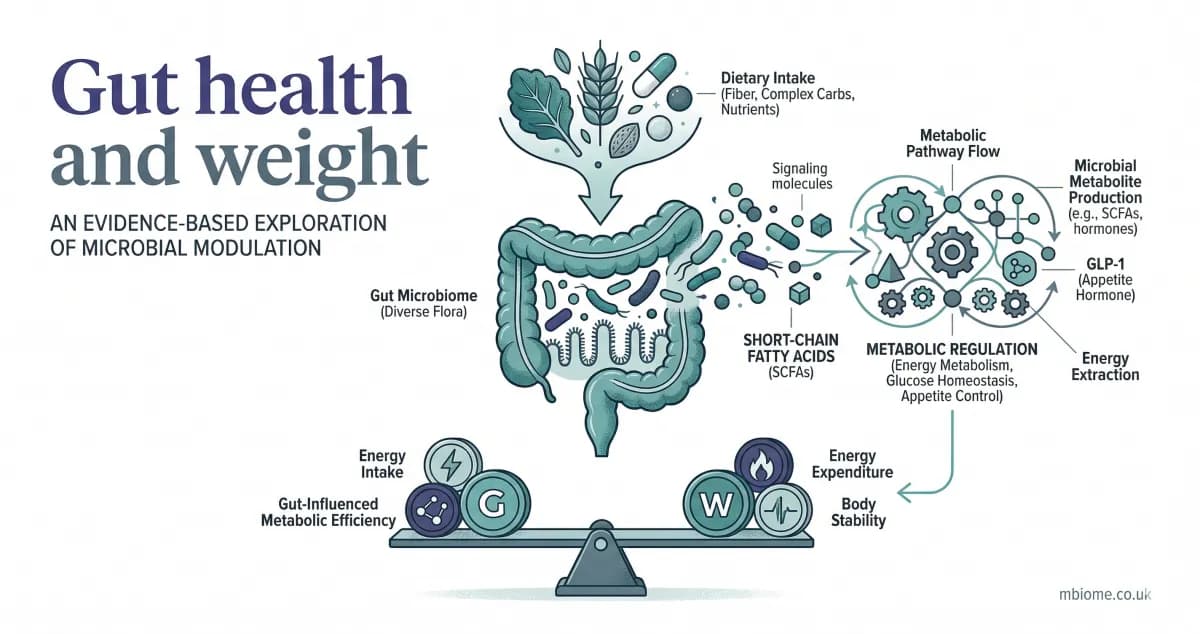
The Microbiome and Weight: What Science Really Says About Gut Bacteria and Body Weight
Research increasingly links the gut microbiome to weight regulation, but the relationship is complex. We examine the evidence — from landmark mouse studies to human trials — and separate proven mechanisms from premature claims.

Gut Health Myths Debunked: 10 Common Claims That Don't Stand Up to Science
From "leaky gut syndrome" to juice cleanses and the idea that all bacteria are either good or bad, gut health is surrounded by myths. Here's what the evidence actually says.
Explore Other Topics
Related articles from across mbiome
The Mediterranean Diet and the Microbiome: Why It Keeps Topping the Evidence
The Mediterranean diet is the most studied dietary pattern in microbiome research, consistently linked to greater microbial diversity, reduced inflammation, and better metabolic health. Here's what the science shows and how to apply it.
Gut-Brain AxisThe Gut-Brain Connection: How Your Microbiome Affects Your Mind
Scientists call it the "second brain." Your gut produces neurotransmitters, communicates directly with your brain via the vagus nerve, and may influence everything from anxiety to cognitive function.
Diet & NutritionUltra-Processed Food and Gut Health: What the Science Says
The UK gets 57% of its calories from ultra-processed food — more than almost any other country. A growing body of research links this dietary pattern to gut microbiome disruption, reduced diversity, and impaired gut barrier function.
Key Terms
Glossary terms mentioned in this article
Short-Chain Fatty Acids (SCFAs)
Metabolites produced when gut bacteria ferment dietary fibre. The three main SCFAs — butyrate, propionate, and acetate — are critical for colon health, immune regulation, and energy metabolism.
Faecalibacterium prausnitzii
One of the most abundant and important bacteria in the healthy human gut. A major butyrate producer with strong anti-inflammatory properties. Reduced abundance is consistently associated with Crohn's disease and other inflammatory conditions.
Intestinal Permeability
The property of the intestinal lining that controls what passes from the gut into the bloodstream. Increased permeability (sometimes called "leaky gut") allows harmful substances to enter circulation, triggering immune responses.
Lactobacillus rhamnosus
One of the most extensively studied probiotic species. The strain L. rhamnosus GG has strong evidence for preventing antibiotic-associated diarrhoea and acute gastroenteritis in children. The strain L. rhamnosus JB-1 has shown anxiolytic effects in animal models via the vagus nerve, though human trials have been less conclusive.
Mediterranean Diet
A dietary pattern emphasising vegetables, fruits, wholegrains, legumes, nuts, olive oil, and fish, with moderate dairy and limited red meat. It is the most studied dietary pattern in microbiome research, consistently linked to greater microbial diversity, higher SCFA production, and reduced inflammation.
Bifidobacterium
A genus of beneficial bacteria that dominates the infant gut and remains important throughout life. Various species (B. longum, B. infantis, B. breve) are among the most studied probiotics, with evidence for IBS, immunity, and infant health.
Gut-Brain Axis
The bidirectional communication system between the gastrointestinal tract and the central nervous system, involving neural, hormonal, and immune pathways. The microbiome plays a central role in this communication.
Proteobacteria
A bacterial phylum that includes many well-known pathogens (E. coli, Salmonella, Helicobacter). In a healthy gut, Proteobacteria are a minor component, but their expansion is considered a potential marker of dysbiosis and microbial instability. Elevated Proteobacteria levels are observed in inflammatory bowel disease and other conditions.