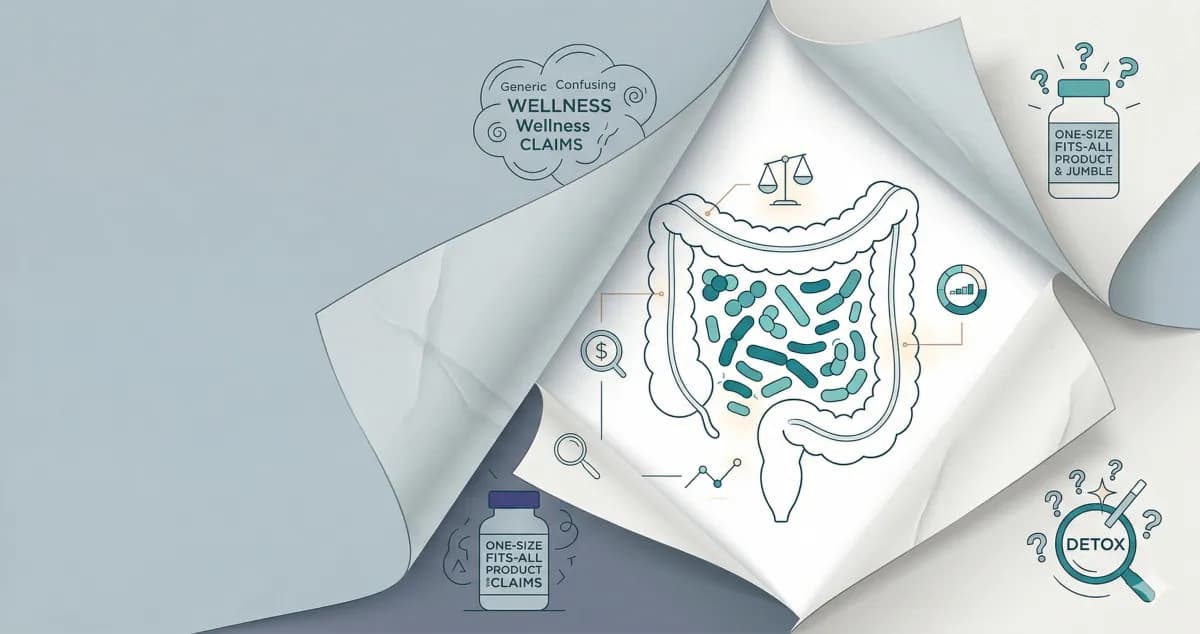
Gut health is one of the most hyped topics in wellness culture, and with that hype comes a significant amount of misinformation. Some claims contain a kernel of truth but are wildly overstated. Others are outright wrong. Here are ten of the most common gut health myths, examined against the published scientific evidence.
Myth 1: "Leaky Gut Syndrome" Is a Recognised Medical Diagnosis
The claim: A condition called "leaky gut syndrome" causes toxins to leak through the intestinal wall, causing a wide range of conditions from autoimmune diseases to brain fog.
The reality: Increased intestinal permeability is a real, measurable phenomenon. The intestinal barrier can become more permeable, allowing larger molecules — including bacterial fragments like lipopolysaccharides (LPS) — to cross into the bloodstream. This has been documented in conditions including coeliac disease, Crohn's disease, type 1 diabetes, and after heavy NSAID use (Bischoff et al., 2014, BMC Gastroenterology).
However, "leaky gut syndrome" as promoted by alternative health practitioners — a catch-all diagnosis blamed for everything from chronic fatigue to depression — is not a recognised medical condition. The British Society of Gastroenterology does not list it as a diagnosis. Increased intestinal permeability is a feature of certain diseases, not a standalone diagnosis. The direction of causation (does permeability cause disease, or does disease cause permeability?) remains unclear for most conditions.
Myth 2: You Need to Do a Gut "Detox" or "Cleanse"
The claim: Juice cleanses, colon cleanses, or detox supplements are necessary to "reset" your gut and remove accumulated toxins.
The reality: Your body already has highly effective detoxification systems: the liver, kidneys, and the gut itself. There is no published clinical evidence that juice cleanses, colonic irrigation, or detox supplements improve gut health or remove toxins more effectively than your body's own mechanisms.
Colonic irrigation (colon hydrotherapy) has been reviewed by the American Journal of Gastroenterology, which found no evidence of benefit and documented potential risks including electrolyte imbalance, bowel perforation, and disruption of the gut microbiome (Mishori et al., 2011). The NHS does not recommend colonic irrigation for any indication.
Myth 3: All Bacteria Are Either "Good" or "Bad"
The claim: Gut bacteria fall neatly into beneficial and harmful categories. The goal is to maximise "good" bacteria and eliminate "bad" ones.
The reality: The microbiome is an ecosystem, not a battlefield. Most bacteria are context-dependent — their effects depend on their abundance, location, and the overall community composition. E. coli, for instance, is essential for vitamin K production and gut barrier maintenance at normal levels but pathogenic in certain strains or when it translocates outside the gut.
Even bacteria commonly labelled "bad" — such as Proteobacteria — serve roles in normal gut ecology. The concept of "dysbiosis" (microbial imbalance) is itself debated in the literature, with no universally agreed definition (Hooks & O'Malley, 2017, Canadian Journal of Microbiology). A healthy microbiome is characterised by diversity and balance, not by maximising one type and eliminating another.
Myth 4: Probiotics Work the Same for Everyone
The claim: Taking a probiotic supplement will improve your gut health regardless of your individual circumstances.
The reality: Probiotic effects are highly individual. A groundbreaking study by Zmora et al. (2018, Cell) at the Weizmann Institute in Israel directly colonoscoped volunteers after probiotic supplementation and found that colonisation was highly variable — some people's guts readily accepted the probiotic strains, while others were essentially "resistant" to colonisation. The existing microbiome composition determined whether the probiotic could establish itself.
Furthermore, a follow-up study (Suez et al., 2018, Cell) showed that taking probiotics after antibiotics actually delayed the recovery of the native microbiome compared to spontaneous recovery. This challenges the widespread practice of routinely taking probiotics after any antibiotic course.
Myth 5: You Can Diagnose Gut Problems from Symptoms Alone
The claim: Bloating, gas, fatigue, or brain fog definitively indicate a gut problem that can be self-diagnosed and self-treated.
The reality: While gut issues can cause these symptoms, so can dozens of other conditions. Bloating can result from small intestinal bacterial overgrowth (SIBO), food intolerances, IBS, coeliac disease, ovarian cancer, or simply eating too quickly. Brain fog has neurological, endocrine, and psychological causes unrelated to the gut.
Self-diagnosis risks missing serious conditions. The NHS recommends seeing a GP if digestive symptoms persist for more than three weeks, particularly if accompanied by weight loss, blood in stool, or a change in bowel habits. NICE guidelines for suspected cancer (NG12) include persistent bloating as a possible indicator of ovarian cancer in women.
Myth 6: Eating Yoghurt Is Enough to Fix Your Gut
The claim: Daily yoghurt consumption provides sufficient probiotics to maintain optimal gut health.
The reality: Live yoghurt does contain beneficial bacteria, typically Lactobacillus bulgaricus and Streptococcus thermophilus. These strains are transient — they pass through the gut without permanently colonising it. While fermented foods including yoghurt contribute to microbiome health (as shown in the Stanford fermented foods trial, Wastyk et al., 2021), they are one component of a much larger picture.
Moreover, many commercial yoghurts in the UK are heat-treated after fermentation (killing the live cultures), loaded with sugar, or contain only minimal live bacteria. Check for "live cultures" on the label and be wary of sweetened "probiotic" yoghurt drinks that contain more sugar than benefit.
Myth 7: Gluten Is Bad for Everyone's Gut
The claim: Everyone should avoid gluten because it damages the gut lining and causes inflammation.
The reality: Gluten causes genuine harm to people with coeliac disease (affecting approximately 1 in 100 people in the UK, though many remain undiagnosed) and may cause symptoms in people with non-coeliac gluten sensitivity. For the remaining majority of the population, gluten-containing wholegrains are beneficial for gut health.
A study by Lebwohl et al. (2017, BMJ) following over 100,000 participants found that long-term gluten avoidance in people without coeliac disease was associated with a higher risk of heart disease — likely because avoiding gluten led to lower consumption of beneficial wholegrains. Wholegrains are among the best prebiotic foods available, feeding beneficial gut bacteria through their fibre content.
Myth 8: Microbiome Testing Tells You What to Eat
The claim: Commercial gut microbiome tests can analyse your bacterial composition and provide personalised dietary recommendations.
The reality: Commercial microbiome testing (companies like ZOE, Viome, and others) can provide a snapshot of your microbial composition, but the science of translating that snapshot into reliable dietary recommendations is immature. There is currently no consensus on what constitutes an "optimal" microbiome composition — it varies enormously between healthy individuals.
A review by Allaband et al. (2019, Nature Medicine) concluded that the field lacks the reference databases, standardised methods, and clinical validation needed for microbiome tests to provide actionable individual health recommendations. The British Society of Gastroenterology does not currently endorse commercial microbiome testing for clinical decision-making. See our article on microbiome testing for a fuller discussion.
Myth 9: Stomach Acid Is the Enemy
The claim: We produce too much stomach acid, and reducing it improves gut health.
The reality: Stomach acid serves critical functions: it kills ingested pathogens, activates digestive enzymes, and facilitates nutrient absorption (particularly iron, calcium, and vitamin B12). Proton pump inhibitors (PPIs) are among the most prescribed medications in the UK and are appropriate for genuine acid-related conditions like GORD and peptic ulcers.
However, long-term PPI use has been associated with significantly altered gut microbiome composition (Imhann et al., 2016, Gut), increased risk of Clostridioides difficile infection, and reduced absorption of key nutrients. A systematic review by Vaezi et al. (2017) estimated that up to 70% of PPI prescriptions may be inappropriate or unnecessary. If you are on long-term PPIs, it is worth discussing with your GP whether they are still needed.
Myth 10: Supplements Can Replace a Good Diet
The claim: Probiotic and prebiotic supplements can compensate for a poor diet by directly fixing the microbiome.
The reality: No supplement can replicate the complexity of nutrients, fibre types, polyphenols, and other bioactive compounds found in whole foods. A single prebiotic supplement provides one or two types of fibre; a varied diet provides dozens. The American Gut Project data (McDonald et al., 2018) consistently shows that dietary diversity — specifically eating 30+ different plant foods per week — is the strongest predictor of microbial diversity, far more than any supplement.
Supplements may have a role in specific situations (such as S. boulardii during antibiotic treatment), but they should be viewed as targeted interventions, not replacements for fundamental dietary quality.
Key Takeaways
- Increased intestinal permeability is real, but "leaky gut syndrome" is not a recognised medical diagnosis
- Gut cleanses and detoxes have no evidence of benefit and may cause harm
- Bacteria are not simply "good" or "bad" — context and balance matter
- Probiotic colonisation is highly individual — the same product works differently in different people
- Persistent digestive symptoms should be investigated by a GP, not self-diagnosed
- Gluten-free diets are essential for coeliac disease but unnecessary and potentially harmful for the general population
- Commercial microbiome tests cannot yet provide reliable personalised dietary advice — see our testing guide
- No supplement can substitute for a diverse, fibre-rich diet — see our guide to improving gut health naturally. For a more comprehensive look at microbiome misconceptions, see also microbiome myths vs reality
Medical disclaimer: This article is for educational purposes only and does not constitute medical advice. Always consult a qualified healthcare professional before making changes to your diet, starting supplements, or making decisions about your health.
Related Articles
The Baby Microbiome: Why the First 1,000 Days Shape Lifelong Health
From birth to age three, a child's microbiome undergoes the most dramatic development it will ever experience. How a baby is born, fed, and raised has lasting consequences for immune function, allergy risk, and metabolic health.

Gut Health After 50: How the Microbiome Changes with Age and What You Can Do
After 50, microbial diversity naturally declines while inflammation-associated bacteria increase. Understanding these shifts can help you protect your gut health, immunity, and cognitive function as you age.
The Microbiome and Weight: What Science Really Says About Gut Bacteria and Body Weight
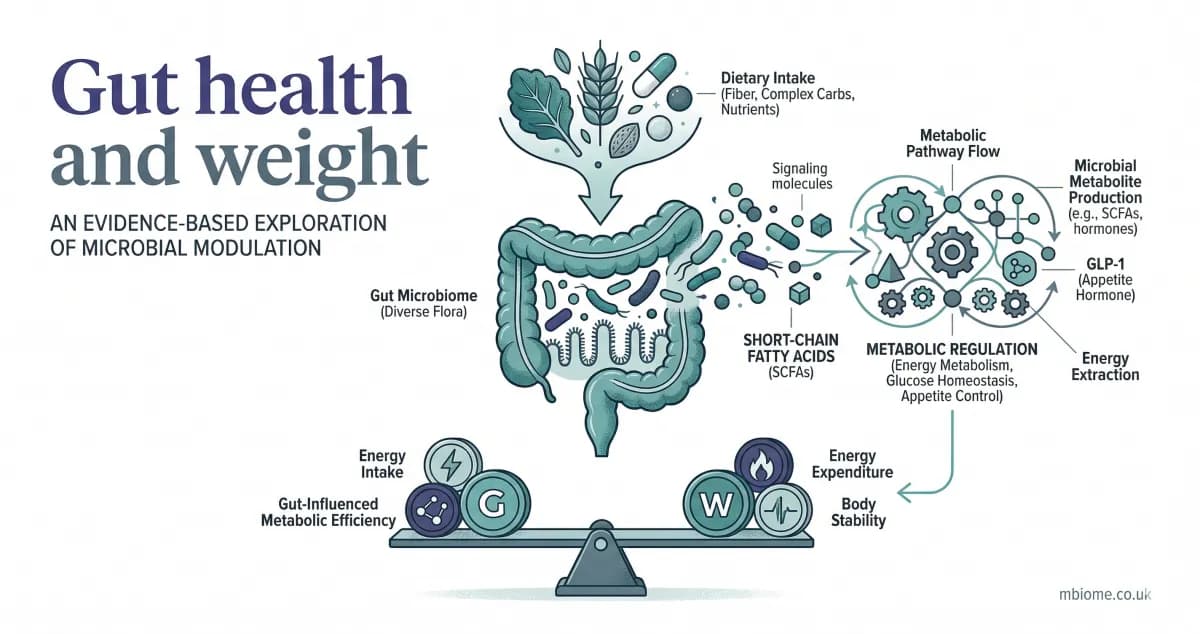
Research increasingly links the gut microbiome to weight regulation, but the relationship is complex. We examine the evidence — from landmark mouse studies to human trials — and separate proven mechanisms from premature claims.
Explore Other Topics
Related articles from across mbiome
Microbiome and Mental Health: Separating Science from Hype
Headlines claim gut bacteria can cure depression and anxiety. The reality is more nuanced — but the science connecting the microbiome to mental health is genuine, growing, and worth understanding properly.
Probiotics & PrebioticsProbiotics: What the Evidence Actually Says
Probiotics are a billion-pound industry, but which strains have genuine clinical evidence behind them? We break down the research by condition and strain.
Probiotics & PrebioticsBest Probiotics in the UK: An Evidence-Based Guide to What Actually Works
The UK probiotic market is crowded with options. We assess the most popular products — Symprove, Bio-Kult, Optibac, VSL#3, and others — against the clinical evidence for their specific strains.
Key Terms
Glossary terms mentioned in this article
IBS (Irritable Bowel Syndrome)
A chronic functional gastrointestinal disorder characterised by abdominal pain, bloating, and altered bowel habits without identifiable structural cause. The microbiome is increasingly recognised as a contributing factor, with IBS patients typically showing reduced microbial diversity and altered bacterial composition compared to healthy controls.
Lipopolysaccharide (LPS)
A component of the outer membrane of gram-negative bacteria. When LPS enters the bloodstream through a compromised intestinal barrier, it triggers inflammation — a key mechanism linking gut health to systemic disease.
Clostridioides difficile
A bacterium that can cause severe diarrhoea and colitis, typically after antibiotic use disrupts the normal gut flora. C. difficile infection is one of the clearest examples of how microbiome disruption leads to disease.
Intestinal Permeability
The property of the intestinal lining that controls what passes from the gut into the bloodstream. Increased permeability (sometimes called "leaky gut") allows harmful substances to enter circulation, triggering immune responses.
Proteobacteria
A bacterial phylum that includes many well-known pathogens (E. coli, Salmonella, Helicobacter). In a healthy gut, Proteobacteria are a minor component, but their expansion is considered a potential marker of dysbiosis and microbial instability. Elevated Proteobacteria levels are observed in inflammatory bowel disease and other conditions.
Lactobacillus
A genus of lactic acid-producing bacteria found naturally in the gut, mouth, and vaginal tract. Certain strains (L. rhamnosus GG, L. plantarum 299v) have strong clinical evidence for specific health benefits. Now reclassified into multiple genera including Lacticaseibacillus and Limosilactobacillus.
Fermentation
The metabolic process by which bacteria break down substrates (such as dietary fibre) in the absence of oxygen. In the gut, fermentation of fibre produces short-chain fatty acids, gases, and other metabolites essential for colon health.
Polyphenols
Plant-derived compounds found in berries, tea, coffee, dark chocolate, red wine, and olive oil. Most polyphenols are poorly absorbed in the small intestine and reach the colon, where gut bacteria metabolise them into bioactive compounds with anti-inflammatory properties.