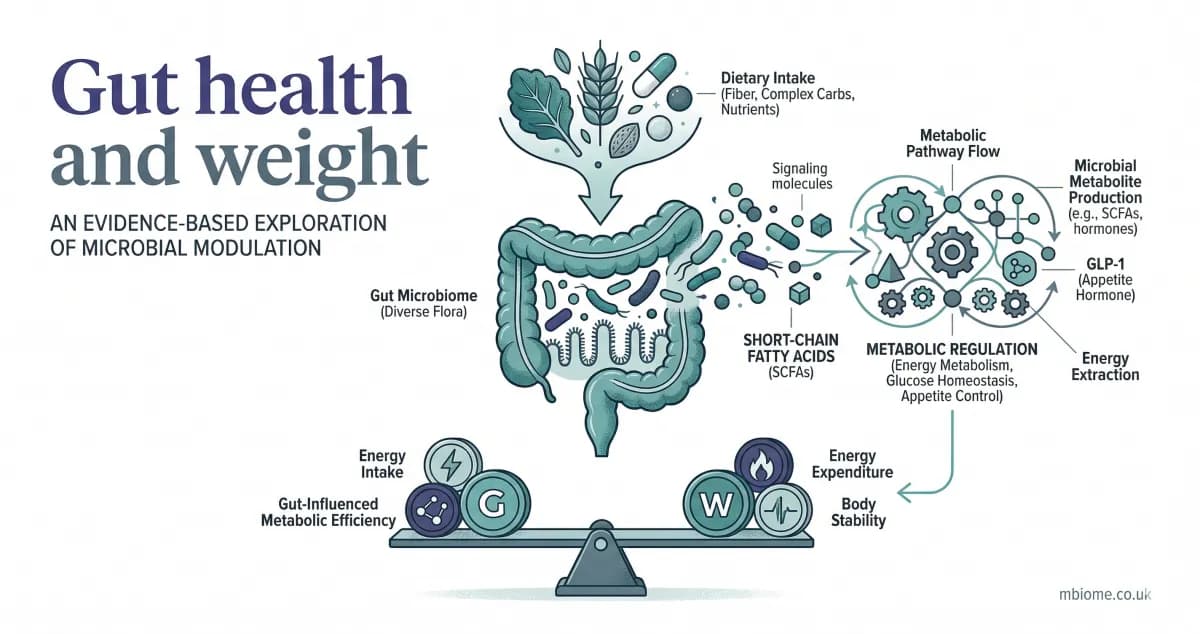
Headlines claiming you can "lose weight by fixing your gut" are everywhere. The reality is more nuanced. There is genuine, compelling evidence that the gut microbiome influences energy metabolism, fat storage, appetite signalling, and inflammation — all factors in weight regulation. But the leap from "the microbiome plays a role" to "take this probiotic and lose weight" is not supported by current evidence.
The Landmark Research
The Turnbaugh Twin Studies
The foundational research linking the microbiome to weight comes from Jeffrey Gordon's laboratory at Washington University in St. Louis. In a landmark 2006 study (Turnbaugh et al., Nature), Gordon's team showed that genetically obese mice had a different ratio of the two dominant bacterial phyla — more Firmicutes and fewer Bacteroidetes — compared to lean littermates.
More striking was what happened when they transferred microbiomes from obese mice into germ-free (microbiome-free) mice: the recipients gained significantly more fat than those receiving microbiomes from lean donors, despite eating the same amount of food. This demonstrated that the microbiome itself could influence energy harvest from food.
A subsequent study (Ridaura et al., 2013, Science) used microbiomes from human twins discordant for obesity — pairs where one twin was lean and the other obese. Germ-free mice colonised with the obese twin's microbiome gained more fat than those colonised with the lean twin's microbiome. Crucially, when the mice were housed together (allowing microbial transfer through coprophagy), the "lean" microbiome invaded and prevented obesity — but only when the mice were fed a high-fibre, low-fat diet.
The Firmicutes-to-Bacteroidetes Ratio
Early research suggested that a higher Firmicutes-to-Bacteroidetes (F:B) ratio was a biomarker for obesity. This idea entered popular culture and still appears in many commercial microbiome test reports. However, subsequent large-scale human studies have largely failed to replicate this simple association.
A meta-analysis by Walters et al. (2014, BMC Microbiology) found no consistent difference in the F:B ratio between obese and lean humans across ten studies. The relationship between specific phyla and weight is far more complex than a single ratio can capture. The F:B ratio should not be used as a diagnostic or predictive tool.
How the Microbiome Actually Influences Weight
Energy Extraction
Different microbial communities extract different amounts of energy from the same food. Some bacterial species are more efficient at breaking down complex carbohydrates and extracting calories that would otherwise pass through undigested. Jumpertz et al. (2011, American Journal of Clinical Nutrition) showed that when lean volunteers had their microbiomes temporarily shifted toward an "obese-type" composition through diet, they absorbed approximately 150 more calories per day from the same food.
Short-Chain Fatty Acids and Appetite
When gut bacteria ferment dietary fibre, they produce short-chain fatty acids (SCFAs) — butyrate, propionate, and acetate. These SCFAs are not simply waste products; they act as signalling molecules. Propionate, for example, stimulates the release of the appetite-suppressing hormones PYY and GLP-1 from intestinal L-cells (Chambers et al., 2015, Gut — a study conducted at Imperial College London).
In a human study by the same group, participants who consumed propionate-enriched bread over 24 weeks gained significantly less weight than controls. Butyrate also plays a role in maintaining insulin sensitivity, a key factor in metabolic health and weight regulation.
Bile Acid Metabolism
The gut microbiome modifies bile acids — molecules produced by the liver to aid fat digestion. Specific bacteria convert primary bile acids into secondary bile acids that activate the TGR5 receptor, which influences energy expenditure and glucose metabolism. Disrupted bile acid metabolism has been linked to obesity and type 2 diabetes (Wahlstrom et al., 2016, Cell Metabolism).
Inflammation and Metabolic Endotoxaemia
A disrupted microbiome can increase intestinal permeability, allowing bacterial components (particularly lipopolysaccharides, or LPS) to leak into the bloodstream. This triggers a state of chronic, low-grade inflammation termed "metabolic endotoxaemia" (Cani et al., 2007, Diabetes). This inflammation impairs insulin signalling, promotes fat storage, and is a recognised feature of obesity and metabolic syndrome.
Gut Hormones and Appetite Regulation
The gut produces numerous hormones that regulate appetite: ghrelin (hunger), leptin (satiety), GLP-1 (glucose-dependent insulin release), and PYY (satiety). The microbiome influences the production of these hormones. Germ-free mice have altered levels of several appetite-related hormones, and specific bacterial metabolites can directly modulate their release.
What About Probiotics for Weight Loss?
This is where the evidence becomes thinner. While animal studies have shown that specific bacterial strains can reduce weight gain in mice, human results are far less convincing.
A meta-analysis by Borgeraas et al. (2018, Clinical Nutrition) reviewed 15 RCTs of probiotics for weight loss in humans. The pooled results showed a modest reduction in body weight (mean -0.6 kg) and BMI, but the clinical significance of this effect is questionable. Most studies used different strains, doses, and durations, making generalisation difficult.
Specific findings: - Lactobacillus gasseri SBT2055 showed a reduction in visceral fat in a Japanese RCT (Kadooka et al., 2010), but the effect reversed when supplementation stopped - Lactobacillus rhamnosus CGMCC1.3724 showed weight loss in women but not men in a Canadian trial (Sanchez et al., 2014, British Journal of Nutrition) - Akkermansia muciniphila — a next-generation probiotic — showed improvements in metabolic markers in overweight individuals in a Belgian RCT (Depommier et al., 2019, Nature Medicine), but weight loss was not the primary outcome
No probiotic currently has sufficient evidence to be recommended specifically for weight loss by any major health authority, including NICE.
The Role of Diet
The consistent finding across research is that diet shapes the microbiome, and the microbiome shapes how the body processes that diet. This creates a feedback loop. A high-fibre diet promotes SCFA-producing bacteria that suppress appetite, improve insulin sensitivity, and maintain gut barrier integrity. An ultra-processed, low-fibre diet promotes bacteria that increase energy extraction, drive inflammation, and impair metabolic signalling.
The PREDICT study (Berry et al., 2020, Nature Medicine) — a large UK-based trial led by Tim Spector at King's College London — found that gut microbiome composition was a better predictor of post-meal metabolic responses (blood sugar, insulin, triglycerides) than the food's nutritional content alone. Identical twins eating the same food had different metabolic responses, partly explained by their different microbiomes.
This suggests that personalised nutrition — tailored to an individual's microbiome — may eventually be more effective than generic dietary guidelines. But that field is still in its early stages.
Bariatric Surgery: A Natural Experiment
Gastric bypass surgery causes dramatic, rapid shifts in the gut microbiome — even before significant weight loss occurs. Tremaroli et al. (2015, Cell Metabolism) showed that transferring post-surgery microbiomes into germ-free mice produced less fat gain than pre-surgery microbiomes. This suggests that the microbiome changes induced by surgery contribute independently to the metabolic improvements seen after bariatric procedures.
Practical Recommendations
Based on current evidence, the most effective microbiome-targeted strategies for healthy weight management are:
- Increase fibre intake — aim for 30g daily from diverse plant sources. This promotes SCFA production and beneficial bacterial growth.
- Eat 30+ different plant foods per week — the American Gut Project consistently links dietary diversity to microbial diversity.
- Reduce ultra-processed food consumption — emulsifiers, artificial sweeteners, and refined sugars disrupt microbial balance and gut barrier integrity.
- Include fermented foods — kefir, live yoghurt, sauerkraut, and kimchi support microbial diversity.
- Exercise regularly — physical activity independently increases microbial diversity.
- Prioritise sleep — disrupted sleep alters the microbiome in ways associated with metabolic dysfunction.
Key Takeaways
- The gut microbiome genuinely influences weight regulation through energy extraction, appetite hormones, bile acid metabolism, and inflammation
- The landmark mouse studies (Gordon lab) demonstrate that the microbiome can causally influence fat storage — this is well established
- The simple Firmicutes-to-Bacteroidetes ratio does not reliably predict weight status in humans
- No probiotic has sufficient evidence to be recommended for weight loss by any major health authority
- Diet is the strongest modifiable factor — high fibre, diverse plant foods, and fermented foods promote a microbiome composition associated with healthy weight
- Personalised nutrition based on individual microbiome composition is a promising but still-developing field
- Weight management is multifactorial — the microbiome is one important piece, not a magic bullet
Medical disclaimer: This article is for educational purposes only and does not constitute medical advice. Always consult a qualified healthcare professional before making changes to your diet, starting supplements, or making decisions about your health.
Related Articles
The Baby Microbiome: Why the First 1,000 Days Shape Lifelong Health
From birth to age three, a child's microbiome undergoes the most dramatic development it will ever experience. How a baby is born, fed, and raised has lasting consequences for immune function, allergy risk, and metabolic health.

Gut Health After 50: How the Microbiome Changes with Age and What You Can Do
After 50, microbial diversity naturally declines while inflammation-associated bacteria increase. Understanding these shifts can help you protect your gut health, immunity, and cognitive function as you age.
Gut Health Myths Debunked: 10 Common Claims That Don't Stand Up to Science
From "leaky gut syndrome" to juice cleanses and the idea that all bacteria are either good or bad, gut health is surrounded by myths. Here's what the evidence actually says.
Explore Other Topics
Related articles from across mbiome
Gut Bacteria and Anxiety: What Does the Evidence Say?
Headlines claim probiotics can treat anxiety. The reality is more nuanced — animal studies are compelling, but human evidence is still catching up. Here is a balanced look at the psychobiotics field.
Gut-Brain AxisMicrobiome and Mental Health: Separating Science from Hype
Headlines claim gut bacteria can cure depression and anxiety. The reality is more nuanced — but the science connecting the microbiome to mental health is genuine, growing, and worth understanding properly.
Diet & NutritionUltra-Processed Food and Gut Health: What the Science Says
The UK gets 57% of its calories from ultra-processed food — more than almost any other country. A growing body of research links this dietary pattern to gut microbiome disruption, reduced diversity, and impaired gut barrier function.
Key Terms
Glossary terms mentioned in this article
Short-Chain Fatty Acids (SCFAs)
Metabolites produced when gut bacteria ferment dietary fibre. The three main SCFAs — butyrate, propionate, and acetate — are critical for colon health, immune regulation, and energy metabolism.
Lipopolysaccharide (LPS)
A component of the outer membrane of gram-negative bacteria. When LPS enters the bloodstream through a compromised intestinal barrier, it triggers inflammation — a key mechanism linking gut health to systemic disease.
Intestinal Permeability
The property of the intestinal lining that controls what passes from the gut into the bloodstream. Increased permeability (sometimes called "leaky gut") allows harmful substances to enter circulation, triggering immune responses.
Lactobacillus rhamnosus
One of the most extensively studied probiotic species. The strain L. rhamnosus GG has strong evidence for preventing antibiotic-associated diarrhoea and acute gastroenteritis in children. The strain L. rhamnosus JB-1 has shown anxiolytic effects in animal models via the vagus nerve, though human trials have been less conclusive.
Metabolic Endotoxaemia
A state of chronically elevated blood levels of bacterial lipopolysaccharide (LPS), typically caused by increased intestinal permeability. First described by Cani et al. (2007), it is linked to low-grade systemic inflammation and is proposed as a mechanism connecting gut dysbiosis to obesity, type 2 diabetes, and cardiovascular disease.
Lactobacillus
A genus of lactic acid-producing bacteria found naturally in the gut, mouth, and vaginal tract. Certain strains (L. rhamnosus GG, L. plantarum 299v) have strong clinical evidence for specific health benefits. Now reclassified into multiple genera including Lacticaseibacillus and Limosilactobacillus.
Bacteroidetes
One of the two dominant bacterial phyla in the human gut (alongside Firmicutes). Bacteroidetes species are generally skilled at breaking down complex plant polysaccharides and are associated with leaner body composition in some studies. The Firmicutes-to-Bacteroidetes ratio was once considered a key health marker, though its significance is now debated.
Akkermansia
Akkermansia muciniphila is a mucin-degrading bacterium that lives in the intestinal mucus layer. Higher abundance is associated with improved metabolic health, lower inflammation, and better gut barrier function. It thrives on polyphenol-rich foods.