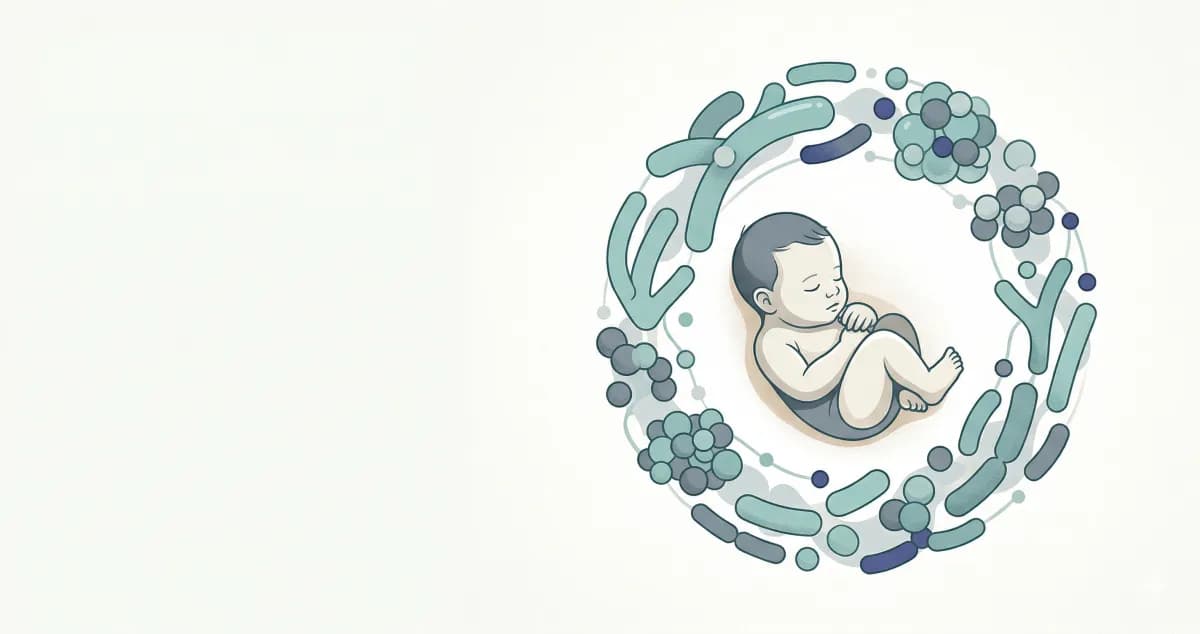
The first 1,000 days of life — from conception to roughly age three — represent a critical window for microbiome development. During this period, the microbial communities that colonise an infant's gut undergo rapid and dramatic shifts, ultimately establishing a foundation that influences health for decades to come.
Before Birth: Is the Womb Sterile?
The traditional view held that the womb is a sterile environment and that microbial colonisation begins only at birth. This has been challenged by studies detecting bacterial DNA in the placenta and amniotic fluid (Aagaard et al., 2014, Science Translational Medicine). However, more recent work using stringent contamination controls (de Goffau et al., 2019, Nature) concluded that the placenta does not harbour a consistent microbiome. The current consensus is that meaningful colonisation begins during and immediately after delivery — though the debate continues.
Birth Mode: Vaginal vs Caesarean
How a baby is born has a measurable impact on early microbial colonisation. Vaginally delivered infants acquire bacteria from the birth canal and maternal gut, including Lactobacillus, Prevotella, and Bacteroides species. Caesarean-born infants, by contrast, are initially colonised by skin and hospital environment microbes — predominantly Staphylococcus, Corynebacterium, and Propionibacterium.
A large-scale study by Shao et al. (2019) in Nature, using data from the Baby Biome Study at the Wellcome Sanger Institute in the UK, found that caesarean-born babies had substantially different gut microbiomes at birth, with reduced Bacteroides and increased colonisation by potentially pathogenic hospital-associated bacteria such as Enterococcus and Klebsiella. By age one, some of these differences had narrowed, but others persisted.
This does not mean caesarean delivery is inherently harmful — it is life-saving when medically indicated. But it does highlight the importance of understanding and, where possible, supporting healthy microbial colonisation in caesarean-born infants.
Breastfeeding: Nature's Prebiotic
Breast milk is far more than nutrition. It contains over 200 distinct human milk oligosaccharides (HMOs) — complex sugars that the infant cannot digest. Their purpose is to selectively feed beneficial Bifidobacterium species in the baby's gut, particularly B. longum subsp. infantis, which has evolved specific genetic machinery to metabolise HMOs (Sela & Mills, 2010, Trends in Microbiology).
Breastfed infants consistently show higher levels of Bifidobacterium and Lactobacillus compared to formula-fed infants. The WHO recommends exclusive breastfeeding for the first six months, with continued breastfeeding alongside complementary foods until age two or beyond — partly because of these microbiome benefits.
Formula manufacturers have begun adding HMO-like compounds (2'-fucosyllactose and lacto-N-neotetraose) to infant formula. Early evidence suggests these may partially replicate some prebiotic effects, but the full complexity of breast milk's microbial support system has not been matched.
Antibiotics in Early Life
Antibiotic use in the first year of life has been linked to increased risk of asthma, allergies, obesity, and inflammatory bowel disease in later childhood. For more on antibiotic impact at any age, see our guide to antibiotics and microbiome recovery. A Finnish birth cohort study (Korpela et al., 2016, Nature Communications) found that even a single course of macrolide antibiotics in the first two years significantly reduced Bifidobacterium abundance and microbial diversity, with effects lasting up to two years.
The NHS prescribes antibiotics when necessary, and they remain essential for treating serious infections. However, these findings underscore the importance of avoiding unnecessary antibiotic use in infants and considering microbiome recovery strategies — such as continued breastfeeding and dietary diversity — when antibiotics are required.
Weaning and Dietary Diversity
The introduction of solid foods (typically around six months in the UK, following NHS guidance) triggers the most significant shift in the infant microbiome. As the diet diversifies from milk to include fruits, vegetables, grains, and proteins, microbial diversity increases rapidly. Bacteria capable of fermenting complex carbohydrates — particularly Firmicutes — begin to dominate.
Research from the TEDDY study (The Environmental Determinants of Diabetes in the Young), published in Nature (2018), tracked the microbiomes of over 900 children from birth to age five. They identified three distinct phases: a developmental phase (months 3-14), a transitional phase (months 15-30), and a stable phase (from 31 months). Diet was the strongest driver of microbial composition throughout.
Offering a wide variety of plant foods during weaning — including vegetables, fruits, legumes, and wholegrains — supports the development of a diverse and resilient microbiome.
The Hygiene Hypothesis and Microbial Exposure
Children raised in environments with greater microbial exposure — farms, homes with pets, larger families — tend to have more diverse microbiomes and lower rates of allergic disease. This concept, originally proposed by David Strachan in 1989 and refined as the "Old Friends" hypothesis by Graham Rook, suggests that reduced microbial exposure in modern life contributes to the rise in autoimmune and allergic conditions.
A landmark study (Stein et al., 2016, New England Journal of Medicine) compared Amish children (who live on traditional farms) with Hutterite children (who use industrialised farming). Amish children had dramatically lower rates of asthma and stronger innate immune responses, with significant differences in the microbial content of household dust.
This does not mean hygiene is bad — it means that appropriate microbial exposure during early life supports immune development. Letting children play outdoors, interact with animals, and eat a diverse diet all contribute.
Probiotics for Infants: What Does the Evidence Say?
Probiotic supplementation for infants has been studied extensively for specific conditions:
- Necrotising enterocolitis (NEC) in preterm infants — Multiple meta-analyses support the use of multi-strain probiotics in NICU settings to reduce NEC incidence (Cochrane Review, Sharif et al., 2020)
- Colic — Lactobacillus reuteri DSM 17938 has shown benefit in reducing crying time in breastfed infants with colic, though evidence in formula-fed infants is weaker (Savino et al., 2010)
- Eczema prevention — Some evidence supports Lactobacillus rhamnosus GG given to mothers during pregnancy and to infants for reducing eczema risk, though results are inconsistent (Cochrane Review, 2018)
For healthy, term infants with no specific health concerns, routine probiotic supplementation is not currently recommended by NICE or the NHS.
What Parents Can Do
Supporting an infant's microbiome development does not require expensive interventions. Evidence-based strategies include:
- Breastfeed if possible — even partial breastfeeding confers microbiome benefits
- Avoid unnecessary antibiotics — discuss with your GP whether antibiotics are truly needed
- Introduce diverse foods during weaning — aim for variety across vegetables, fruits, grains, and legumes
- Allow outdoor play and pet exposure — supports immune development through microbial contact
- Avoid over-sanitising the home environment — normal household cleaning is sufficient; antibacterial products are unnecessary for routine use
Key Takeaways
- The first 1,000 days are a critical window for microbiome development, with lasting health consequences
- Birth mode and breastfeeding are the two strongest early-life influences on the infant microbiome
- Breast milk contains over 200 HMOs that selectively feed beneficial Bifidobacterium species
- Early antibiotic exposure is associated with increased risk of allergies, asthma, and obesity
- Dietary diversity during weaning is the strongest driver of microbial maturation
- Microbial exposure through outdoor play, pets, and less-sterile environments supports immune development
- Routine probiotic supplementation is not recommended for healthy term infants — focus on diet and environment instead. For adult probiotic guidance, see our evidence guide
Medical disclaimer: This article is for educational purposes only and does not constitute medical advice. Always consult a qualified healthcare professional before making changes to your diet, starting supplements, or making decisions about your health.
Related Articles

Gut Health After 50: How the Microbiome Changes with Age and What You Can Do
After 50, microbial diversity naturally declines while inflammation-associated bacteria increase. Understanding these shifts can help you protect your gut health, immunity, and cognitive function as you age.
The Microbiome and Weight: What Science Really Says About Gut Bacteria and Body Weight
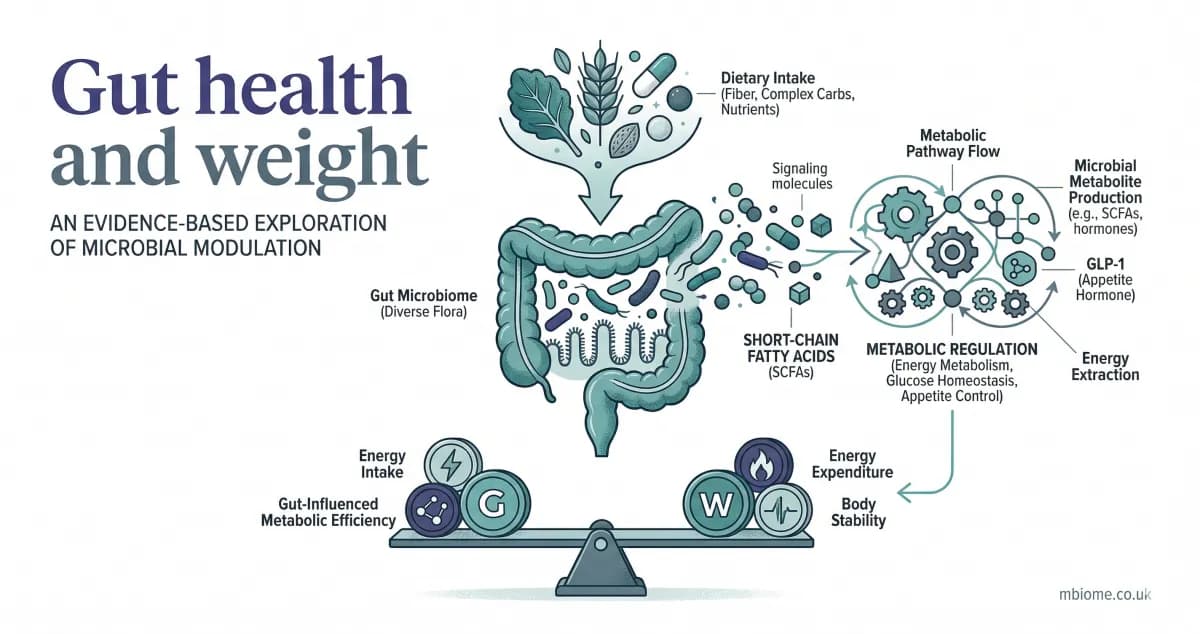
Research increasingly links the gut microbiome to weight regulation, but the relationship is complex. We examine the evidence — from landmark mouse studies to human trials — and separate proven mechanisms from premature claims.
Gut Health Myths Debunked: 10 Common Claims That Don't Stand Up to Science
From "leaky gut syndrome" to juice cleanses and the idea that all bacteria are either good or bad, gut health is surrounded by myths. Here's what the evidence actually says.
Explore Other Topics
Related articles from across mbiome
The Mediterranean Diet and the Microbiome: Why It Keeps Topping the Evidence
The Mediterranean diet is the most studied dietary pattern in microbiome research, consistently linked to greater microbial diversity, reduced inflammation, and better metabolic health. Here's what the science shows and how to apply it.
Diet & NutritionUltra-Processed Food and Gut Health: What the Science Says
The UK gets 57% of its calories from ultra-processed food — more than almost any other country. A growing body of research links this dietary pattern to gut microbiome disruption, reduced diversity, and impaired gut barrier function.
Skin MicrobiomeYour Skin Microbiome: What Lives on Your Skin and Why It Matters
Your skin hosts roughly one trillion microorganisms — bacteria, fungi, viruses, and mites — that form a living shield. Understanding this invisible ecosystem is changing how dermatologists think about skin health.
Key Terms
Glossary terms mentioned in this article
Human Milk Oligosaccharides (HMOs)
Complex sugars found in human breast milk that selectively feed beneficial Bifidobacterium species in the infant gut. HMOs are the third most abundant component of breast milk and are critical for establishing the infant microbiome.
GOS (Galactooligosaccharides)
Prebiotic carbohydrates structurally similar to human milk oligosaccharides. Found naturally in legumes and available as supplements. GOS has evidence for promoting Bifidobacterium growth and reducing symptoms of IBS.
Lactobacillus rhamnosus
One of the most extensively studied probiotic species. The strain L. rhamnosus GG has strong evidence for preventing antibiotic-associated diarrhoea and acute gastroenteritis in children. The strain L. rhamnosus JB-1 has shown anxiolytic effects in animal models via the vagus nerve, though human trials have been less conclusive.
Bifidobacterium
A genus of beneficial bacteria that dominates the infant gut and remains important throughout life. Various species (B. longum, B. infantis, B. breve) are among the most studied probiotics, with evidence for IBS, immunity, and infant health.
Lactobacillus
A genus of lactic acid-producing bacteria found naturally in the gut, mouth, and vaginal tract. Certain strains (L. rhamnosus GG, L. plantarum 299v) have strong clinical evidence for specific health benefits. Now reclassified into multiple genera including Lacticaseibacillus and Limosilactobacillus.
Microbiome
The complete collection of microorganisms (bacteria, viruses, fungi, archaea) and their genetic material within a specific environment, such as the human gut.
Firmicutes
The largest bacterial phylum in the human gut, encompassing diverse genera including Lactobacillus, Clostridium, Faecalibacterium, and Ruminococcus. Many important SCFA producers belong to this phylum. An elevated Firmicutes-to-Bacteroidetes ratio has been associated with obesity in some studies, though the relationship is complex and inconsistent.
Prevotella
A bacterial genus associated with high-fibre, plant-rich diets. Prevotella copri is dominant in populations consuming traditional, grain-based diets and is relatively rare in Western populations eating processed food. It defines one of the three proposed human gut enterotypes.