
Fermented foods have been consumed across cultures for thousands of years, but their role in gut health has only recently been studied rigorously. A landmark 2021 trial at Stanford provides the strongest evidence yet that fermented foods can reshape the gut microbiome — and the results were more impressive than those of a high-fibre diet alone.
The Stanford Study: What It Found
Wastyk et al. (2021, Cell) conducted a 10-week randomised controlled trial comparing two dietary interventions: a high-fibre diet and a high-fermented-food diet. The results were striking.
The fermented foods group (consuming 6+ servings per day of foods like yoghurt, kefir, kimchi, and kombucha) showed:
- Increased microbial diversity — a consistent marker of gut health
- Reduced inflammatory markers — including interleukin-6 (IL-6), interleukin-10, and 15 other inflammatory proteins
- Greater microbiome shifts — the more fermented food consumed, the greater the diversity gains
The high-fibre group, surprisingly, did not show increased microbial diversity over the same period, though the researchers noted that longer interventions might produce different results. The fibre group did show enhanced microbial capacity to digest plant-derived carbohydrates.
The key takeaway: fermented foods appear to introduce new microbial species into the gut, while fibre feeds the bacteria already there. Both matter, but fermented foods may produce faster diversity gains.
Fermented Foods Available in the UK
Live Yoghurt
The most accessible fermented food in Britain. Look for "live cultures" or "contains active cultures" on the label — this indicates the bacteria are still viable. Standard yoghurt that has been pasteurised after fermentation contains no live bacteria.
Where to buy: Every major supermarket. Good options include Yeo Valley, Onken, and own-brand live yoghurt. Greek-style yoghurt is often live but check the label. Avoid yoghurts with high added sugar — the sugar feeds less desirable bacteria.
Typical cultures: Lactobacillus bulgaricus, Streptococcus thermophilus, often with added Lactobacillus acidophilus or Bifidobacterium species.
Kefir
A fermented milk drink with a broader microbial profile than yoghurt, typically containing 30+ bacterial and yeast species. A systematic review by Bourrie et al. (2016, Frontiers in Microbiology) found that kefir consumption was associated with improved lactose digestion, antibacterial activity, and cholesterol reduction, though many studies were small.
Where to buy: Widely available in UK supermarkets. Biotiful Dairy is the most common brand. The Co-op, Tesco, Sainsbury's, and Waitrose all stock kefir. Water kefir is available for those avoiding dairy.
How to drink it: Start with a small glass (100-150ml) and increase gradually. Some people experience bloating initially as their gut adjusts to the influx of new organisms.
Sauerkraut
Fermented cabbage, traditionally made with just cabbage and salt. A single serving contains billions of Lactobacillus bacteria. However, only unpasteurised sauerkraut contains live cultures — the jarred, shelf-stable varieties sold at room temperature have been heat-treated.
Where to buy: Health food shops (e.g., Holland & Barrett), the chilled section of Waitrose, Whole Foods Market, independent delis, and online (Eaten Alive, Loving Foods, and Hurly Burly are UK brands). Always check it is in the fridge section and labelled "raw" or "unpasteurised."
How much: A tablespoon or two with meals is sufficient. It works well alongside eggs, in sandwiches, or as a side with meat dishes.
Kimchi
Korean fermented vegetables — usually napa cabbage with gochugaru (red pepper flakes), garlic, ginger, and fish sauce (or vegan alternatives). Contains Lactobacillus, Leuconostoc, and Weissella species. Park et al. (2014, Journal of Medicinal Food) found kimchi consumption was associated with reduced markers of metabolic syndrome.
Where to buy: Most major supermarkets now stock kimchi. Sainsbury's, Tesco, and Waitrose carry it, as do Asian supermarkets (often better value). UK-made options include Eaten Alive and The Cultured Collective. As with sauerkraut, ensure it is from the fridge section.
How to use: As a side dish, in rice bowls, scrambled eggs, on toast, or in stir-fries (add at the end to preserve live cultures).
Kombucha
A fermented tea drink containing bacteria and yeasts (a SCOBY — symbiotic culture of bacteria and yeast). The microbial content varies significantly between brands and is often lower than marketing implies. Kapp and Sumner (2019, Annals of Epidemiology) noted that while kombucha has theoretical benefits, clinical evidence in humans is sparse.
Where to buy: Widely available — Remedy, Equinox, and Fix8 are common UK brands. Available in most supermarkets.
Caveat: Kombucha can contain residual sugar and small amounts of alcohol (typically under 0.5%). The live culture content varies enormously between products and is rarely quantified on labels.
Miso
A Japanese fermented soybean paste, made with koji (Aspergillus oryzae). Rich in enzymes and bacterial species, though cooking destroys live cultures. Add miso paste to warm (not boiling) water or stir into dishes at the end of cooking.
Where to buy: Most supermarkets stock miso paste. Clearspring and Yutaka are common UK brands. Asian supermarkets offer a wider range (white miso is milder; red miso is more intense).
Tempeh
Fermented soybeans bound by Rhizopus oligosporus mycelium into a firm block. A good source of protein, fibre, and beneficial microorganisms. Less widely known in the UK but increasingly available.
Where to buy: Health food shops, Whole Foods Market, and some supermarkets (Tesco and Sainsbury's stock it intermittently). Tofoo Company makes a UK-produced tempeh.
How Much Should You Eat?
The Stanford study used a target of 6 or more servings per day, which is considerably more than most people currently consume. You do not need to hit that target immediately.
A realistic starting approach:
- Week 1-2: One serving per day (e.g., a pot of live yoghurt or a glass of kefir)
- Week 3-4: Two servings per day (e.g., kefir at breakfast, sauerkraut with lunch)
- Week 5+: Three or more servings per day, rotating different types
What counts as a serving:
- 125ml kefir or live yoghurt
- 1-2 tablespoons of sauerkraut or kimchi
- 200ml kombucha
- 1 tablespoon of miso paste (dissolved in warm water)
- 80g tempeh
The diversity of fermented foods matters as much as the quantity. Rotating between different types exposes your gut to a broader range of microbial species.
Who Should Be Cautious
- People with histamine intolerance — fermented foods are high in histamine and can trigger headaches, flushing, or digestive symptoms
- Anyone on MAO inhibitors — fermented foods contain tyramine, which can interact with these medications
- Immune-compromised individuals — consult your doctor before introducing live cultures
- Those new to fermented foods — start small; introducing too much too quickly can cause significant bloating and gas as your microbiome adjusts
Fermented Foods vs Probiotic Supplements
Fermented foods offer several advantages over supplements:
- Microbial diversity — a single serving of kefir may contain 30+ species; most supplements contain 1-10
- Food matrix effects — the nutrients, organic acids, and enzymes in fermented foods may enhance the survival and activity of the bacteria
- Cost — a pot of live yoghurt is considerably cheaper than most probiotic supplements
- Sustainability — daily fermented food consumption is a sustainable long-term habit; supplement regimens are often abandoned
However, supplements have the advantage of delivering specific, well-studied strains at defined doses — which matters for specific clinical conditions. See our article on prebiotics vs probiotics for more on when supplements make sense.
Key Takeaways
- The 2021 Stanford study provides strong evidence that fermented foods increase microbial diversity and reduce inflammation
- Live yoghurt, kefir, sauerkraut, kimchi, kombucha, miso, and tempeh are all readily available in the UK
- Always check for "live cultures," "unpasteurised," or "raw" on labels — pasteurised products contain no viable bacteria
- Start with one serving per day and increase gradually over several weeks
- Diversity of fermented food types matters as much as quantity
- Fermented foods complement a high-fibre diet — as discussed in our guide to improving gut health, both are important for a thriving microbiome. For a complete list of gut-friendly foods, see our UK shopping guide
Medical disclaimer: This article is for educational purposes only and does not constitute medical advice. Always consult a qualified healthcare professional before making changes to your diet, starting supplements, or making decisions about your health.
Related Articles
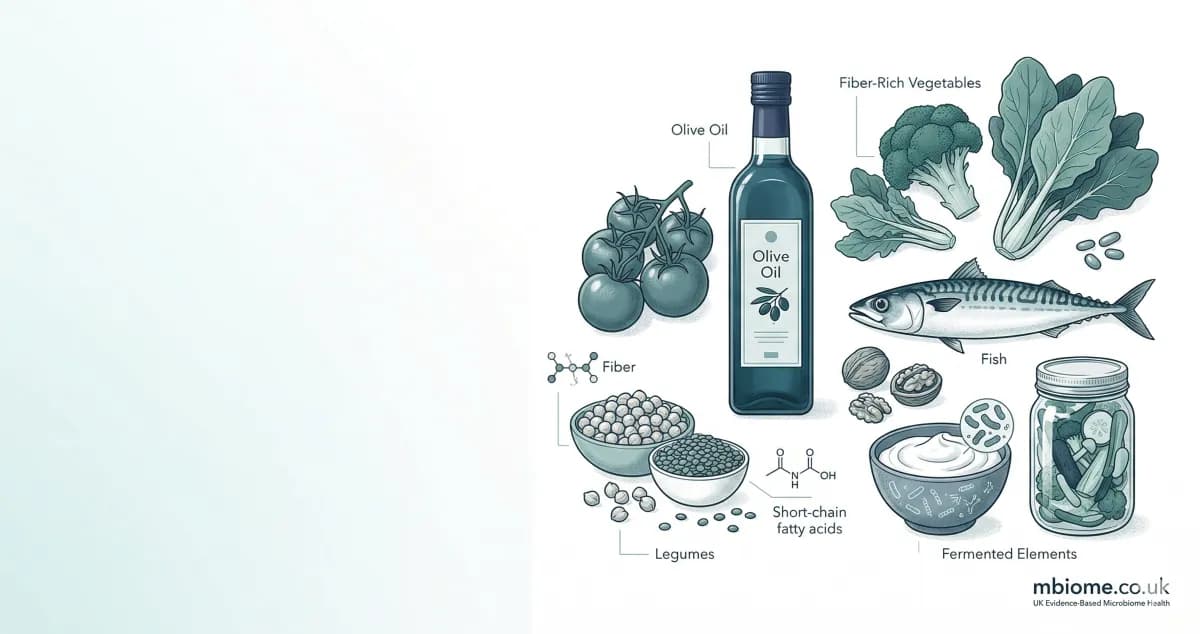
The Mediterranean Diet and the Microbiome: Why It Keeps Topping the Evidence
The Mediterranean diet is the most studied dietary pattern in microbiome research, consistently linked to greater microbial diversity, reduced inflammation, and better metabolic health. Here's what the science shows and how to apply it.
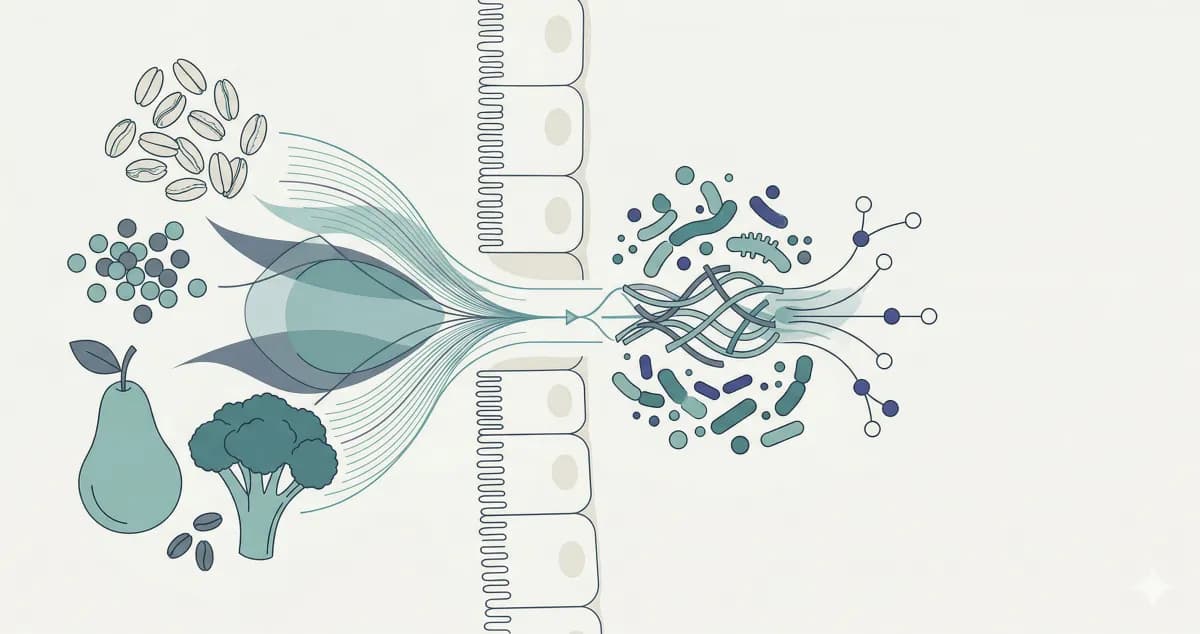
Fibre and the Microbiome: Why It Matters More Than Probiotics
The UK averages just 18g of fibre per day — far below the recommended 30g. This dietary shortfall may be starving the very bacteria your gut needs to keep you healthy.

Ultra-Processed Food and Gut Health: What the Science Says
The UK gets 57% of its calories from ultra-processed food — more than almost any other country. A growing body of research links this dietary pattern to gut microbiome disruption, reduced diversity, and impaired gut barrier function.
Explore Other Topics
Related articles from across mbiome
How to Improve Gut Health Naturally: Evidence-Based Guide
Your gut microbiome responds remarkably quickly to lifestyle changes. Here is what the research says about diet, sleep, exercise, and stress — and which interventions have the strongest evidence behind them.
Gut HealthGut Health in Britain — NHS Access, UK Diet, and What the Data Says
Most microbiome content comes from the US. Here's a UK-specific guide covering NHS pathways, British dietary patterns, UK-available products, and the state of gut health across the country.
Gut HealthGut Health After 50: How the Microbiome Changes with Age and What You Can Do
After 50, microbial diversity naturally declines while inflammation-associated bacteria increase. Understanding these shifts can help you protect your gut health, immunity, and cognitive function as you age.
Key Terms
Glossary terms mentioned in this article
GOS (Galactooligosaccharides)
Prebiotic carbohydrates structurally similar to human milk oligosaccharides. Found naturally in legumes and available as supplements. GOS has evidence for promoting Bifidobacterium growth and reducing symptoms of IBS.
Bifidobacterium
A genus of beneficial bacteria that dominates the infant gut and remains important throughout life. Various species (B. longum, B. infantis, B. breve) are among the most studied probiotics, with evidence for IBS, immunity, and infant health.
Lactobacillus
A genus of lactic acid-producing bacteria found naturally in the gut, mouth, and vaginal tract. Certain strains (L. rhamnosus GG, L. plantarum 299v) have strong clinical evidence for specific health benefits. Now reclassified into multiple genera including Lacticaseibacillus and Limosilactobacillus.
Fermentation
The metabolic process by which bacteria break down substrates (such as dietary fibre) in the absence of oxygen. In the gut, fermentation of fibre produces short-chain fatty acids, gases, and other metabolites essential for colon health.
Microbiome
The complete collection of microorganisms (bacteria, viruses, fungi, archaea) and their genetic material within a specific environment, such as the human gut.
Probiotic
Live microorganisms which, when administered in adequate amounts, confer a health benefit on the host. Benefits are strain-specific, not species-wide.
Prebiotic
Non-digestible food components (typically dietary fibres) that selectively stimulate the growth or activity of beneficial gut bacteria. Common examples include inulin, FOS, and GOS.