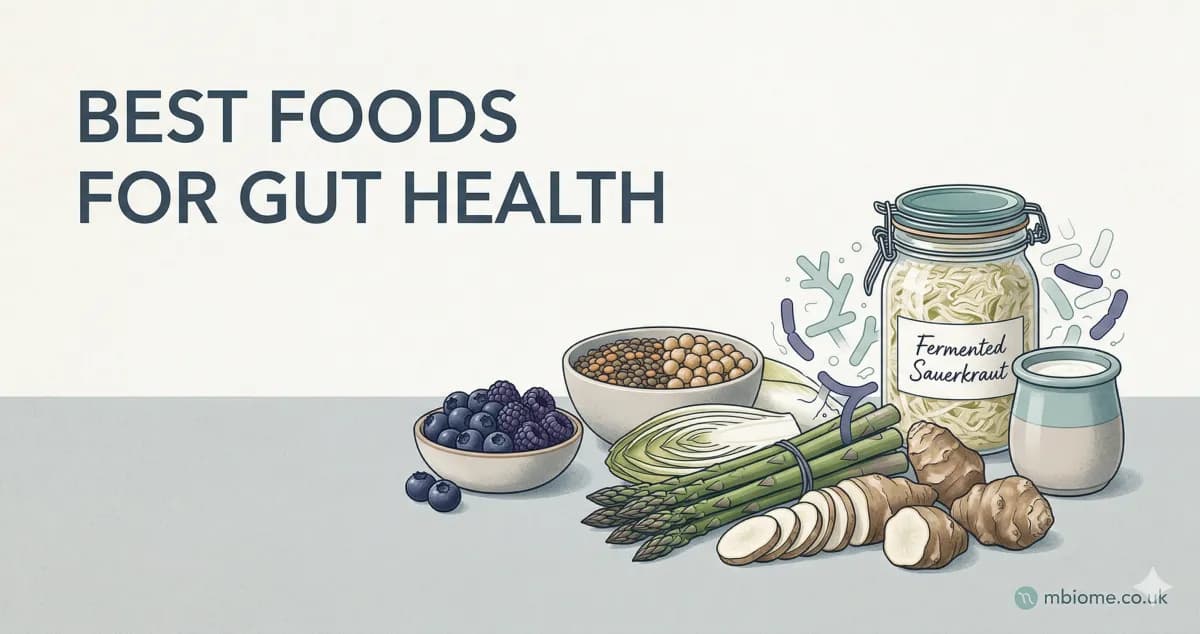
Improving your gut health does not require expensive supplements or radical overhauls. The most effective interventions are rooted in everyday habits — what you eat, how you sleep, how you move, and how you manage stress. This guide covers the evidence for each.
Why Gut Health Matters
The gut microbiome influences digestion, immune function, mental health, and metabolic regulation. Reduced microbial diversity — fewer species in your gut — is consistently associated with chronic diseases including obesity, type 2 diabetes, inflammatory bowel disease, and depression. As discussed in our article on what the microbiome is, the gut is home to over 1,000 bacterial species performing critical functions your body cannot handle alone.
Diet: The Single Biggest Lever
Eat More Fibre
Dietary fibre is the primary fuel source for beneficial gut bacteria. When bacteria ferment fibre, they produce short-chain fatty acids (SCFAs) — particularly butyrate, propionate, and acetate — which nourish the gut lining, regulate inflammation, and support immune function. See our detailed guide to fibre and the microbiome for UK food sources and practical tips.
A landmark study by Sonnenburg et al. (2016) in Cell Host & Microbe demonstrated that low-fibre diets cause irreversible loss of microbial diversity over generations in mice. The UK recommendation is 30g of fibre per day, yet the average British adult consumes just 18g.
Good sources: oats, lentils, chickpeas, beans, broccoli, leeks, onions, garlic, bananas, wholegrain bread, and root vegetables.
Aim for 30 Plants Per Week
Research from the American Gut Project (McDonald et al., 2018, mSystems) found that people who ate 30 or more different plant foods per week had significantly greater microbial diversity than those eating 10 or fewer. This includes fruits, vegetables, wholegrains, legumes, nuts, seeds, herbs, and spices — each one counts.
Include Fermented Foods
A 2021 Stanford study (Wastyk et al., Cell) compared high-fibre and high-fermented-food diets over 10 weeks. The fermented foods group showed increased microbial diversity and reduced inflammatory markers, while the high-fibre group did not see the same diversity gains in that timeframe. See our guide to fermented foods and gut health for UK-specific options and practical advice.
Good choices include live yoghurt, kefir, sauerkraut, kimchi, miso, and kombucha.
What to Reduce
- Ultra-processed foods — High in emulsifiers, artificial sweeteners, and refined sugars that can disrupt the mucus layer and reduce microbial diversity (Suez et al., 2014, Nature)
- Excess alcohol — Chronic consumption increases intestinal permeability and promotes dysbiosis
- Unnecessary antibiotics — While essential when prescribed, overuse is a major driver of microbial loss. See our article on antibiotics and microbiome recovery
Sleep: An Underrated Factor
Poor sleep disrupts the gut microbiome. A study by Benedict et al. (2016) in Molecular Metabolism found that just two nights of partial sleep deprivation altered the ratio of Firmicutes to Bacteroidetes — a shift associated with metabolic dysfunction — and reduced insulin sensitivity.
The gut microbiome also follows circadian rhythms. Thaiss et al. (2014, Cell) demonstrated that disrupted circadian patterns in mice led to dysbiosis and metabolic abnormalities. Aim for 7-9 hours of consistent sleep, keeping wake and sleep times regular.
Exercise: Moving for Your Microbes
Physical activity independently increases microbial diversity. A key study by Barton et al. (2018, Gut) compared the microbiomes of professional rugby players with sedentary controls matched for body size. The athletes had significantly greater diversity and higher levels of Akkermansia muciniphila, a species associated with lean body mass and metabolic health.
You do not need to be an athlete. Moderate activity — brisk walking, cycling, swimming — for 150 minutes per week (the NHS recommendation) appears sufficient to support microbial diversity. The mechanism likely involves improved gut motility, reduced inflammation, and changes in bile acid metabolism.
Stress Management
Chronic stress activates the hypothalamic-pituitary-adrenal (HPA) axis, increasing cortisol levels that alter gut motility, increase intestinal permeability, and shift microbial composition. This is a core mechanism of the gut-brain axis — see our article on the gut-brain connection for the full picture.
A systematic review by Karl et al. (2018, Frontiers in Microbiology) found that psychological stress consistently reduces Lactobacillus and Bifidobacterium populations. Practices with evidence for stress reduction — and by extension gut health — include:
- Mindfulness meditation — reduced cortisol and inflammatory markers in multiple RCTs
- Regular physical activity — dual benefit for stress and microbiome
- Adequate sleep — stress and sleep disruption form a vicious cycle
- Social connection — loneliness is associated with higher inflammatory markers
What Does Not Work
Be cautious of interventions that lack strong evidence:
- Juice cleanses and detoxes — no evidence they improve microbial diversity; they remove fibre
- Colonic irrigation — can disrupt existing microbial communities; not recommended by the NHS
- Single-strain probiotics for general health — probiotics have evidence for specific conditions but are not a general gut health solution. See our guide to probiotics for details on what the evidence supports
Putting It Together
The best approach is cumulative. No single food or habit transforms your gut overnight, but the combined effect of a diverse, fibre-rich diet, regular exercise, quality sleep, and managed stress creates an environment where beneficial microbes thrive.
- Start with fibre — increase gradually to avoid bloating (your microbiome needs time to adapt)
- Add variety — try one new plant food per week to build toward 30
- Include fermented foods daily — even a small serving of live yoghurt or sauerkraut counts
- Move regularly — 150 minutes per week of moderate activity
- Prioritise sleep — consistency matters as much as duration
- Manage stress — find what works for you and do it regularly
The Bottom Line
Gut health improvement is not about a single supplement or superfood. The strongest evidence points to a diverse, fibre-rich diet supplemented with fermented foods, combined with regular exercise, adequate sleep, and effective stress management. These are not quick fixes — they are sustainable habits that support a thriving microbiome for the long term. If you are experiencing persistent digestive symptoms, see your GP before making major dietary changes.
Medical disclaimer: This article is for educational purposes only and does not constitute medical advice. Always consult a qualified healthcare professional before making changes to your diet, starting supplements, or making decisions about your health.
Related Articles
The Baby Microbiome: Why the First 1,000 Days Shape Lifelong Health
From birth to age three, a child's microbiome undergoes the most dramatic development it will ever experience. How a baby is born, fed, and raised has lasting consequences for immune function, allergy risk, and metabolic health.

Gut Health After 50: How the Microbiome Changes with Age and What You Can Do
After 50, microbial diversity naturally declines while inflammation-associated bacteria increase. Understanding these shifts can help you protect your gut health, immunity, and cognitive function as you age.
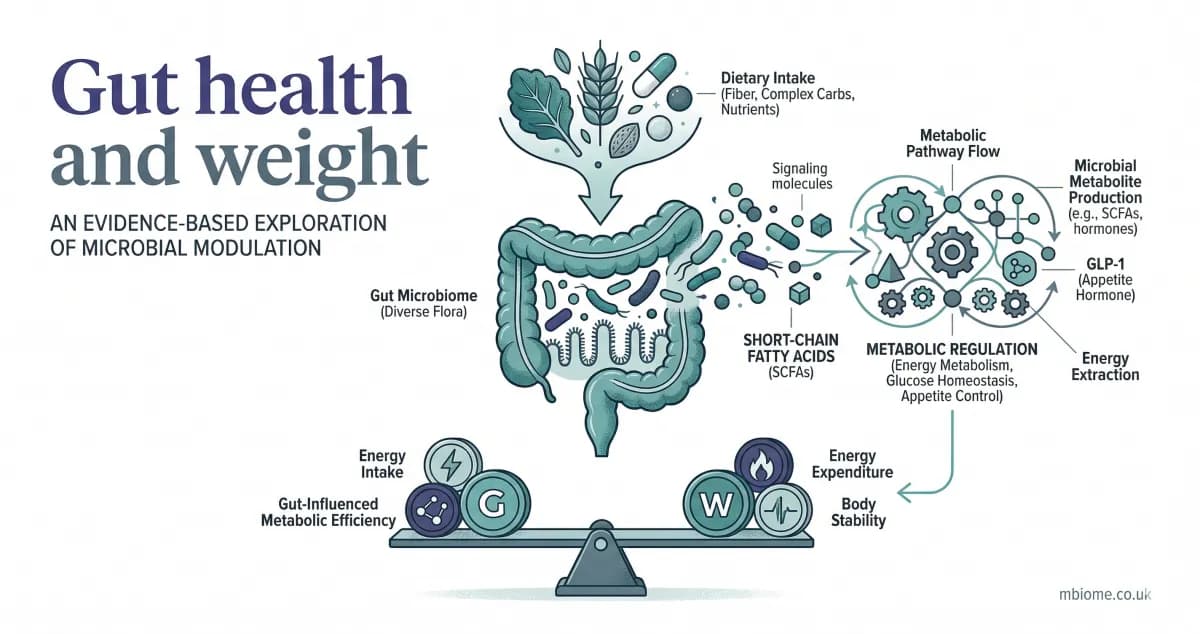
The Microbiome and Weight: What Science Really Says About Gut Bacteria and Body Weight
Research increasingly links the gut microbiome to weight regulation, but the relationship is complex. We examine the evidence — from landmark mouse studies to human trials — and separate proven mechanisms from premature claims.
Explore Other Topics
Related articles from across mbiome
The Mediterranean Diet and the Microbiome: Why It Keeps Topping the Evidence
The Mediterranean diet is the most studied dietary pattern in microbiome research, consistently linked to greater microbial diversity, reduced inflammation, and better metabolic health. Here's what the science shows and how to apply it.
Diet & NutritionUltra-Processed Food and Gut Health: What the Science Says
The UK gets 57% of its calories from ultra-processed food — more than almost any other country. A growing body of research links this dietary pattern to gut microbiome disruption, reduced diversity, and impaired gut barrier function.
Diet & NutritionFermented Foods and Gut Health: A Complete UK Guide
Fermented foods are one of the most effective ways to increase microbial diversity. Here is what the Stanford research found, which foods to choose, where to find them in the UK, and how much you actually need to eat.
Key Terms
Glossary terms mentioned in this article
Short-Chain Fatty Acids (SCFAs)
Metabolites produced when gut bacteria ferment dietary fibre. The three main SCFAs — butyrate, propionate, and acetate — are critical for colon health, immune regulation, and energy metabolism.
Intestinal Permeability
The property of the intestinal lining that controls what passes from the gut into the bloodstream. Increased permeability (sometimes called "leaky gut") allows harmful substances to enter circulation, triggering immune responses.
Circadian Rhythm
The approximately 24-hour biological cycle that governs sleep-wake patterns, hormone release, and metabolism. The gut microbiome exhibits its own circadian fluctuations in composition and function, influenced by meal timing, light exposure, and host circadian clock genes.
Bifidobacterium
A genus of beneficial bacteria that dominates the infant gut and remains important throughout life. Various species (B. longum, B. infantis, B. breve) are among the most studied probiotics, with evidence for IBS, immunity, and infant health.
Gut-Brain Axis
The bidirectional communication system between the gastrointestinal tract and the central nervous system, involving neural, hormonal, and immune pathways. The microbiome plays a central role in this communication.
Lactobacillus
A genus of lactic acid-producing bacteria found naturally in the gut, mouth, and vaginal tract. Certain strains (L. rhamnosus GG, L. plantarum 299v) have strong clinical evidence for specific health benefits. Now reclassified into multiple genera including Lacticaseibacillus and Limosilactobacillus.
Bacteroidetes
One of the two dominant bacterial phyla in the human gut (alongside Firmicutes). Bacteroidetes species are generally skilled at breaking down complex plant polysaccharides and are associated with leaner body composition in some studies. The Firmicutes-to-Bacteroidetes ratio was once considered a key health marker, though its significance is now debated.
Akkermansia
Akkermansia muciniphila is a mucin-degrading bacterium that lives in the intestinal mucus layer. Higher abundance is associated with improved metabolic health, lower inflammation, and better gut barrier function. It thrives on polyphenol-rich foods.