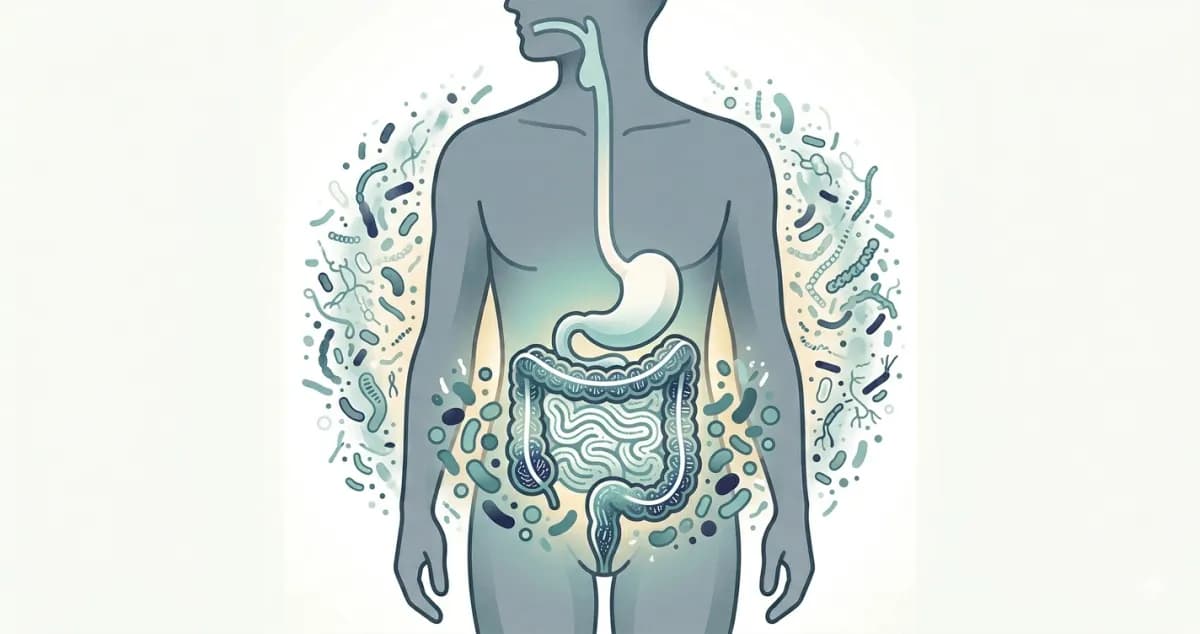
The human microbiome refers to the entire collection of microorganisms — bacteria, viruses, fungi, and archaea — that live in and on your body. The largest and most studied community resides in your gut, primarily in the large intestine.
The Numbers
Research published in Cell (Sender et al., 2016) revised earlier estimates and found that the average human body contains approximately 39 trillion bacterial cells alongside 30 trillion human cells. This near 1:1 ratio replaced the long-standing myth that bacteria outnumber human cells 10:1.
The gut microbiome alone contains over 1,000 different bacterial species, with a combined genetic material (the metagenome) that dwarfs the human genome by a factor of roughly 150:1.
What Does the Microbiome Do?
Your microbiome performs several critical functions:
Digestion and Metabolism — Gut bacteria break down complex carbohydrates, produce short-chain fatty acids (SCFAs), and synthesise vitamins including B12, K, and folate that your body cannot produce on its own.
Immune System Training — Approximately 70% of your immune system resides in the gut-associated lymphoid tissue (GALT). The microbiome helps train immune cells to distinguish between harmful pathogens and harmless substances.
Barrier Protection — A healthy microbiome maintains the integrity of the intestinal lining, preventing harmful substances from entering the bloodstream — a condition often called "leaky gut" when compromised.
Neurotransmitter Production — Gut bacteria produce approximately 95% of the body's serotonin and significant quantities of dopamine, GABA, and other neurotransmitters that influence mood and cognition. This communication system is known as the gut-brain axis.
How Is the Microbiome Established?
The colonisation of your microbiome begins at birth. Babies born vaginally acquire their initial microbiome from the birth canal, while those born via caesarean section receive bacteria primarily from the skin and hospital environment. Breastfeeding further shapes the infant microbiome through human milk oligosaccharides (HMOs) — complex sugars that selectively feed beneficial Bifidobacterium species.
By age 3, a child's microbiome resembles that of an adult in composition, though it continues to shift throughout life in response to diet, environment, medication, and lifestyle.
What Disrupts It?
Several factors can reduce microbial diversity or shift the balance toward harmful species:
- Antibiotics — While essential for treating infections, broad-spectrum antibiotics can devastate microbial diversity, with some communities taking months or years to recover
- Ultra-processed diets — High in refined sugars and low in fibre, these diets starve beneficial bacteria
- Chronic stress — Activates the hypothalamic-pituitary-adrenal (HPA) axis, altering gut motility and microbial composition
- Environmental factors — Pollution, chemicals, and reduced exposure to diverse microbial environments
Why It Matters
Research increasingly links the microbiome to conditions far beyond digestive health: autoimmune diseases, metabolic disorders, mental health conditions, cardiovascular disease, and even cancer treatment outcomes. Understanding your microbiome is becoming a cornerstone of personalised medicine. For practical steps you can take today, see our guide to improving gut health naturally.
Medical disclaimer: This article is for educational purposes only and does not constitute medical advice. Always consult a qualified healthcare professional before making changes to your diet, starting supplements, or making decisions about your health.
Related Articles
The Baby Microbiome: Why the First 1,000 Days Shape Lifelong Health
From birth to age three, a child's microbiome undergoes the most dramatic development it will ever experience. How a baby is born, fed, and raised has lasting consequences for immune function, allergy risk, and metabolic health.

Gut Health After 50: How the Microbiome Changes with Age and What You Can Do
After 50, microbial diversity naturally declines while inflammation-associated bacteria increase. Understanding these shifts can help you protect your gut health, immunity, and cognitive function as you age.
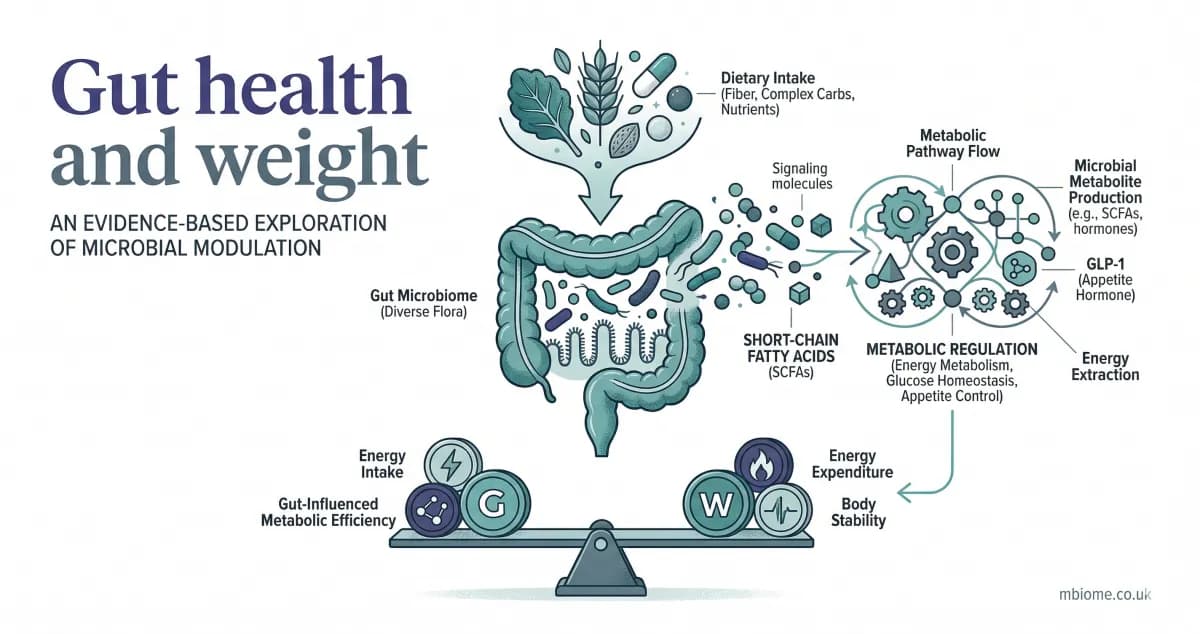
The Microbiome and Weight: What Science Really Says About Gut Bacteria and Body Weight
Research increasingly links the gut microbiome to weight regulation, but the relationship is complex. We examine the evidence — from landmark mouse studies to human trials — and separate proven mechanisms from premature claims.
Explore Other Topics
Related articles from across mbiome
Your Skin Microbiome: What Lives on Your Skin and Why It Matters
Your skin hosts roughly one trillion microorganisms — bacteria, fungi, viruses, and mites — that form a living shield. Understanding this invisible ecosystem is changing how dermatologists think about skin health.
Diet & NutritionThe Mediterranean Diet and the Microbiome: Why It Keeps Topping the Evidence
The Mediterranean diet is the most studied dietary pattern in microbiome research, consistently linked to greater microbial diversity, reduced inflammation, and better metabolic health. Here's what the science shows and how to apply it.
Diet & NutritionFermented Foods and Gut Health: A Complete UK Guide
Fermented foods are one of the most effective ways to increase microbial diversity. Here is what the Stanford research found, which foods to choose, where to find them in the UK, and how much you actually need to eat.
Key Terms
Glossary terms mentioned in this article
Human Milk Oligosaccharides (HMOs)
Complex sugars found in human breast milk that selectively feed beneficial Bifidobacterium species in the infant gut. HMOs are the third most abundant component of breast milk and are critical for establishing the infant microbiome.
Short-Chain Fatty Acids (SCFAs)
Metabolites produced when gut bacteria ferment dietary fibre. The three main SCFAs — butyrate, propionate, and acetate — are critical for colon health, immune regulation, and energy metabolism.
GABA (Gamma-Aminobutyric Acid)
The brain's primary inhibitory neurotransmitter, responsible for reducing neuronal excitability. Several gut bacteria, including Lactobacillus and Bifidobacterium species, produce GABA. Research suggests that microbially produced GABA may influence brain function via the vagus nerve, with implications for anxiety and stress.
GOS (Galactooligosaccharides)
Prebiotic carbohydrates structurally similar to human milk oligosaccharides. Found naturally in legumes and available as supplements. GOS has evidence for promoting Bifidobacterium growth and reducing symptoms of IBS.
Intestinal Permeability
The property of the intestinal lining that controls what passes from the gut into the bloodstream. Increased permeability (sometimes called "leaky gut") allows harmful substances to enter circulation, triggering immune responses.
Bifidobacterium
A genus of beneficial bacteria that dominates the infant gut and remains important throughout life. Various species (B. longum, B. infantis, B. breve) are among the most studied probiotics, with evidence for IBS, immunity, and infant health.
Gut-Brain Axis
The bidirectional communication system between the gastrointestinal tract and the central nervous system, involving neural, hormonal, and immune pathways. The microbiome plays a central role in this communication.
Microbiome
The complete collection of microorganisms (bacteria, viruses, fungi, archaea) and their genetic material within a specific environment, such as the human gut.