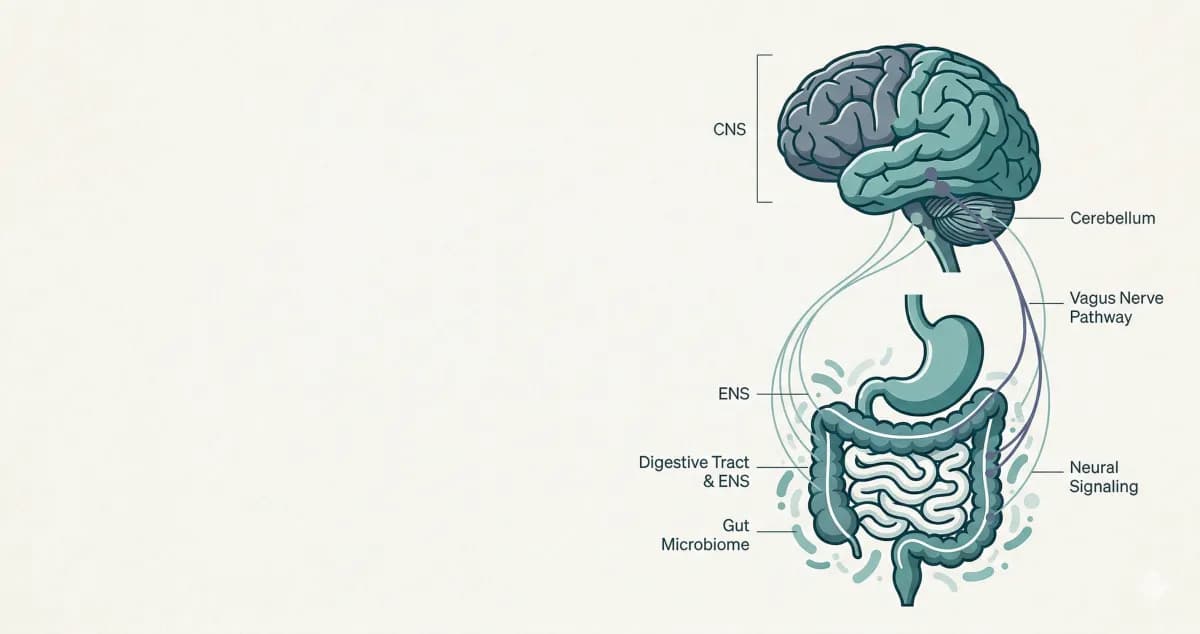
The idea that your gut affects your mood might sound like pseudoscience, but it's backed by a rapidly growing body of research. The gut-brain axis is one of the most active areas in microbiome science.
The Vagus Nerve Highway
The vagus nerve is the longest cranial nerve in the body, running from the brainstem to the abdomen. It serves as the primary communication channel between the gut and the brain, carrying signals in both directions. Approximately 80% of the vagus nerve's fibres are afferent — meaning they carry information from the gut to the brain, not the other way around.
This means your gut is sending far more information to your brain than your brain is sending to your gut.
Neurotransmitter Production
Your gut microbiome produces or influences the production of several key neurotransmitters:
- Serotonin — Approximately 95% of the body's serotonin is produced in the gut by enterochromaffin cells, with production heavily influenced by the microbiome. Serotonin regulates mood, sleep, appetite, and pain perception.
- GABA — Certain Lactobacillus and Bifidobacterium species produce gamma-aminobutyric acid, the brain's primary inhibitory neurotransmitter. Low GABA activity is associated with anxiety and insomnia.
- Dopamine — About 50% of the body's dopamine is produced in the gut. Gut bacteria influence dopamine synthesis through their metabolic byproducts.
What the Research Shows
Animal Studies (Strong): Germ-free mice (raised without any microbiome) show dramatically altered behaviour: increased anxiety, reduced social behaviour, and exaggerated stress responses. Colonising these mice with specific bacterial strains can reverse some of these effects — a powerful demonstration of the microbiome's role in brain function.
Human Studies (Growing): - A 2019 study in Nature Microbiology (Valles-Colomer et al.) analysed the microbiomes of over 1,000 participants and found that people with depression had consistently lower levels of Coprococcus and Dialister bacteria, regardless of antidepressant use. - A systematic review of probiotic interventions for depression (Liu et al., 2019) found a modest but significant reduction in depressive symptoms, though methodological quality varied. - Neuroimaging studies show that probiotic supplementation can alter brain activity patterns in regions involved in emotional processing (Tillisch et al., 2013, UCLA).
Inflammation: The Mediator
Much of the gut-brain connection may be mediated through inflammation. A disrupted microbiome can increase intestinal permeability, allowing bacterial components like lipopolysaccharides (LPS) to enter the bloodstream. This triggers systemic inflammation, which crosses the blood-brain barrier and activates neuroinflammatory pathways implicated in depression, anxiety, and cognitive decline.
Practical Implications
The research is compelling but the field is young. Currently:
- There is no clinically validated "psychobiotic" for treating diagnosed mental health conditions
- Diet remains the most evidence-based way to support a healthy gut-brain axis — particularly high-fibre, diverse plant-based diets
- The Mediterranean diet has the strongest epidemiological evidence for both microbiome diversity and mental health outcomes
- Fermented foods (kefir, kimchi, sauerkraut, live yoghurt) provide both probiotics and prebiotics
What's Next
Large-scale clinical trials are underway testing specific bacterial strains for depression, anxiety, and PTSD. The concept of "psychobiotics" — probiotics specifically designed to influence brain function — is moving from theory toward clinical application, but we're not there yet. For a deeper look at the mental health evidence, see our article on microbiome and mental health. The role of sleep in the gut-brain relationship is also increasingly well understood.
Medical disclaimer: This article is for educational purposes only and does not constitute medical advice. Always consult a qualified healthcare professional before making changes to your diet, starting supplements, or making decisions about your health.
Related Articles
How Stress Affects Your Gut: The Two-Way Street
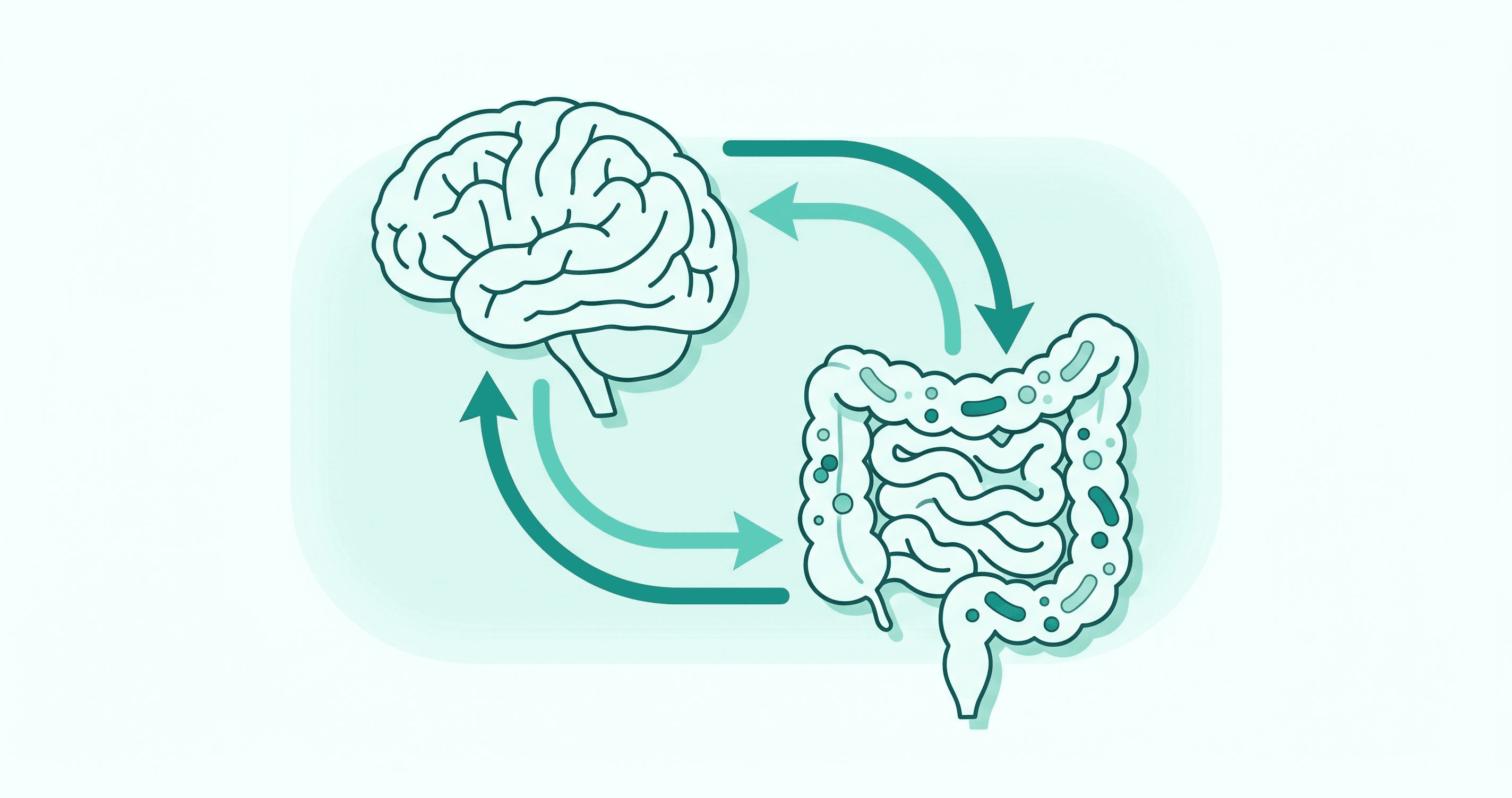
Stress does not just feel bad — it physically alters your gut microbiome. The HPA axis, vagus nerve, and intestinal barrier are all involved in a bidirectional stress-gut loop that research is only beginning to untangle.
Gut Bacteria and Anxiety: What Does the Evidence Say?
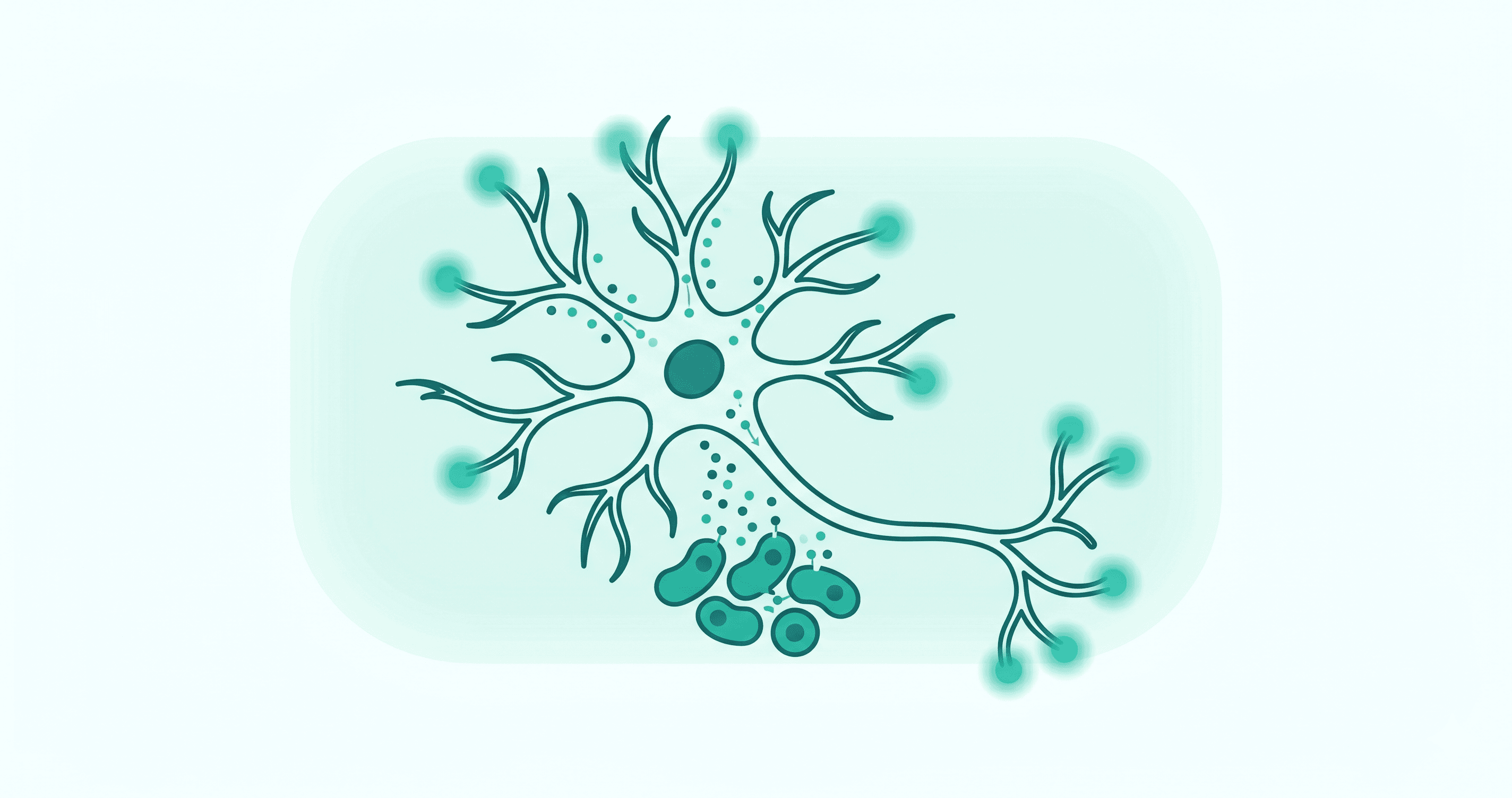
Headlines claim probiotics can treat anxiety. The reality is more nuanced — animal studies are compelling, but human evidence is still catching up. Here is a balanced look at the psychobiotics field.
Sleep and the Microbiome: A Two-Way Relationship
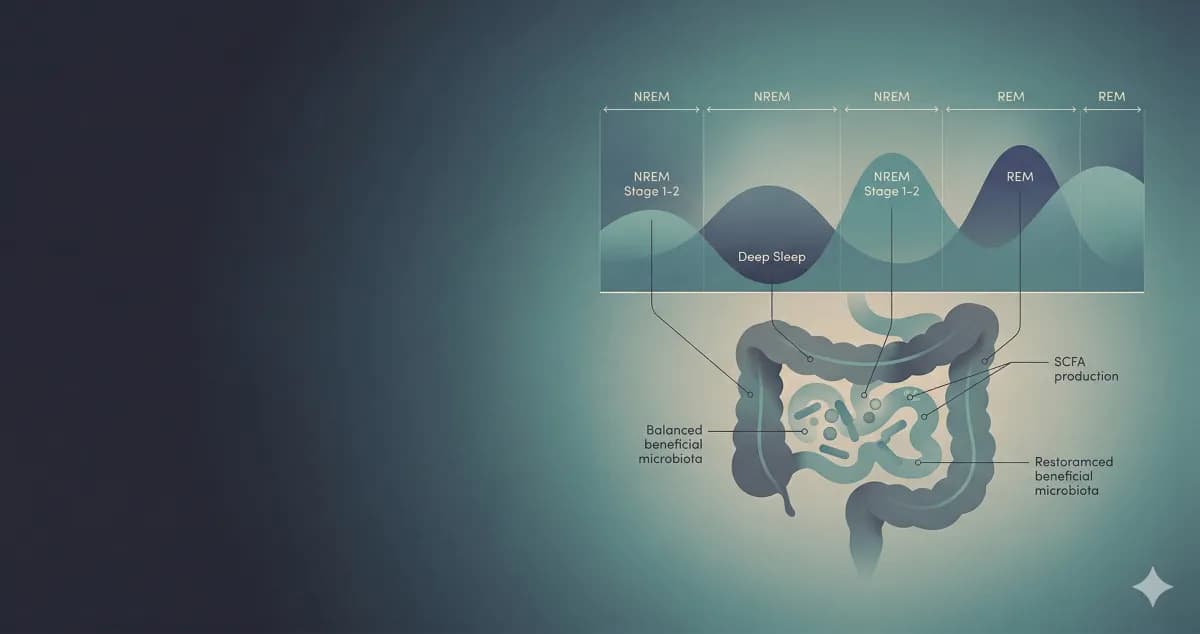
Poor sleep disrupts your gut bacteria, and an imbalanced microbiome disrupts your sleep. Here's what the research reveals about this bidirectional connection.
Explore Other Topics
Related articles from across mbiome
Ultra-Processed Food and Gut Health: What the Science Says
The UK gets 57% of its calories from ultra-processed food — more than almost any other country. A growing body of research links this dietary pattern to gut microbiome disruption, reduced diversity, and impaired gut barrier function.
Skin MicrobiomeThe Gut-Skin Axis: How Your Microbiome Affects Your Skin
Acne, eczema, rosacea, and psoriasis have all been linked to gut health. The emerging science of the gut-skin axis suggests that what happens in your digestive tract can show up on your face.
Gut HealthThe Microbiome and Weight: What Science Really Says About Gut Bacteria and Body Weight
Research increasingly links the gut microbiome to weight regulation, but the relationship is complex. We examine the evidence — from landmark mouse studies to human trials — and separate proven mechanisms from premature claims.
Key Terms
Glossary terms mentioned in this article
GABA (Gamma-Aminobutyric Acid)
The brain's primary inhibitory neurotransmitter, responsible for reducing neuronal excitability. Several gut bacteria, including Lactobacillus and Bifidobacterium species, produce GABA. Research suggests that microbially produced GABA may influence brain function via the vagus nerve, with implications for anxiety and stress.
Lipopolysaccharide (LPS)
A component of the outer membrane of gram-negative bacteria. When LPS enters the bloodstream through a compromised intestinal barrier, it triggers inflammation — a key mechanism linking gut health to systemic disease.
Intestinal Permeability
The property of the intestinal lining that controls what passes from the gut into the bloodstream. Increased permeability (sometimes called "leaky gut") allows harmful substances to enter circulation, triggering immune responses.
Enterochromaffin Cells
Specialised cells in the gut lining that produce approximately 95% of the body's serotonin. Their activity is directly influenced by the gut microbiome, making them a key link in the gut-brain axis.
Microbiome Diversity
The variety and abundance of different microbial species in a given environment. Greater diversity is consistently associated with better health outcomes, while reduced diversity is linked to obesity, inflammatory bowel disease, and other chronic conditions.
Mediterranean Diet
A dietary pattern emphasising vegetables, fruits, wholegrains, legumes, nuts, olive oil, and fish, with moderate dairy and limited red meat. It is the most studied dietary pattern in microbiome research, consistently linked to greater microbial diversity, higher SCFA production, and reduced inflammation.
Bifidobacterium
A genus of beneficial bacteria that dominates the infant gut and remains important throughout life. Various species (B. longum, B. infantis, B. breve) are among the most studied probiotics, with evidence for IBS, immunity, and infant health.
Gut-Brain Axis
The bidirectional communication system between the gastrointestinal tract and the central nervous system, involving neural, hormonal, and immune pathways. The microbiome plays a central role in this communication.