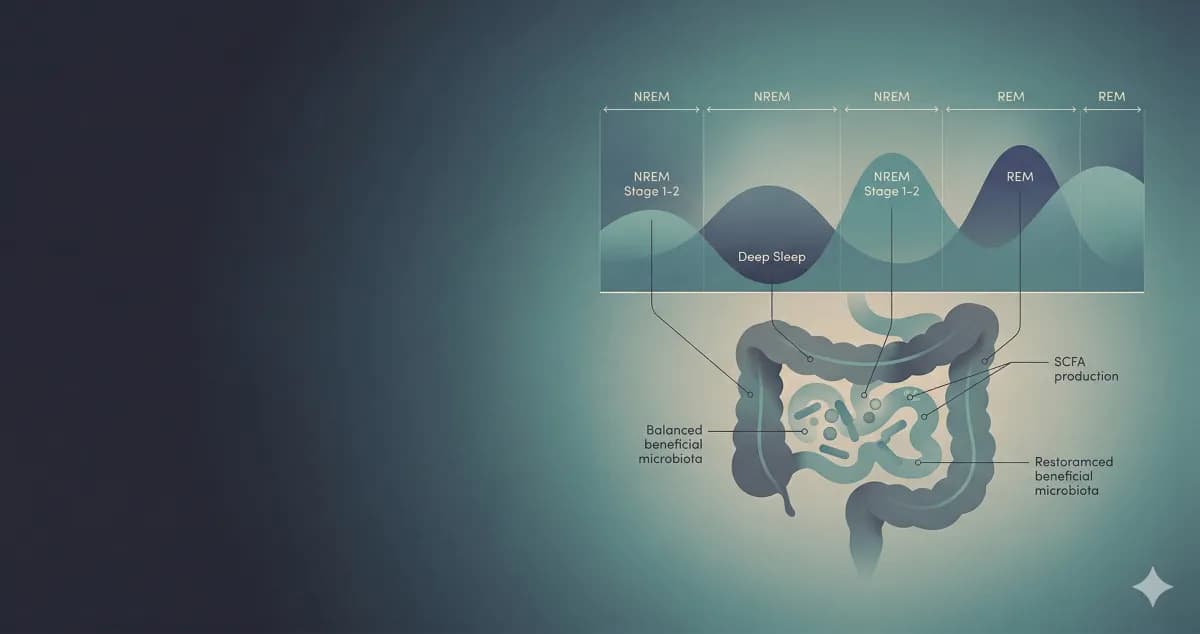
The relationship between sleep and the gut microbiome is one of the more surprising findings in modern microbiome research. It is not simply that poor sleep is bad for your gut — your gut bacteria actively influence your sleep quality in return. This bidirectional communication operates through the gut-brain axis, immune signalling, and microbial metabolite production.
The Circadian Microbiome
Your gut microbiome is not constant throughout the day. Research by Thaiss et al., published in *Cell* (2014), demonstrated that gut bacteria follow their own circadian rhythms — oscillating in both abundance and metabolic activity over a 24-hour cycle. Certain species peak during waking hours; others flourish during sleep.
These microbial rhythms are entrained by host feeding patterns and circadian clock genes. When the host's circadian rhythm is disrupted — through shift work, jet lag, or irregular sleep schedules — the microbial oscillations are abolished. The result is a dysbiotic state characterised by increased *Firmicutes*-to-*Bacteroidetes* ratios, a pattern associated with metabolic dysfunction and obesity.
A follow-up study by the same group (Thaiss et al., *Cell*, 2016) showed that transferring the microbiome from jet-lagged mice to germ-free mice induced glucose intolerance and weight gain — demonstrating that circadian disruption of the microbiome has metabolic consequences independent of host behaviour.
How Poor Sleep Affects the Microbiome
Reduced diversity — A 2019 study by Smith et al. in *PLoS ONE* found that healthy adults who slept fewer than six hours per night had significantly lower microbial alpha-diversity compared with those sleeping seven to eight hours. Diversity is consistently associated with better health outcomes.
Increased inflammation — Sleep deprivation activates the hypothalamic-pituitary-adrenal (HPA) axis, increasing cortisol production. Elevated cortisol alters intestinal permeability and shifts microbial composition toward pro-inflammatory species. Benedict et al. (2016) showed that just two nights of partial sleep deprivation increased the *Firmicutes*-to-*Bacteroidetes* ratio.
Impaired immune function — Sleep is essential for immune regulation. The gut-associated lymphoid tissue (GALT), which houses approximately 70% of the immune system, depends on adequate sleep for normal function. Sleep-deprived individuals show reduced secretory IgA — a key mucosal defence that helps maintain healthy microbial balance.
Altered appetite hormones — Poor sleep increases ghrelin (hunger hormone) and decreases leptin (satiety hormone), driving cravings for high-sugar, high-fat foods. These dietary shifts further impact the microbiome by favouring bacteria that thrive on simple carbohydrates at the expense of fibre-fermenting species.
How the Microbiome Affects Sleep
Serotonin and melatonin production — Approximately 95% of the body's serotonin is produced in the gut by enterochromaffin cells, with microbial metabolites directly influencing this process. Serotonin is the precursor to melatonin — the primary sleep-regulating hormone. Research by Yano et al. (2015) in *Cell* demonstrated that germ-free mice (lacking a microbiome) had 60% less serotonin in their blood than conventionally colonised mice.
GABA production — Certain *Lactobacillus* and *Bifidobacterium* species produce gamma-aminobutyric acid (GABA), the brain's primary inhibitory neurotransmitter. GABA promotes relaxation and sleep onset. A 2020 study by Bravo et al. found that *Lactobacillus rhamnosus* JB-1 reduced anxiety-like behaviour and altered GABA receptor expression in mice via vagal nerve signalling.
Short-chain fatty acids — Gut bacteria ferment dietary fibre to produce short-chain fatty acids (SCFAs), particularly butyrate, propionate, and acetate. A 2019 study by Heath et al. in *Scientific Reports* found that higher dietary fibre intake — and consequently higher SCFA production — was associated with more restorative slow-wave sleep and less light sleep.
Inflammatory cytokines — Dysbiosis triggers increased production of pro-inflammatory cytokines (IL-6, TNF-alpha) that enter systemic circulation. These cytokines disrupt sleep architecture, particularly reducing REM sleep. Chronic low-grade inflammation is a common feature of both poor sleep and gut dysbiosis, creating a vicious cycle.
Shift Work: A Case Study in Circadian Disruption
Shift workers represent a natural experiment in circadian disruption. A 2019 study by Reynolds et al. in the *Journal of Sleep Research* compared the gut microbiomes of rotating shift workers with day workers and found significant differences in microbial composition, with shift workers showing reduced levels of beneficial *Bifidobacterium* species and increased markers of intestinal inflammation.
The Health and Safety Executive estimates that approximately 3.5 million people in the UK work night shifts. The long-term health consequences — increased rates of metabolic syndrome, cardiovascular disease, and certain cancers — may be partially mediated by chronic microbiome disruption.
The Role of Sleep Disorders
Obstructive sleep apnoea (OSA) — A 2019 study by Ko et al. found that patients with OSA had distinct gut microbial profiles, with reduced diversity and increased pro-inflammatory species. The intermittent hypoxia characteristic of OSA appears to directly alter the gut environment. CPAP treatment partially reversed these changes.
Insomnia — Li et al. (2017) found that patients with chronic insomnia had significantly lower microbial diversity and reduced populations of short-chain fatty acid producers. The authors proposed that microbiome-targeted interventions could be a novel therapeutic avenue for insomnia.
Practical Strategies
Maintain a consistent sleep schedule — Regular bed and wake times support both host circadian rhythms and microbial oscillations. Even on weekends, aim to stay within 30 minutes of your weekday schedule.
Front-load fibre intake — Consuming the majority of your dietary fibre earlier in the day (breakfast and lunch) supports SCFA production during the hours when your gut bacteria are most metabolically active.
Avoid late-night eating — Eating within two hours of bedtime disrupts microbial circadian rhythms. A 12-hour overnight fast (e.g. 8 PM to 8 AM) allows the migrating motor complex to sweep the small intestine — a housekeeping function that is active only during fasting.
Consider targeted probiotics — While the evidence is preliminary, strains such as *Lactobacillus rhamnosus* JB-1 and *Bifidobacterium longum* 1714 have shown anxiolytic effects in trials that may support sleep. These are not yet widely available as standalone supplements in the UK.
Limit alcohol — While alcohol may aid sleep onset, it profoundly disrupts sleep architecture (reducing REM sleep) and is detrimental to microbial diversity. The UK Chief Medical Officers' guideline of no more than 14 units per week is a reasonable target.
Prioritise fermented foods — Yoghurt, kefir, sauerkraut, and kimchi provide live cultures and prebiotic substrates. A 2021 Stanford study by Sonnenburg et al. found that a diet high in fermented foods increased microbial diversity and reduced inflammatory markers over 10 weeks.
Key Takeaways
- The gut microbiome follows its own circadian rhythm, and sleep disruption abolishes these microbial oscillations
- Poor sleep reduces microbial diversity, increases inflammation, and drives cravings for foods that further harm the microbiome
- The microbiome influences sleep through serotonin/melatonin production, GABA synthesis, and short-chain fatty acid production
- Shift workers and those with sleep apnoea show distinct patterns of gut dysbiosis
- Consistent sleep schedules, front-loaded fibre intake, and avoiding late-night eating are the most evidence-based strategies for supporting both sleep and gut health
Medical disclaimer: This article is for educational purposes only and does not constitute medical advice. Always consult a qualified healthcare professional before making changes to your diet, starting supplements, or making decisions about your health.
Related Articles
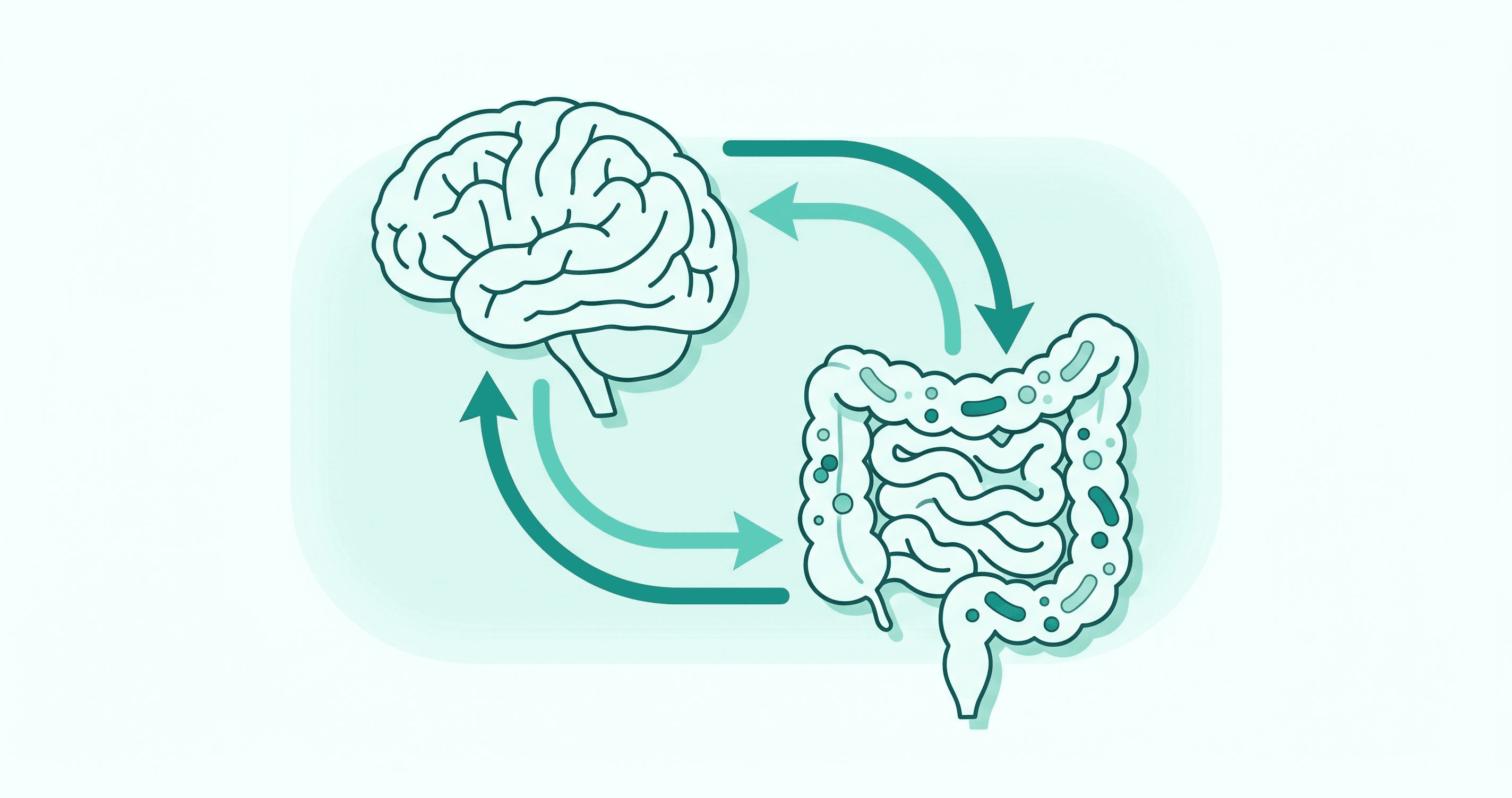
How Stress Affects Your Gut: The Two-Way Street
Stress does not just feel bad — it physically alters your gut microbiome. The HPA axis, vagus nerve, and intestinal barrier are all involved in a bidirectional stress-gut loop that research is only beginning to untangle.
Gut Bacteria and Anxiety: What Does the Evidence Say?
Headlines claim probiotics can treat anxiety. The reality is more nuanced — animal studies are compelling, but human evidence is still catching up. Here is a balanced look at the psychobiotics field.
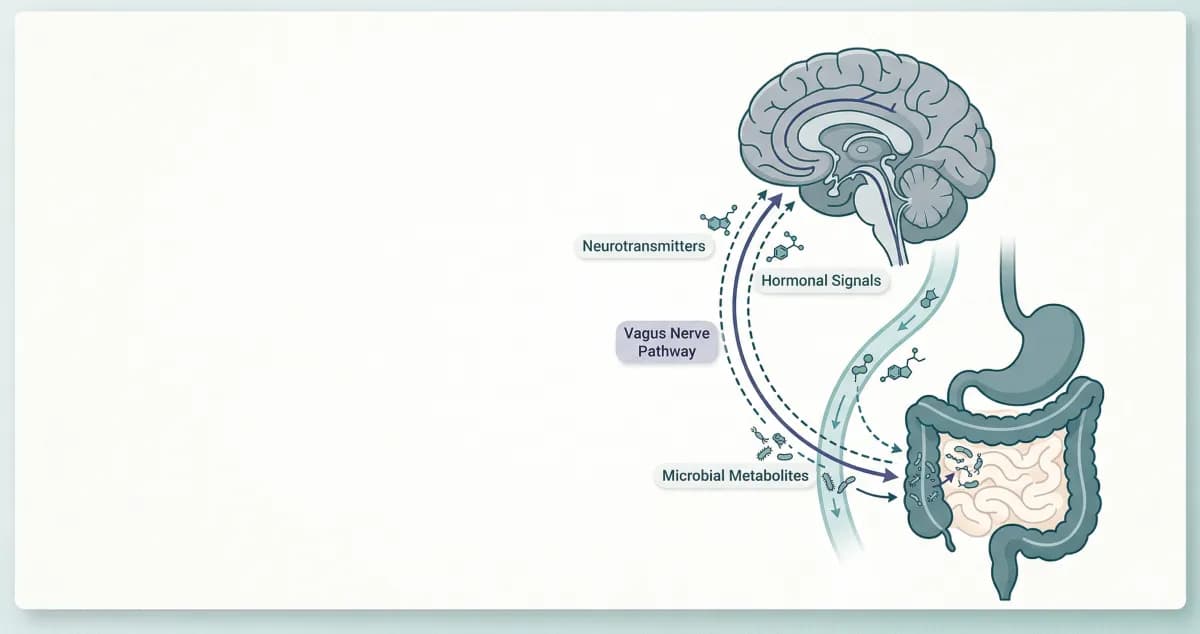
Microbiome and Mental Health: Separating Science from Hype
Headlines claim gut bacteria can cure depression and anxiety. The reality is more nuanced — but the science connecting the microbiome to mental health is genuine, growing, and worth understanding properly.
Explore Other Topics
Related articles from across mbiome
The Autoimmune-Microbiome Connection: What Research Reveals
From rheumatoid arthritis to type 1 diabetes, autoimmune diseases are increasingly linked to gut microbiome disruption. Here's what the evidence says about this critical relationship.
Gut HealthThe Microbiome and Weight: What Science Really Says About Gut Bacteria and Body Weight
Research increasingly links the gut microbiome to weight regulation, but the relationship is complex. We examine the evidence — from landmark mouse studies to human trials — and separate proven mechanisms from premature claims.
Diet & NutritionThe Mediterranean Diet and the Microbiome: Why It Keeps Topping the Evidence
The Mediterranean diet is the most studied dietary pattern in microbiome research, consistently linked to greater microbial diversity, reduced inflammation, and better metabolic health. Here's what the science shows and how to apply it.
Key Terms
Glossary terms mentioned in this article
Short-Chain Fatty Acids (SCFAs)
Metabolites produced when gut bacteria ferment dietary fibre. The three main SCFAs — butyrate, propionate, and acetate — are critical for colon health, immune regulation, and energy metabolism.
GABA (Gamma-Aminobutyric Acid)
The brain's primary inhibitory neurotransmitter, responsible for reducing neuronal excitability. Several gut bacteria, including Lactobacillus and Bifidobacterium species, produce GABA. Research suggests that microbially produced GABA may influence brain function via the vagus nerve, with implications for anxiety and stress.
Intestinal Permeability
The property of the intestinal lining that controls what passes from the gut into the bloodstream. Increased permeability (sometimes called "leaky gut") allows harmful substances to enter circulation, triggering immune responses.
Lactobacillus rhamnosus
One of the most extensively studied probiotic species. The strain L. rhamnosus GG has strong evidence for preventing antibiotic-associated diarrhoea and acute gastroenteritis in children. The strain L. rhamnosus JB-1 has shown anxiolytic effects in animal models via the vagus nerve, though human trials have been less conclusive.
Enterochromaffin Cells
Specialised cells in the gut lining that produce approximately 95% of the body's serotonin. Their activity is directly influenced by the gut microbiome, making them a key link in the gut-brain axis.
Bifidobacterium longum
A beneficial bacterial species naturally abundant in the human gut from infancy. The strain B. longum 1714 has been studied for its effects on stress and cognitive function, showing modest benefits in human trials. B. longum subsp. infantis is particularly important for infant gut health and breast milk digestion.
Circadian Rhythm
The approximately 24-hour biological cycle that governs sleep-wake patterns, hormone release, and metabolism. The gut microbiome exhibits its own circadian fluctuations in composition and function, influenced by meal timing, light exposure, and host circadian clock genes.
Alpha Diversity
A measure of the variety of microbial species within a single sample or environment (e.g., one person's gut). Higher alpha diversity is generally associated with better health outcomes.