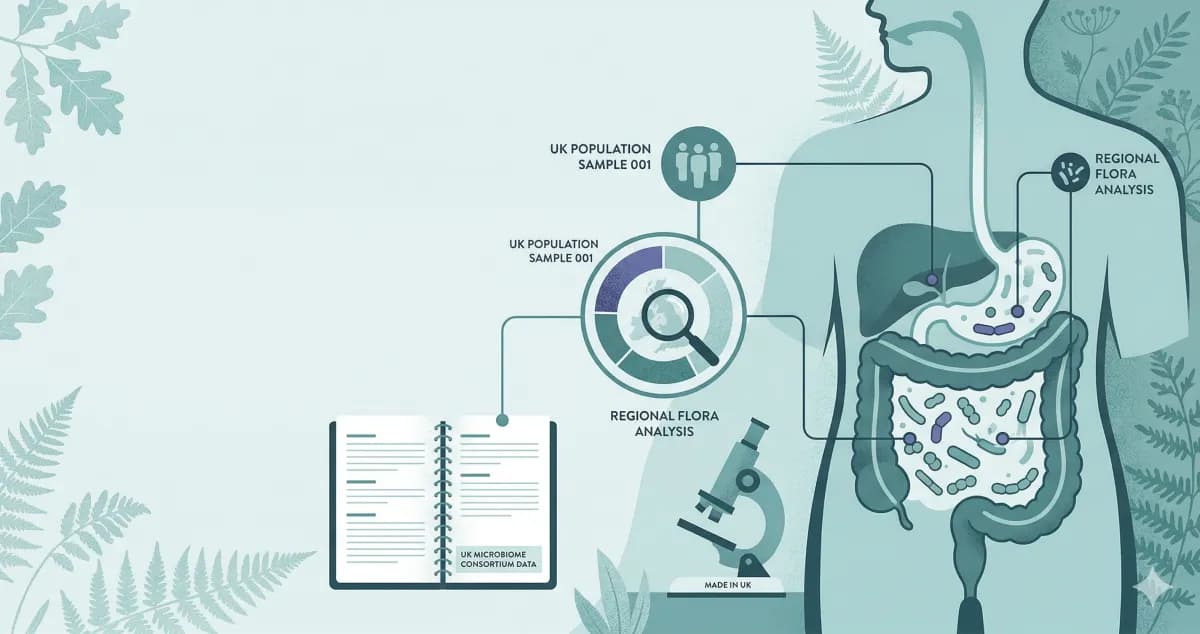
The vast majority of gut health content online is written from an American perspective — referencing US healthcare systems, American dietary patterns, and products available primarily in North America. This article provides a UK-specific overview, covering NHS access, British dietary data, UK-available testing and products, and the state of gut health research in Britain.
The State of British Gut Health
Digestive diseases are among the most common reasons for GP consultations and hospital admissions in the UK. According to Guts UK (formerly the British Society of Gastroenterology patient charity):
- Approximately 43% of the UK population experiences digestive symptoms at any given time
- IBS affects an estimated 10–20% of the UK population (6–13 million people)
- Inflammatory bowel disease (IBD) affects over 500,000 people in the UK — one of the highest rates in the world
- Bowel cancer is the fourth most common cancer in the UK, with approximately 42,000 new cases per year
- Coeliac disease affects approximately 1 in 100 people, though up to 75% remain undiagnosed
These statistics place digestive health squarely in the realm of public health concern, yet gut health receives relatively little attention in NHS preventive care compared with cardiovascular disease or cancer screening.
The British Diet and the Microbiome
The National Diet and Nutrition Survey (NDNS), conducted by Public Health England and the Food Standards Agency, provides the most comprehensive data on what Britons actually eat. The most recent data reveals several patterns relevant to gut health:
Fibre intake is chronically low. The UK government recommends 30g of dietary fibre per day for adults. The NDNS data shows that the average adult intake is approximately 19g per day — roughly 60% of the target. Only 9% of adults meet the 30g recommendation. This matters enormously for the microbiome because fibre is the primary fuel for beneficial gut bacteria, driving the production of short-chain fatty acids (SCFAs) that maintain gut barrier integrity and reduce inflammation.
Ultra-processed food consumption is among the highest in Europe. A 2023 study by Rauber et al. in *BMJ Open* found that ultra-processed foods account for approximately 57% of total energy intake in the UK adult diet — higher than any other European country studied. Ultra-processed foods (ready meals, crisps, sugary cereals, processed meats, fizzy drinks) are typically low in fibre, high in additives, and associated with reduced microbial diversity.
Plant diversity is limited. Professor Tim Spector's research at King's College London has repeatedly shown that consuming 30 or more different plant species per week is associated with significantly greater microbial diversity. While the UK has year-round access to a wide variety of plant foods, dietary patterns tend toward repetition — the same vegetables, the same fruits, the same grains week after week.
Alcohol consumption remains high. According to the Health Survey for England, approximately 24% of adults drink at hazardous levels (above 14 units per week). Alcohol disrupts the intestinal barrier, promotes pro-inflammatory bacterial species, and reduces microbial diversity.
NHS Pathways for Gut Conditions
Understanding how the NHS handles gut health complaints is essential for anyone navigating the system.
GP consultation — The first point of contact for digestive symptoms. GPs can order blood tests (coeliac screen, inflammatory markers, liver function, thyroid function), stool tests (faecal calprotectin for IBD screening, faecal immunochemical test for bowel cancer screening), and refer to secondary care.
Faecal calprotectin — This is a key test in the UK system. It measures a protein released by inflamed intestinal cells and helps distinguish between IBS (typically normal calprotectin) and IBD (elevated calprotectin). This test can be ordered by GPs and saves many unnecessary colonoscopies. NICE guidelines (CG152) recommend it as a first-line investigation for adults with lower GI symptoms where cancer is not suspected.
Two-week wait (2WW) referral — If bowel cancer is suspected (unexplained weight loss, rectal bleeding, persistent change in bowel habit in over-50s), GPs can refer under the urgent cancer pathway. NICE guideline NG12 specifies the criteria.
Gastroenterology referral — Non-urgent referrals to gastroenterology vary enormously by region. The average waiting time for a first outpatient appointment in England is 12–18 weeks, but some areas exceed 26 weeks. NHS Digital data shows significant postcode variation.
Endoscopy — Colonoscopy and gastroscopy waiting times have worsened since the COVID-19 pandemic. The Joint Advisory Group on GI Endoscopy (JAG) reports that only 75% of trusts meet the two-week endoscopy target for suspected cancer referrals.
Dietetics — NHS dietitians are the most underused resource in gut health. Referral (usually via GP or gastroenterologist) gives access to evidence-based dietary advice, including supervised low-FODMAP diets for IBS. However, waiting times for dietetics appointments can exceed 12 weeks in many areas.
UK Bowel Cancer Screening
The NHS Bowel Cancer Screening Programme is one of the UK's most important preventive health initiatives. All adults aged 56–74 (being extended to age 50 by 2025) receive a FIT (faecal immunochemical test) kit every two years. The test detects microscopic blood in the stool, which can indicate polyps or early-stage cancer.
Uptake is a concern. According to Public Health England, only approximately 70% of invited individuals complete and return their FIT kit. Uptake is lower in deprived areas, among men, and in certain ethnic groups. If you receive a FIT kit, use it — bowel cancer detected at stage 1 has a 90%+ five-year survival rate, compared with approximately 10% at stage 4.
UK-Available Gut Health Products
The UK market for probiotics, prebiotics, and gut health supplements has grown significantly. Here is an evidence-based assessment of the most widely available products:
Symprove — A liquid multi-strain probiotic with published clinical trial data for IBS. Approximately £22/week. Available online and in some Boots stores.
Optibac — A UK brand offering condition-specific formulations (e.g. "For Every Day," "For Women," "For Babies & Children"). Uses well-characterised strains. Moderate price point (approximately £10–15 for a month's supply). Available in Holland & Barrett, Boots, and supermarkets.
Bio-Kult — Multi-strain capsule probiotic. The original Bio-Kult has 14 strains. Limited clinical trial data specific to the product, though individual strains have wider evidence. Approximately £10 for 60 capsules.
Yakult/Actimel — Widely available dairy-based probiotic drinks. Yakult contains *Lactobacillus casei* Shirota, which has moderate evidence for immune function and digestive regularity. Low cost (approximately £1.50–2.00 for a pack of 7).
Kefir — Increasingly available in UK supermarkets (Biotiful, Nourish, supermarket own-brand). Contains a diverse range of live cultures and is a whole food rather than a supplement. The evidence for kefir's health benefits is growing, with a 2023 meta-analysis finding benefits for blood glucose control and cholesterol.
Fermented foods — Sauerkraut, kimchi, miso, and kombucha are increasingly available in mainstream UK supermarkets. The Stanford fermented foods trial (Sonnenburg et al., 2021) found that a high-fermented-food diet increased microbial diversity and reduced inflammatory markers over 10 weeks.
UK Gut Health Research
The UK is a world leader in microbiome research, with several major initiatives:
British Gut Project — Founded by Professor Tim Spector, this was one of the largest citizen-science microbiome projects in the world. Participants submitted stool samples for sequencing, building a database of the British microbiome. The project's data now forms part of the ZOE dataset.
UK Biobank — This massive prospective study of 500,000 UK adults is increasingly incorporating microbiome data, enabling population-scale associations between gut bacteria and health outcomes.
The Wellcome Sanger Institute — Based in Cambridge, this institute has been at the forefront of microbial genome sequencing, producing reference catalogues of human gut bacterial genomes.
King's College London — Professor Spector's group at King's runs the PREDICT studies (the research behind ZOE) and the TwinsUK registry, which has contributed enormously to understanding how genetics and environment shape the microbiome.
Imperial College London — Professor Julian Marchesi's group has conducted influential research on the metabolic outputs of the gut microbiome and their role in colorectal cancer.
Practical UK-Specific Recommendations
Use the NHS wisely. For persistent symptoms (more than four weeks of changed bowel habits, bloating, pain), see your GP. Ask specifically about faecal calprotectin testing if IBD is a concern. Request a dietetics referral for structured dietary intervention.
Increase fibre to 30g/day. Most Britons need to roughly double their fibre intake. Practical strategies: porridge with seeds for breakfast, pulses added to soups and stews, vegetables with every meal, wholegrain bread, and fruit as snacks.
Diversify your plants. Herbs and spices count toward the 30-plants-per-week target. A single mixed salad can contain 8–10 different plants. Frozen vegetables are nutritionally equivalent to fresh and are often cheaper.
Complete your bowel cancer screening. If you receive a FIT kit, use it. If you are under 56 and have symptoms or a family history, discuss early screening with your GP.
Be cautious with private testing. The UK market for private gut microbiome testing is growing rapidly (ZOE, Healthpath, Ombre, Atlas Biomed). While some offer genuine insights, none is a substitute for NHS investigation of concerning symptoms. Private test results should be interpreted with a qualified practitioner, not used for self-diagnosis.
Key Takeaways
- Digestive symptoms affect 43% of the UK population; IBS alone affects up to 13 million people
- Average UK fibre intake (19g/day) is well below the 30g recommendation — this is the single most impactful dietary change for gut health
- Ultra-processed foods account for 57% of UK calorie intake, the highest in Europe
- NHS pathways exist for gut investigation (faecal calprotectin, FIT screening, dietetics referral) but waiting times vary significantly by region
- The UK is a global leader in microbiome research, with major programmes at King's College London, the Sanger Institute, and through UK Biobank
- Completing your NHS bowel cancer screening kit when invited is one of the highest-impact things you can do for your digestive health
Medical disclaimer: This article is for educational purposes only and does not constitute medical advice. Always consult a qualified healthcare professional before making changes to your diet, starting supplements, or making decisions about your health.
Related Articles

The Baby Microbiome: Why the First 1,000 Days Shape Lifelong Health
From birth to age three, a child's microbiome undergoes the most dramatic development it will ever experience. How a baby is born, fed, and raised has lasting consequences for immune function, allergy risk, and metabolic health.

Gut Health After 50: How the Microbiome Changes with Age and What You Can Do
After 50, microbial diversity naturally declines while inflammation-associated bacteria increase. Understanding these shifts can help you protect your gut health, immunity, and cognitive function as you age.
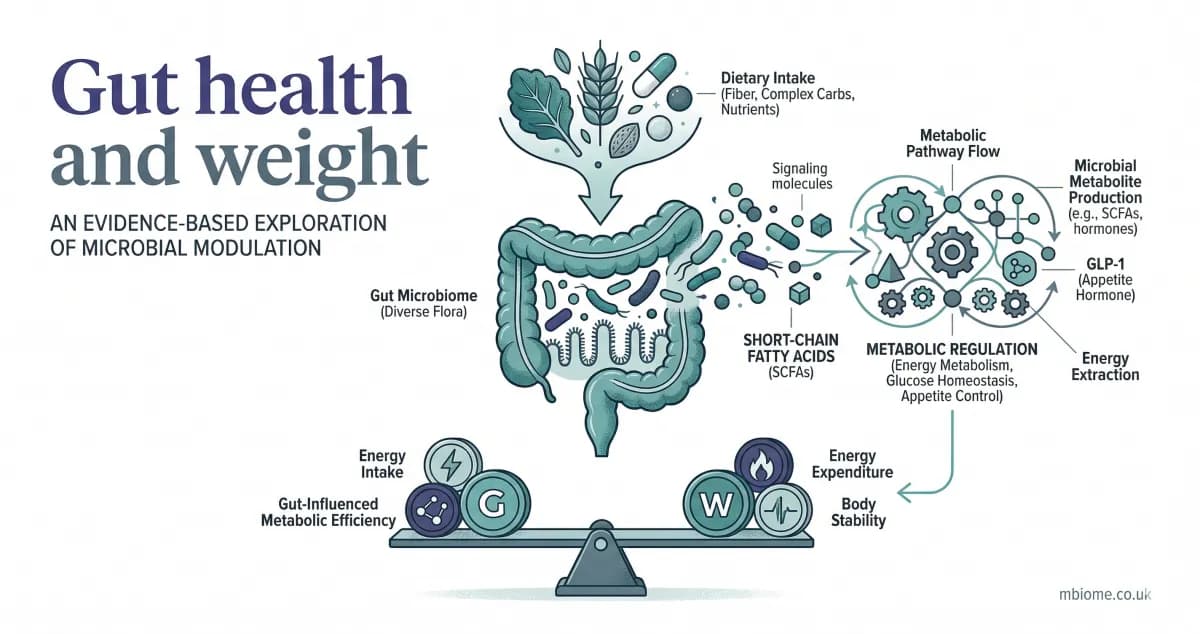
The Microbiome and Weight: What Science Really Says About Gut Bacteria and Body Weight
Research increasingly links the gut microbiome to weight regulation, but the relationship is complex. We examine the evidence — from landmark mouse studies to human trials — and separate proven mechanisms from premature claims.
Explore Other Topics
Related articles from across mbiome
Ultra-Processed Food and Gut Health: What the Science Says
The UK gets 57% of its calories from ultra-processed food — more than almost any other country. A growing body of research links this dietary pattern to gut microbiome disruption, reduced diversity, and impaired gut barrier function.
Diet & NutritionThe Mediterranean Diet and the Microbiome: Why It Keeps Topping the Evidence
The Mediterranean diet is the most studied dietary pattern in microbiome research, consistently linked to greater microbial diversity, reduced inflammation, and better metabolic health. Here's what the science shows and how to apply it.
Diet & NutritionFermented Foods and Gut Health: A Complete UK Guide
Fermented foods are one of the most effective ways to increase microbial diversity. Here is what the Stanford research found, which foods to choose, where to find them in the UK, and how much you actually need to eat.
Key Terms
Glossary terms mentioned in this article
Short-Chain Fatty Acids (SCFAs)
Metabolites produced when gut bacteria ferment dietary fibre. The three main SCFAs — butyrate, propionate, and acetate — are critical for colon health, immune regulation, and energy metabolism.
IBS (Irritable Bowel Syndrome)
A chronic functional gastrointestinal disorder characterised by abdominal pain, bloating, and altered bowel habits without identifiable structural cause. The microbiome is increasingly recognised as a contributing factor, with IBS patients typically showing reduced microbial diversity and altered bacterial composition compared to healthy controls.
Lactobacillus
A genus of lactic acid-producing bacteria found naturally in the gut, mouth, and vaginal tract. Certain strains (L. rhamnosus GG, L. plantarum 299v) have strong clinical evidence for specific health benefits. Now reclassified into multiple genera including Lacticaseibacillus and Limosilactobacillus.
Microbiome
The complete collection of microorganisms (bacteria, viruses, fungi, archaea) and their genetic material within a specific environment, such as the human gut.
Probiotic
Live microorganisms which, when administered in adequate amounts, confer a health benefit on the host. Benefits are strain-specific, not species-wide.
Prebiotic
Non-digestible food components (typically dietary fibres) that selectively stimulate the growth or activity of beneficial gut bacteria. Common examples include inulin, FOS, and GOS.
FODMAP
Fermentable Oligosaccharides, Disaccharides, Monosaccharides, and Polyols — a group of short-chain carbohydrates that are poorly absorbed and rapidly fermented by gut bacteria. The low-FODMAP diet is an evidence-based treatment for IBS symptoms, developed at Monash University.