Eczema — formally known as atopic dermatitis — affects roughly 1 in 5 children and 1 in 10 adults in the UK. It is a chronic inflammatory skin condition characterised by dry, itchy, and inflamed patches. Over the past decade, research has revealed that the skin microbiome plays a central role in eczema flares and severity.
The Staphylococcus aureus Problem
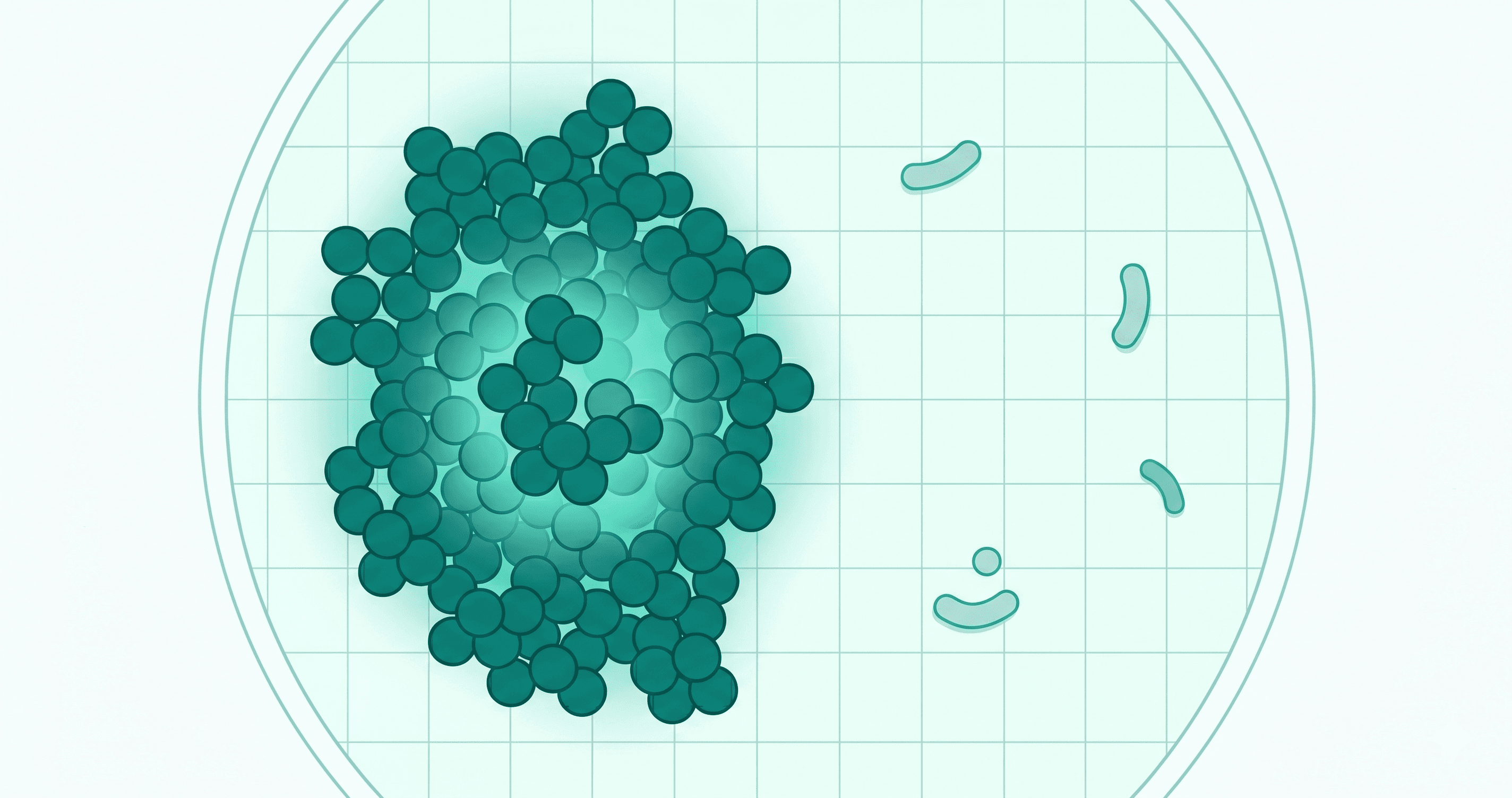
The most consistent finding in eczema microbiome research is the dominance of Staphylococcus aureus on affected skin. In healthy individuals, S. aureus colonises the skin of approximately 5–30% of people without causing problems. In eczema patients, colonisation rates rise to 70–90%.
A landmark study by Kong et al. (2012, Genome Research) used metagenomic sequencing to track the skin microbiome during eczema flares. They found that during active flares, S. aureus abundance surged dramatically while microbial diversity collapsed. Between flares, diversity partially recovered — but S. aureus levels remained elevated compared to healthy controls.
This is not simply correlation. S. aureus actively worsens eczema through several mechanisms:
- Superantigen production — S. aureus produces toxins that hyperactivate the immune system, driving intense inflammation
- Biofilm formation — Biofilms protect S. aureus colonies from both the immune system and topical treatments
- Barrier disruption — S. aureus proteases (enzymes) directly damage the skin barrier, increasing permeability and moisture loss
- Immune evasion — S. aureus has evolved sophisticated mechanisms to evade skin immune defences
The Diversity Collapse
Beyond S. aureus overgrowth, eczema is characterised by a broader loss of microbial diversity. A study by Byrd et al. (2017, Science Translational Medicine) showed that children with severe eczema had significantly less diverse skin microbial communities than those with mild disease or no eczema.
Crucially, reduced abundance of beneficial species compounds the problem. Staphylococcus epidermidis, Staphylococcus hominis, and other commensal staphylococci produce antimicrobial peptides that naturally suppress S. aureus. When these protective species are lost, S. aureus faces less competition and can dominate.
The Gut-Eczema Link
The gut microbiome also plays a role, particularly in early life. A systematic review by Petersen et al. (2019, JEADV) found that infants who later developed eczema had measurably different gut microbiomes in the first months of life — specifically, lower Bifidobacterium diversity and higher Clostridium levels.
This finding aligns with the "hygiene hypothesis" and its modern refinement, the "old friends hypothesis" — the idea that reduced microbial exposure in early life impairs immune development, increasing the risk of allergic conditions. The infant microbiome during the first 1,000 days appears to be a critical window for immune programming.
Some probiotic interventions during pregnancy and infancy have shown modest benefit. A Finnish trial by Kalliomaki et al. (2001, The Lancet) found that Lactobacillus rhamnosus GG, given to mothers during late pregnancy and to infants in the first six months, reduced eczema incidence by roughly 50% in high-risk families. However, subsequent studies have produced inconsistent results, and current NICE guidelines do not recommend routine probiotics for eczema prevention.
Microbiome-Based Treatments Under Research
Several innovative approaches are being investigated:
Bacteriotherapy — Researchers at the National Institutes of Health conducted a small trial applying live Roseomonas mucosa (a commensal skin bacterium) to the skin of eczema patients. The results, published in JCI Insight (2018), showed improvement in disease severity, reduced S. aureus colonisation, and improved skin barrier function. Larger trials are underway.
Coagulase-negative staphylococci transplants — Nakatsuji et al. (2017, Science Translational Medicine) isolated antimicrobial-producing strains of S. epidermidis and S. hominis from healthy volunteers and applied them to the skin of eczema patients. S. aureus colonisation was significantly reduced. This approach — essentially a skin microbiome transplant — is now in clinical development.
Endolysin therapy — Phage-derived endolysins are enzymes that specifically target and destroy S. aureus without harming beneficial bacteria. Unlike broad-spectrum antibiotics, these precision tools preserve microbial diversity. Early-stage clinical trials have shown promise.
Probiotic lysates — Rather than applying live bacteria, some research uses bacterial extracts (lysates) that modulate the immune response without the challenges of keeping bacteria alive on the skin surface.
Current Practical Advice
While microbiome-based treatments are still under development, the following evidence-based strategies can help manage eczema and support the skin microbiome:
Emollient therapy — Regular, liberal use of fragrance-free emollients is the cornerstone of eczema management. Emollients support the skin barrier, reduce transepidermal water loss, and provide a more hospitable environment for commensal bacteria. Apply within minutes of bathing.
Avoid over-washing — Bathing once daily (or less) with lukewarm water and soap-free cleansers helps preserve the skin microbiome. Hot water and harsh soaps strip away protective oils and bacteria.
Reduce S. aureus load carefully — Dilute bleach baths (0.005% sodium hypochlorite) are recommended by some dermatologists to reduce S. aureus colonisation. A Cochrane Review found modest evidence for their benefit, though results are mixed.
Support gut health — While the evidence for oral probiotics in established eczema is limited, maintaining gut microbial diversity through a high-fibre diet, fermented foods, and avoiding unnecessary antibiotics supports overall immune regulation.
Be cautious with topical antibiotics — Prolonged use of topical antibiotics (such as fusidic acid) drives resistance in S. aureus and further disrupts the skin microbiome. Use only as directed by your GP or dermatologist.
The Future
The eczema-microbiome field is one of the most promising areas in dermatology. Within the next five to ten years, we may see clinically validated microbiome-based treatments — from personalised bacteriotherapy to precision endolysins — that address the root microbial imbalance rather than simply managing symptoms. For now, the best approach combines conventional eczema management with gentle skin and gut-supportive practices that protect microbial diversity.
Medical disclaimer: This article is for educational purposes only and does not constitute medical advice. Always consult a qualified healthcare professional before making changes to your diet, starting supplements, or making decisions about your health.
Related Articles

Your Skin Microbiome: What Lives on Your Skin and Why It Matters
Your skin hosts roughly one trillion microorganisms — bacteria, fungi, viruses, and mites — that form a living shield. Understanding this invisible ecosystem is changing how dermatologists think about skin health.
Acne and the Microbiome: What the Research Shows
Acne is far more than a teenage nuisance — it affects 85% of people at some point. Emerging research suggests the skin and gut microbiome play a bigger role than previously thought.
The Gut-Skin Axis: How Your Microbiome Affects Your Skin
Acne, eczema, rosacea, and psoriasis have all been linked to gut health. The emerging science of the gut-skin axis suggests that what happens in your digestive tract can show up on your face.
Explore Other Topics
Related articles from across mbiome
The Mediterranean Diet and the Microbiome: Why It Keeps Topping the Evidence
The Mediterranean diet is the most studied dietary pattern in microbiome research, consistently linked to greater microbial diversity, reduced inflammation, and better metabolic health. Here's what the science shows and how to apply it.
Gut HealthHistamine Intolerance and the Gut Microbiome: What the Research Shows
Histamine intolerance causes symptoms from headaches to skin flushing and digestive distress. Emerging research points to the gut microbiome — and specifically histamine-producing bacteria — as a key factor.
Gut HealthThe Autoimmune-Microbiome Connection: What Research Reveals
From rheumatoid arthritis to type 1 diabetes, autoimmune diseases are increasingly linked to gut microbiome disruption. Here's what the evidence says about this critical relationship.
Key Terms
Glossary terms mentioned in this article
Staphylococcus epidermidis
One of the most abundant commensal bacteria on human skin. S. epidermidis produces antimicrobial peptides that inhibit pathogenic bacteria including S. aureus, communicates with the immune system, and helps maintain the skin's acidic pH. Often called the "good staph."
Intestinal Permeability
The property of the intestinal lining that controls what passes from the gut into the bloodstream. Increased permeability (sometimes called "leaky gut") allows harmful substances to enter circulation, triggering immune responses.
Staphylococcus aureus
A common bacterium that colonises the skin and nasal passages. While often harmless, S. aureus is an opportunistic pathogen implicated in wound infections, food poisoning, and skin conditions. In eczema, S. aureus overgrowth during flares is a consistent finding, driving inflammation through superantigen production.
Bifidobacterium
A genus of beneficial bacteria that dominates the infant gut and remains important throughout life. Various species (B. longum, B. infantis, B. breve) are among the most studied probiotics, with evidence for IBS, immunity, and infant health.
Lactobacillus
A genus of lactic acid-producing bacteria found naturally in the gut, mouth, and vaginal tract. Certain strains (L. rhamnosus GG, L. plantarum 299v) have strong clinical evidence for specific health benefits. Now reclassified into multiple genera including Lacticaseibacillus and Limosilactobacillus.
Microbiome
The complete collection of microorganisms (bacteria, viruses, fungi, archaea) and their genetic material within a specific environment, such as the human gut.
Probiotic
Live microorganisms which, when administered in adequate amounts, confer a health benefit on the host. Benefits are strain-specific, not species-wide.
Commensal
An organism that benefits from a relationship with another organism without causing harm. Most gut bacteria are commensals — they gain food and shelter while contributing to digestion, immunity, and barrier function.