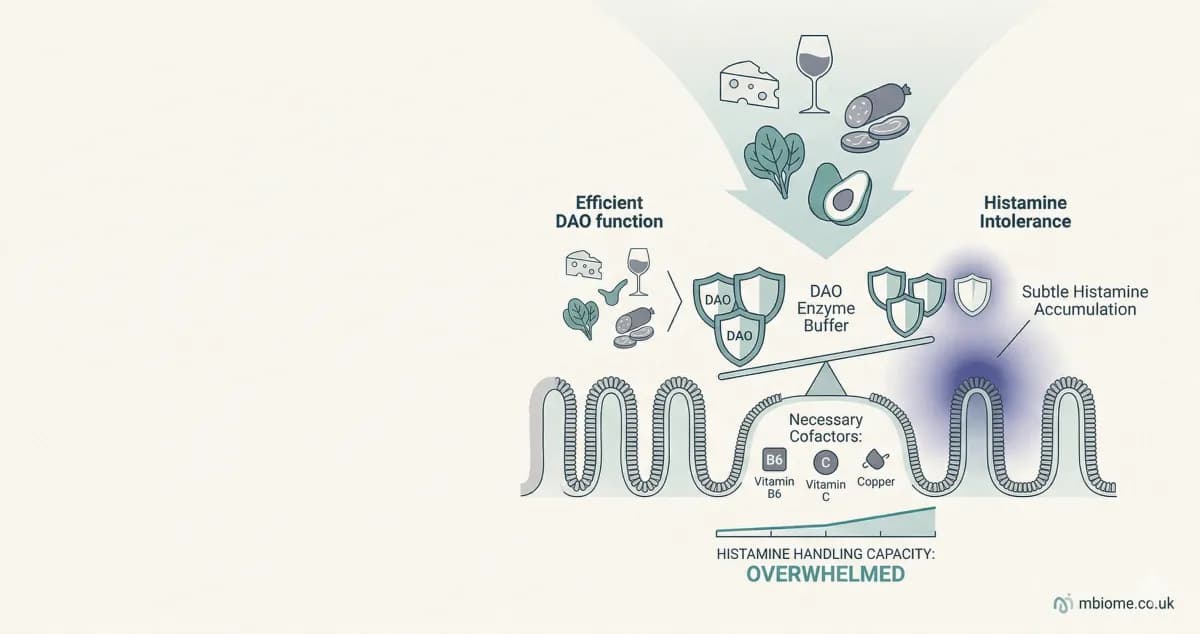
Histamine intolerance is an increasingly recognised condition in which the body accumulates more histamine than it can break down, leading to a range of symptoms that often mimic allergic reactions. While traditionally viewed as a dietary issue, emerging research is revealing a significant role for the gut microbiome in histamine production and degradation.
What Is Histamine?
Histamine is a biogenic amine — a signalling molecule with essential roles throughout the body. It is involved in immune responses (triggering inflammation to fight infection), gastric acid secretion, neurotransmission, and the regulation of the sleep-wake cycle. Histamine is not inherently harmful; it is essential for normal physiology.
Problems arise when histamine accumulates beyond the body's capacity to break it down. This can result from excessive production, impaired degradation, or both.
What Is Histamine Intolerance?
Histamine intolerance (HIT) is estimated to affect approximately 1-3% of the population, though precise prevalence data are limited. It is characterised by symptoms that occur when histamine levels exceed the body's breakdown capacity:
- Headaches and migraines
- Nasal congestion and sneezing
- Skin flushing, hives, or itching
- Digestive symptoms: bloating, diarrhoea, abdominal pain, nausea
- Rapid heartbeat (tachycardia)
- Fatigue
- Anxiety or difficulty concentrating
These symptoms are often episodic and related to dietary histamine intake, but they can be difficult to distinguish from true allergy, mastocytosis, or other conditions. Diagnosis typically involves a combination of symptom assessment, dietary elimination, and exclusion of other causes.
How the Body Breaks Down Histamine
The body has two primary enzymes for degrading histamine:
- Diamine oxidase (DAO) — the main enzyme responsible for breaking down histamine in the gut. DAO is produced primarily by enterocytes (intestinal lining cells) and is released into the gut lumen to degrade dietary histamine before it is absorbed.
- Histamine N-methyltransferase (HNMT) — operates intracellularly, primarily in the liver, kidneys, and central nervous system.
Most cases of histamine intolerance are attributed to reduced DAO activity in the gut. Maintz & Novak (2007, American Journal of Clinical Nutrition) published a comprehensive review establishing DAO deficiency as the primary mechanism behind dietary histamine intolerance.
The Gut Microbiome Connection
This is where it becomes particularly relevant to microbiome science. Many gut bacteria produce histamine as a metabolic byproduct, while others actively degrade it. The balance between these populations can significantly influence how much histamine accumulates in the gut.
Histamine-Producing Bacteria
Several common gut bacterial species produce histamine through the enzyme histidine decarboxylase, which converts the amino acid histidine into histamine. Key histamine-producing species include:
- Escherichia coli — certain strains are significant histamine producers
- Morganella morganii — one of the most potent histamine producers in the gut
- Klebsiella pneumoniae — produces histamine and is often elevated in dysbiosis
- Lactobacillus vaginalis — unlike most lactobacilli, this species produces histamine
- Enterobacter aerogenes — another Enterobacteriaceae family member that produces histamine
- Staphylococcus aureus — produces histamine when present in the gut
Notably, not all Lactobacillus species behave the same way. While L. vaginalis produces histamine, Lactobacillus rhamnosus GG does not — illustrating the critical importance of strain-level analysis.
Histamine-Degrading Bacteria
Some gut bacteria possess DAO-like enzymes or other pathways that break down histamine:
- Bifidobacterium infantis — does not produce histamine and may help reduce gut histamine levels
- Bifidobacterium longum — similarly non-histamine-producing and potentially beneficial
- Lactobacillus plantarum — some strains actively degrade biogenic amines including histamine
- Lactobacillus rhamnosus GG — does not produce histamine and has anti-inflammatory properties
Research Evidence
A study by Schink et al. (2018, Journal of Allergy and Clinical Immunology) analysed the gut microbiomes of patients with histamine intolerance compared to healthy controls. They found significant differences in microbial composition, including reduced diversity and altered abundance of specific bacterial taxa in the HIT group. Proteobacteria (which include many histamine-producing species) were relatively increased.
Dev et al. (2017, Proceedings of the National Academy of Sciences) demonstrated in a murine model that histamine produced by gut bacteria could activate the immune system through the H2 receptor, influencing inflammatory signalling. This showed that bacterially-produced histamine is not inert — it actively modulates host physiology.
Sánchez-Pérez et al. (2022, Biomolecules) provided a comprehensive review linking gut microbial composition to histamine metabolism and proposed that targeting the microbiome could be a therapeutic strategy for HIT.
Factors That Worsen the Gut-Histamine Connection
Dysbiosis
Any condition that promotes the overgrowth of histamine-producing bacteria relative to histamine-degrading species can worsen histamine intolerance. Common causes of such dysbiosis include:
- Antibiotic use (particularly broad-spectrum antibiotics)
- Low-fibre diets that starve beneficial Bifidobacterium species
- Chronic stress, which alters gut motility and microbial balance
- Small intestinal bacterial overgrowth (SIBO) — see below
SIBO
Small intestinal bacterial overgrowth is particularly relevant to histamine intolerance. When bacteria that normally reside in the large intestine proliferate in the small intestine, they encounter dietary amino acids (including histidine) earlier in the digestive tract, producing histamine where DAO production is lower. Leccioli et al. (2017) reported a significant overlap between SIBO and histamine intolerance symptoms, suggesting a causal link in some patients.
DAO Inhibitors
Certain substances inhibit DAO activity, compounding the problem:
- Alcohol (particularly red wine and beer) — both contains histamine and inhibits DAO
- Certain medications: NSAIDs, some antidepressants, some antiarrhythmics, and some antibiotics
- Specific foods: tea and energy drinks (via catechins and other DAO-inhibiting compounds)
Dietary Management
The mainstay of histamine intolerance management is a low-histamine diet, at least temporarily, to reduce symptom burden and allow assessment.
High-histamine foods to avoid or reduce: - Aged cheeses, cured meats, smoked fish - Fermented foods (sauerkraut, kimchi, kombucha, soy sauce, vinegar) — these are normally recommended for gut health but can worsen HIT - Tinned fish, particularly tuna and mackerel - Alcohol, especially red wine, champagne, and beer - Leftover protein dishes (histamine increases as food sits) - Certain fruits: citrus, strawberries, tomatoes (also trigger histamine release)
Low-histamine alternatives: - Fresh (not leftover) meat, poultry, and fish - Most fresh vegetables (except tomatoes, spinach, and aubergine) - Rice, quinoa, oats, potatoes - Most fresh fruits (except citrus and strawberries) - Fresh herbs, ginger, turmeric
The elimination phase typically lasts 2-4 weeks, followed by systematic reintroduction to identify individual trigger thresholds.
Microbiome-Targeted Strategies
Beyond dietary histamine avoidance, strategies aimed at rebalancing the gut microbiome may help address the underlying cause:
- Increase prebiotic fibre — supports the growth of Bifidobacterium and other non-histamine-producing species. Oats, leeks, garlic, and onions are good choices (though onions may be problematic for some HIT patients)
- Consider specific probiotic strains — Bifidobacterium infantis, B. longum, Lactobacillus rhamnosus GG, and certain L. plantarum strains are non-histamine-producing and may help rebalance the microbial ecosystem. Avoid histamine-producing strains (L. casei, L. bulgaricus, L. reuteri in some preparations)
- Address SIBO if present — treatment typically involves targeted antibiotics (rifaximin) or herbal antimicrobials, guided by a gastroenterologist
- DAO supplementation — supplemental diamine oxidase (available in the UK as DAOSiN or similar products) taken before meals can help break down dietary histamine. Evidence is preliminary but promising (Izquierdo-Casas et al., 2019, Journal of Clinical Medicine)
Getting a Diagnosis in the UK
Histamine intolerance is not yet widely recognised across all NHS pathways. The first step is to see your GP, who can rule out true allergy (via IgE testing), coeliac disease, and other conditions. A referral to a gastroenterologist or allergy specialist may be helpful. DAO activity can be measured through blood tests, though this is not routinely available on the NHS and may require private testing.
A registered dietitian experienced in food intolerance (look for HCPC-registered or BDA-accredited practitioners) can guide dietary management safely.
Key Takeaways
- Histamine intolerance results from an imbalance between histamine production and degradation, with DAO deficiency being the primary mechanism
- Many gut bacteria produce histamine (particularly Proteobacteria), while others (Bifidobacterium, certain Lactobacillus strains) do not
- The gut microbiome composition directly influences histamine levels in the gut
- SIBO and dysbiosis can worsen histamine intolerance by increasing bacterial histamine production
- A temporary low-histamine diet is the primary management strategy, but microbiome-targeted approaches may address underlying causes
- Fermented foods — normally beneficial for gut health — may worsen symptoms in people with histamine intolerance
- Not all probiotic strains are suitable for HIT — avoid histamine-producing species and select strains with evidence of safety
- Seek proper diagnosis through your GP to rule out allergy, coeliac disease, and other conditions before self-treating
Medical disclaimer: This article is for educational purposes only and does not constitute medical advice. Always consult a qualified healthcare professional before making changes to your diet, starting supplements, or making decisions about your health.
Related Articles
The Baby Microbiome: Why the First 1,000 Days Shape Lifelong Health
From birth to age three, a child's microbiome undergoes the most dramatic development it will ever experience. How a baby is born, fed, and raised has lasting consequences for immune function, allergy risk, and metabolic health.

Gut Health After 50: How the Microbiome Changes with Age and What You Can Do
After 50, microbial diversity naturally declines while inflammation-associated bacteria increase. Understanding these shifts can help you protect your gut health, immunity, and cognitive function as you age.
The Microbiome and Weight: What Science Really Says About Gut Bacteria and Body Weight
Research increasingly links the gut microbiome to weight regulation, but the relationship is complex. We examine the evidence — from landmark mouse studies to human trials — and separate proven mechanisms from premature claims.
Explore Other Topics
Related articles from across mbiome
Acne and the Microbiome: What the Research Shows
Acne is far more than a teenage nuisance — it affects 85% of people at some point. Emerging research suggests the skin and gut microbiome play a bigger role than previously thought.
Probiotics & PrebioticsProbiotics: What the Evidence Actually Says
Probiotics are a billion-pound industry, but which strains have genuine clinical evidence behind them? We break down the research by condition and strain.
Skin MicrobiomeThe Gut-Skin Axis: How Your Microbiome Affects Your Skin
Acne, eczema, rosacea, and psoriasis have all been linked to gut health. The emerging science of the gut-skin axis suggests that what happens in your digestive tract can show up on your face.
Key Terms
Glossary terms mentioned in this article
Lactobacillus rhamnosus
One of the most extensively studied probiotic species. The strain L. rhamnosus GG has strong evidence for preventing antibiotic-associated diarrhoea and acute gastroenteritis in children. The strain L. rhamnosus JB-1 has shown anxiolytic effects in animal models via the vagus nerve, though human trials have been less conclusive.
Bifidobacterium longum
A beneficial bacterial species naturally abundant in the human gut from infancy. The strain B. longum 1714 has been studied for its effects on stress and cognitive function, showing modest benefits in human trials. B. longum subsp. infantis is particularly important for infant gut health and breast milk digestion.
Staphylococcus aureus
A common bacterium that colonises the skin and nasal passages. While often harmless, S. aureus is an opportunistic pathogen implicated in wound infections, food poisoning, and skin conditions. In eczema, S. aureus overgrowth during flares is a consistent finding, driving inflammation through superantigen production.
Bifidobacterium
A genus of beneficial bacteria that dominates the infant gut and remains important throughout life. Various species (B. longum, B. infantis, B. breve) are among the most studied probiotics, with evidence for IBS, immunity, and infant health.
Proteobacteria
A bacterial phylum that includes many well-known pathogens (E. coli, Salmonella, Helicobacter). In a healthy gut, Proteobacteria are a minor component, but their expansion is considered a potential marker of dysbiosis and microbial instability. Elevated Proteobacteria levels are observed in inflammatory bowel disease and other conditions.
Lactobacillus
A genus of lactic acid-producing bacteria found naturally in the gut, mouth, and vaginal tract. Certain strains (L. rhamnosus GG, L. plantarum 299v) have strong clinical evidence for specific health benefits. Now reclassified into multiple genera including Lacticaseibacillus and Limosilactobacillus.
Microbiome
The complete collection of microorganisms (bacteria, viruses, fungi, archaea) and their genetic material within a specific environment, such as the human gut.
Probiotic
Live microorganisms which, when administered in adequate amounts, confer a health benefit on the host. Benefits are strain-specific, not species-wide.