Microbiome Testing
At-home gut testing kits, clinical stool analysis, and what your results actually mean. A practical guide to microbiome diagnostics.

Articles in Microbiome Testing
These articles are grouped to help readers move from overview to specifics without losing the evidence context.
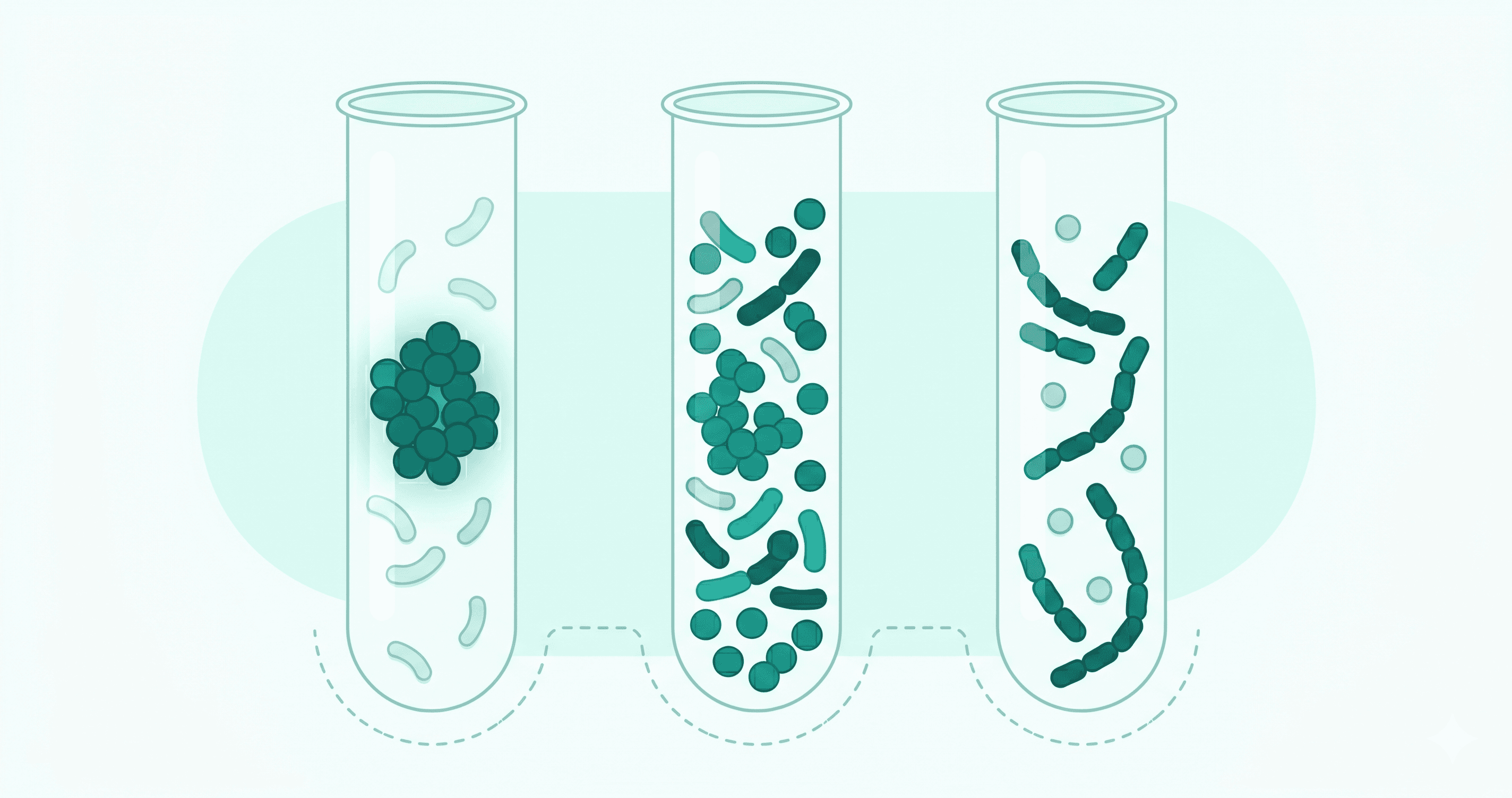
How Accurate Are Gut Microbiome Tests? What the Science Says
Commercial microbiome tests promise personalised insights, but how reproducible are the results? We examine inter-lab variation, sequencing methods, and what the science says about accuracy.

Zoe Gut Health Test: What You Get and Is It Worth It?
Zoe is the UK's most popular personalised nutrition programme, combining gut microbiome, blood sugar, and blood fat testing. We assess the science, the experience, and whether it delivers value for the price.

A Practical Guide to Microbiome Testing in the UK
From Zoe to Atlas Biomed and Thriva, the UK market for microbiome tests is growing. Here is what each test measures, what it costs, and whether you actually need one.

ZOE Review — Is Personalised Nutrition Testing Worth It?
ZOE promises to decode your unique biology through gut microbiome, blood sugar, and blood fat testing. We examine the science, the experience, and whether it delivers value.

Gut Microbiome Tests: Are They Worth It?
Commercial microbiome tests promise personalised health insights from a stool sample. But how reliable are they, what do they actually measure, and should you spend £100–300 on one? We examine the science and the limitations.
Key Terms: Microbiome Testing
Glossary terms commonly referenced in microbiome testing articles
Microbiome
The complete collection of microorganisms (bacteria, viruses, fungi, archaea) and their genetic material within a specific environment, such as the human gut.
16S rRNA Sequencing
A molecular technique that identifies bacteria by sequencing a specific gene (16S ribosomal RNA) present in all bacteria. Used in most commercial microbiome tests. Can identify bacteria to genus level but often lacks strain-level resolution.
Shotgun Metagenomics
A sequencing approach that reads all DNA in a sample, not just bacterial marker genes. Provides higher resolution than 16S rRNA sequencing, including strain-level identification, functional gene analysis, and detection of viruses and fungi.
Akkermansia
Akkermansia muciniphila is a mucin-degrading bacterium that lives in the intestinal mucus layer. Higher abundance is associated with improved metabolic health, lower inflammation, and better gut barrier function. It thrives on polyphenol-rich foods.
Clostridioides difficile
A bacterium that can cause severe diarrhoea and colitis, typically after antibiotic use disrupts the normal gut flora. C. difficile infection is one of the clearest examples of how microbiome disruption leads to disease.
Microbiome Diversity
The variety and abundance of different microbial species in a given environment. Greater diversity is consistently associated with better health outcomes, while reduced diversity is linked to obesity, inflammatory bowel disease, and other chronic conditions.
SIBO
Small Intestinal Bacterial Overgrowth. A condition where excessive bacteria colonise the small intestine (which normally has relatively few), causing bloating, pain, and malabsorption.
Probiotic
Live microorganisms which, when administered in adequate amounts, confer a health benefit on the host. Benefits are strain-specific, not species-wide.
Alpha Diversity
A measure of the variety of microbial species within a single sample or environment (e.g., one person's gut). Higher alpha diversity is generally associated with better health outcomes.
Bacteroidetes
One of the two dominant bacterial phyla in the human gut (alongside Firmicutes). Bacteroidetes species are generally skilled at breaking down complex plant polysaccharides and are associated with leaner body composition in some studies. The Firmicutes-to-Bacteroidetes ratio was once considered a key health marker, though its significance is now debated.
Firmicutes
The largest bacterial phylum in the human gut, encompassing diverse genera including Lactobacillus, Clostridium, Faecalibacterium, and Ruminococcus. Many important SCFA producers belong to this phylum. An elevated Firmicutes-to-Bacteroidetes ratio has been associated with obesity in some studies, though the relationship is complex and inconsistent.
Lactobacillus
A genus of lactic acid-producing bacteria found naturally in the gut, mouth, and vaginal tract. Certain strains (L. rhamnosus GG, L. plantarum 299v) have strong clinical evidence for specific health benefits. Now reclassified into multiple genera including Lacticaseibacillus and Limosilactobacillus.