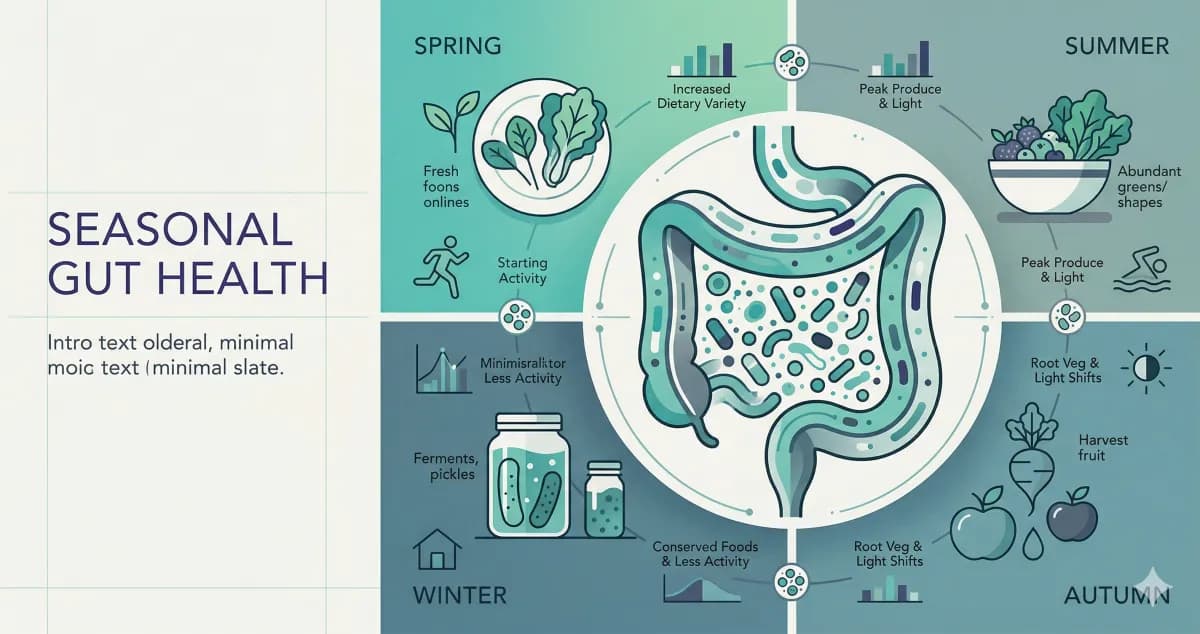
Your gut microbiome is not a static ecosystem. It responds to the world around you — and one of the most consistent patterns researchers have found is seasonal variation. From shifting dietary habits to changes in vitamin D synthesis, the time of year may influence the composition and function of your gut bacteria more than you might expect.
Seasonal Shifts in Microbial Diversity
A landmark 2017 study published in *Science* by Smits et al. examined the Hadza people of Tanzania — one of the last remaining hunter-gatherer populations — and found pronounced seasonal oscillations in their gut microbiome. During the wet season, when their diet was rich in berries and honey, certain bacterial taxa flourished. During the dry season, when the diet shifted toward hunted game, an entirely different microbial profile emerged.
Critically, some bacterial species that vanished in one season reappeared in the next — suggesting a cyclical pattern tied directly to dietary inputs. The researchers noted that several taxa that cycle seasonally in the Hadza are permanently absent in industrialised populations, raising the possibility that our modern year-round diets have eliminated natural microbial seasonality altogether.
Diet: The Primary Driver
In the UK, seasonal eating has largely been replaced by year-round availability of most foods. However, subtle dietary shifts still occur. Winter diets tend to be heavier in starchy comfort foods, processed meals, and alcohol (particularly over the Christmas period). Summer diets typically include more salads, fresh fruit, and lighter meals.
These shifts matter because gut bacteria are exquisitely sensitive to dietary fibre and plant diversity. Research by Professor Tim Spector at King's College London has repeatedly shown that consuming 30 or more different plant species per week — a target easier to hit in summer — is associated with greater microbial diversity.
A 2019 study in the *British Journal of Nutrition* (Kaczmarek et al.) found that participants consuming summer diets rich in diverse fruits and vegetables had significantly higher levels of *Bacteroidetes* — a phylum associated with leanness and metabolic health — compared with their winter dietary profiles.
Vitamin D and the Microbiome
The UK's latitude means that between October and March, UVB radiation is insufficient for cutaneous vitamin D synthesis. Public Health England recommends that all adults consider supplementing with 10 micrograms (400 IU) of vitamin D daily during autumn and winter.
This matters for gut health because vitamin D receptors are densely expressed throughout the intestinal epithelium. A 2020 study by Thomas et al. in *Nature Communications* found that vitamin D supplementation over 12 weeks significantly increased gut microbial diversity, with particular enrichment of *Bacteroides* and *Akkermansia* — both considered beneficial taxa.
Professor Martineau's VITDGUT trial at Queen Mary University of London further explored this connection, finding that vitamin D status correlated with markers of intestinal barrier integrity. Lower vitamin D levels were associated with increased intestinal permeability — a condition colloquially known as "leaky gut."
Physical Activity and Seasonal Patterns
Physical activity levels in the UK drop significantly during winter months. Data from Sport England's Active Lives Survey consistently shows that adults are less active between November and February, with cold weather, shorter days, and poor conditions cited as primary barriers.
This reduction in activity has downstream effects on the microbiome. A 2018 study by Allen et al. in *Medicine & Science in Sports & Exercise* demonstrated that six weeks of moderate aerobic exercise increased concentrations of butyrate-producing bacteria in previously sedentary adults. Butyrate is a short-chain fatty acid critical for colonocyte health, anti-inflammatory signalling, and gut barrier maintenance.
When exercise decreases in winter, these beneficial populations may decline — contributing to the seasonal dips in microbial diversity observed in several cohort studies.
Cold, Flu Season, and Antibiotic Use
Winter in the UK brings increased rates of upper respiratory tract infections. NHS data shows that antibiotic prescriptions peak between December and February. While antibiotics are sometimes necessary, their impact on the microbiome is well documented.
A 2019 study by Palleja et al. in *Nature Microbiology* tracked gut microbiome recovery after a four-day course of three broad-spectrum antibiotics. While most bacterial species recovered within six months, several common commensals had not returned after six months, and some were still absent at the 180-day follow-up.
This means that a single winter course of antibiotics can have effects lasting well into summer — and repeated winter antibiotic courses compound the damage.
Circadian Rhythm Disruption
The shorter days of winter and the clock changes (GMT to BST and back) disrupt circadian rhythms. This is relevant because the gut microbiome itself exhibits diurnal oscillations. Research by Thaiss et al., published in *Cell* (2014), demonstrated that gut bacteria follow a rhythmic pattern of abundance and function over the 24-hour cycle — and that disrupting the host's circadian rhythm (through jet lag or shift work) abolished these oscillations and promoted a dysbiotic state.
The biannual clock change, combined with reduced daylight exposure and altered sleep patterns, may contribute to subtle seasonal dysbiosis.
Practical Strategies for Winter Gut Health
Maintain plant diversity — Even in winter, aim for 30 different plant foods per week. Frozen vegetables, tinned pulses, nuts, seeds, herbs, and spices all count. Root vegetables, brassicas, and alliums are in season and excellent for gut health.
Supplement vitamin D — Follow PHE guidance: 10 micrograms daily from October to March. Consider testing your levels via a postal blood test (NHS or private providers such as Medichecks).
Stay active — Even moderate walking supports microbial diversity. Aim for 150 minutes per week of moderate activity year-round.
Question antibiotic necessity — If prescribed antibiotics, ask whether they are truly needed (many winter infections are viral). If you do take them, consider a well-evidenced probiotic such as *Saccharomyces boulardii* alongside the course. See our guide to antibiotic recovery for detailed strategies.
Prioritise sleep — Consistent sleep and wake times support circadian microbial rhythms. Avoid bright screens in the hour before bed and consider a dawn simulator alarm during the darkest months.
Key Takeaways
- Your gut microbiome shifts seasonally, influenced by diet, sunlight, activity, and illness patterns
- UK winters bring reduced vitamin D, less dietary diversity, lower activity, and more antibiotic use — all of which can reduce microbial diversity
- Hunter-gatherer studies suggest industrialised diets may have eliminated natural seasonal microbial cycling
- Maintaining plant diversity, supplementing vitamin D, and staying active through winter are the most evidence-based strategies for year-round gut health — see our UK food guide for seasonal availability
- A single course of antibiotics can affect the microbiome for six months or longer. For more on circadian gut rhythms, see our article on sleep and the microbiome
Medical disclaimer: This article is for educational purposes only and does not constitute medical advice. Always consult a qualified healthcare professional before making changes to your diet, starting supplements, or making decisions about your health.
Related Articles
The Baby Microbiome: Why the First 1,000 Days Shape Lifelong Health
From birth to age three, a child's microbiome undergoes the most dramatic development it will ever experience. How a baby is born, fed, and raised has lasting consequences for immune function, allergy risk, and metabolic health.

Gut Health After 50: How the Microbiome Changes with Age and What You Can Do
After 50, microbial diversity naturally declines while inflammation-associated bacteria increase. Understanding these shifts can help you protect your gut health, immunity, and cognitive function as you age.
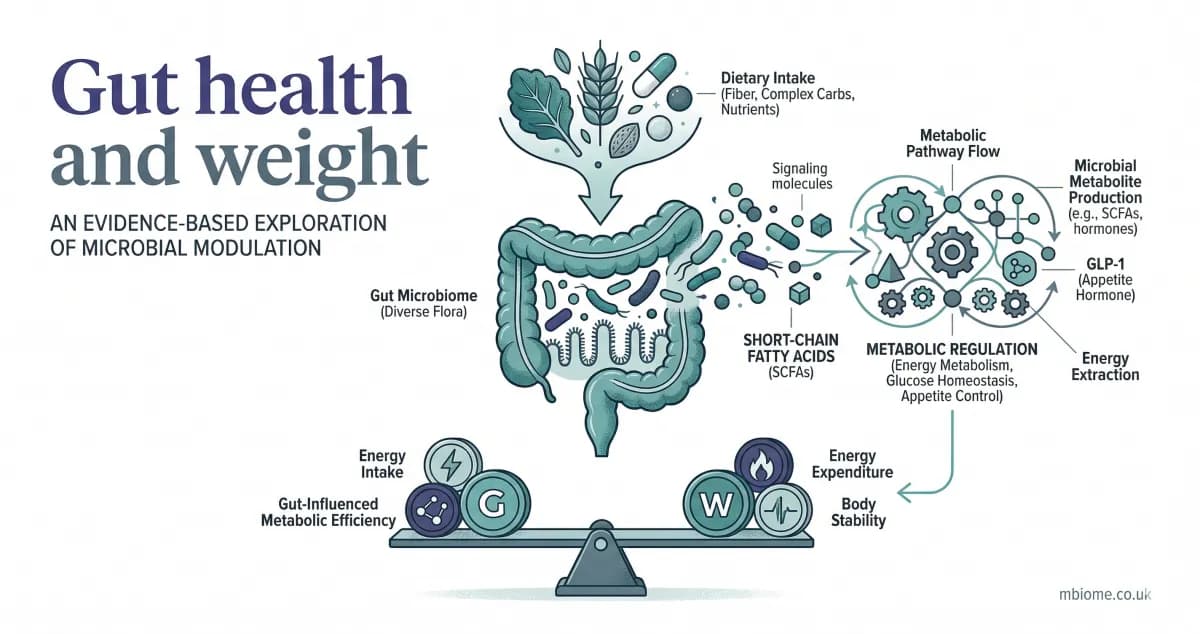
The Microbiome and Weight: What Science Really Says About Gut Bacteria and Body Weight
Research increasingly links the gut microbiome to weight regulation, but the relationship is complex. We examine the evidence — from landmark mouse studies to human trials — and separate proven mechanisms from premature claims.
Explore Other Topics
Related articles from across mbiome
The Mediterranean Diet and the Microbiome: Why It Keeps Topping the Evidence
The Mediterranean diet is the most studied dietary pattern in microbiome research, consistently linked to greater microbial diversity, reduced inflammation, and better metabolic health. Here's what the science shows and how to apply it.
Diet & NutritionUltra-Processed Food and Gut Health: What the Science Says
The UK gets 57% of its calories from ultra-processed food — more than almost any other country. A growing body of research links this dietary pattern to gut microbiome disruption, reduced diversity, and impaired gut barrier function.
Diet & NutritionFermented Foods and Gut Health: A Complete UK Guide
Fermented foods are one of the most effective ways to increase microbial diversity. Here is what the Stanford research found, which foods to choose, where to find them in the UK, and how much you actually need to eat.
Key Terms
Glossary terms mentioned in this article
Intestinal Permeability
The property of the intestinal lining that controls what passes from the gut into the bloodstream. Increased permeability (sometimes called "leaky gut") allows harmful substances to enter circulation, triggering immune responses.
Circadian Rhythm
The approximately 24-hour biological cycle that governs sleep-wake patterns, hormone release, and metabolism. The gut microbiome exhibits its own circadian fluctuations in composition and function, influenced by meal timing, light exposure, and host circadian clock genes.
Bacteroidetes
One of the two dominant bacterial phyla in the human gut (alongside Firmicutes). Bacteroidetes species are generally skilled at breaking down complex plant polysaccharides and are associated with leaner body composition in some studies. The Firmicutes-to-Bacteroidetes ratio was once considered a key health marker, though its significance is now debated.
Akkermansia
Akkermansia muciniphila is a mucin-degrading bacterium that lives in the intestinal mucus layer. Higher abundance is associated with improved metabolic health, lower inflammation, and better gut barrier function. It thrives on polyphenol-rich foods.
Microbiome
The complete collection of microorganisms (bacteria, viruses, fungi, archaea) and their genetic material within a specific environment, such as the human gut.
Colonocyte
Epithelial cells lining the colon. These cells rely on butyrate (produced by gut bacteria) as their primary energy source, making them directly dependent on a healthy microbiome.
Probiotic
Live microorganisms which, when administered in adequate amounts, confer a health benefit on the host. Benefits are strain-specific, not species-wide.
Dysbiosis
An imbalance in the composition or function of the microbiome, typically characterised by reduced diversity, loss of beneficial bacteria, or overgrowth of potentially harmful species.