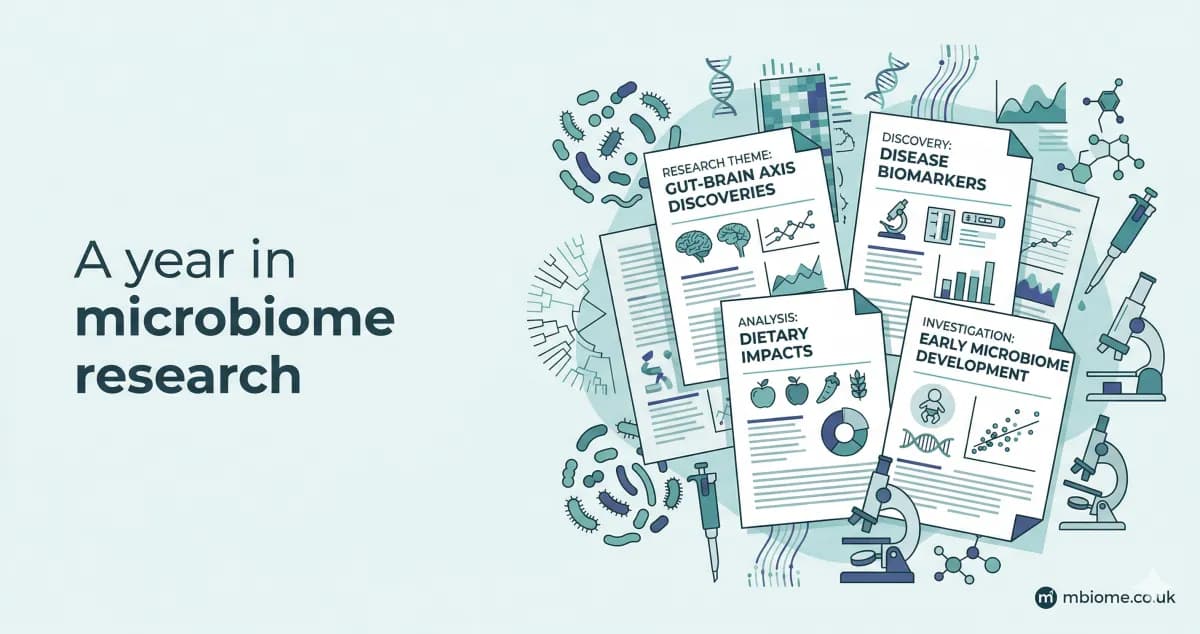
2025 was a pivotal year for microbiome research, with several developments that moved the field from academic curiosity toward clinical reality. Here are the most significant breakthroughs, assessed by the strength of their evidence and potential for patient impact.
FMT Becomes Mainstream Medicine
The biggest story of 2025 was the continued normalisation of faecal microbiota transplantation (FMT) as a standard medical intervention. In 2023, the FDA approved Vowst (SER-109) and Rebyota — the first orally administered and rectally administered microbiome therapeutics, respectively — for recurrent *Clostridioides difficile* infection (rCDI). By 2025, real-world data confirmed their efficacy outside clinical trials.
In the UK, NICE updated its guidance in mid-2025 to formally recommend FMT for recurrent CDI after two or more recurrences, bringing it in line with European Society of Clinical Microbiology and Infectious Diseases (ESCMID) guidelines. Several NHS trusts expanded their FMT services, with the Birmingham Microbiome Treatment Centre becoming a national referral hub.
Beyond CDI, 2025 saw the first Phase III trial results for FMT in ulcerative colitis. The SuperDonor-UC trial (led by Professor Samuel Costello at the University of Adelaide, with UK sites participating) demonstrated that FMT from carefully selected "super donors" induced clinical remission in 39% of patients with active UC at 12 weeks, compared with 13% receiving autologous (own stool) FMT as placebo. The results, published in *The Lancet Gastroenterology & Hepatology*, were the strongest FMT evidence for UC to date.
Phage Therapy Enters Clinical Trials
Bacteriophages — viruses that specifically target and kill bacteria — have long been proposed as precision alternatives to broad-spectrum antibiotics. In 2025, two significant UK-linked trials advanced the field.
The PHAGEBURN-2 trial, a multicentre European study with participation from Imperial College London, tested a phage cocktail targeting *Pseudomonas aeruginosa* in chronic wound infections. The results showed a 60% reduction in bacterial load compared with standard care, with no significant adverse effects.
Meanwhile, the Wellcome-funded PhagePATH consortium published preclinical data in *Nature Microbiology* showing that engineered phages could selectively eliminate antibiotic-resistant *E. coli* from the gut without disrupting commensal populations. Dr Martha Clokie at the University of Leicester led the UK component of this work.
This is significant because it represents a paradigm shift: rather than carpet-bombing the entire microbiome with antibiotics, phage therapy could surgically remove specific harmful species.
AI-Powered Microbiome Diagnostics
2025 saw several advances in using artificial intelligence to interpret microbiome data. The most clinically relevant was the MICROB-AI study from the Weizmann Institute of Science (Segal and Elinav labs, Israel, with UK validation cohorts). Their machine learning model, trained on over 100,000 gut microbiome samples, could predict response to immunotherapy in melanoma patients with 82% accuracy based solely on baseline stool microbiome composition.
This finding has immediate clinical relevance because immunotherapy (checkpoint inhibitors) works in only 40–50% of melanoma patients, and there is currently no reliable way to predict who will respond. A stool-based predictor could spare non-responders from months of ineffective treatment and direct them to alternatives sooner.
In the UK, researchers at the University of Cambridge published a microbiome-based risk score for colorectal cancer screening (*Gut*, 2025). Their model, incorporating microbial markers alongside established risk factors, outperformed the current NHS FIT (faecal immunochemical test) for detecting advanced adenomas — the precancerous lesions that FIT most often misses.
The Oral-Gut Axis Comes of Age
Research in 2025 strengthened the evidence that the oral microbiome is not just a local ecosystem but directly influences gut health and systemic disease.
A large prospective study by Atarashi et al. (originally from RIKEN, Japan, but with UK Biobank validation data) published in *Nature* demonstrated that *Fusobacterium nucleatum* — an oral bacterium — was present in the gut tumour tissue of 87% of right-sided colorectal cancers. The bacteria appeared to translocate from the mouth to the colon, where it promoted tumour growth by suppressing local immune responses.
This has practical implications: it suggests that oral hygiene and dental health may be a modifiable risk factor for colorectal cancer. Professor Wendy Garrett at Harvard (a frequent collaborator with UK groups) published a companion review arguing for integrated oral-gut microbiome assessment in cancer risk stratification.
Microbiome and Mental Health: The First Positive RCT
The gut-brain axis field has been long on hype and short on rigorous clinical trials. That changed in 2025 with the publication of the MiMo trial (Microbiome for Mood), a multicentre RCT led by Professor Ted Dinan and Dr John Cryan at University College Cork, with sites at King's College London and the University of Edinburgh.
The trial enrolled 320 patients with moderate major depressive disorder and randomised them to receive either a multi-strain psychobiotic (containing *Bifidobacterium longum* 1714, *Lactobacillus helveticus* R0052, and *Lactobacillus rhamnosus* JB-1) or placebo for 12 weeks. The psychobiotic group showed a statistically significant improvement in Hamilton Depression Rating Scale scores compared with placebo (mean difference: 3.2 points, p=0.008).
While the effect size was modest (comparable to some antidepressant trials), this was the first large, well-designed RCT to demonstrate a mental health benefit from probiotics. The authors emphasised that the intervention was intended as an adjunct to, not a replacement for, standard treatment.
Postbiotics Gain Traction
2025 saw increasing research interest in postbiotics — the metabolic byproducts of gut bacteria, including short-chain fatty acids (SCFAs), exopolysaccharides, and cell wall fragments. Unlike probiotics (live organisms), postbiotics are stable, do not require refrigeration, and have a more predictable dose-response relationship.
The most notable 2025 study was a Phase II trial of a tributyrin supplement (a prodrug of butyrate) for ulcerative colitis, conducted at the University of Glasgow. The trial showed significant improvements in mucosal healing scores at 8 weeks compared with placebo, providing the first clinical evidence that directly supplementing a microbial metabolite could treat inflammatory bowel disease.
Professor Patrice Cani at the University of Louvain published a comprehensive review in *Nature Reviews Gastroenterology & Hepatology* arguing that postbiotics may ultimately prove more clinically useful than probiotics because they bypass the challenge of establishing live organisms in an existing ecosystem.
The Mycobiome Gets Attention
The gut mycobiome — the fungal component of the gut ecosystem — received unprecedented attention in 2025. A study by Iliev et al. at Cornell (published in *Cell Host & Microbe*) characterised the gut mycobiome in 5,000 individuals across four continents and found that fungal diversity was a stronger predictor of inflammatory bowel disease risk than bacterial diversity alone.
In the UK, Professor Julian Naglik at King's College London published research showing that *Candida albicans* — a common gut fungus — could breach the intestinal barrier and enter the bloodstream in immunocompromised patients, with specific gut bacterial signatures either promoting or preventing this translocation.
This work highlights that the microbiome is not just about bacteria. Fungi, archaea, and viruses are integral components that have been historically underestimated.
Key Takeaways
- FMT moved from experimental to mainstream for recurrent CDI, with NICE guidance updated and the first strong Phase III UC results
- Phage therapy entered clinical trials as a precision alternative to antibiotics, with the potential to target harmful species without collateral microbial damage
- AI-powered diagnostics using microbiome data showed promise for predicting immunotherapy response and improving colorectal cancer screening
- The oral-gut axis was confirmed as clinically significant, with oral bacteria implicated in colorectal cancer development
- The first large, positive RCT for psychobiotics in depression was published, lending credibility to the gut-brain therapeutic axis
- Postbiotics (microbial metabolites) showed clinical promise as a more controllable alternative to live probiotic supplementation
- The mycobiome emerged as an under-recognised but important component of gut health and disease. For context on evaluating these findings, see our guide to reading microbiome research
Medical disclaimer: This article is for educational purposes only and does not constitute medical advice. Always consult a qualified healthcare professional before making changes to your diet, starting supplements, or making decisions about your health.
Related Articles
The Baby Microbiome: Why the First 1,000 Days Shape Lifelong Health
From birth to age three, a child's microbiome undergoes the most dramatic development it will ever experience. How a baby is born, fed, and raised has lasting consequences for immune function, allergy risk, and metabolic health.

Gut Health After 50: How the Microbiome Changes with Age and What You Can Do
After 50, microbial diversity naturally declines while inflammation-associated bacteria increase. Understanding these shifts can help you protect your gut health, immunity, and cognitive function as you age.
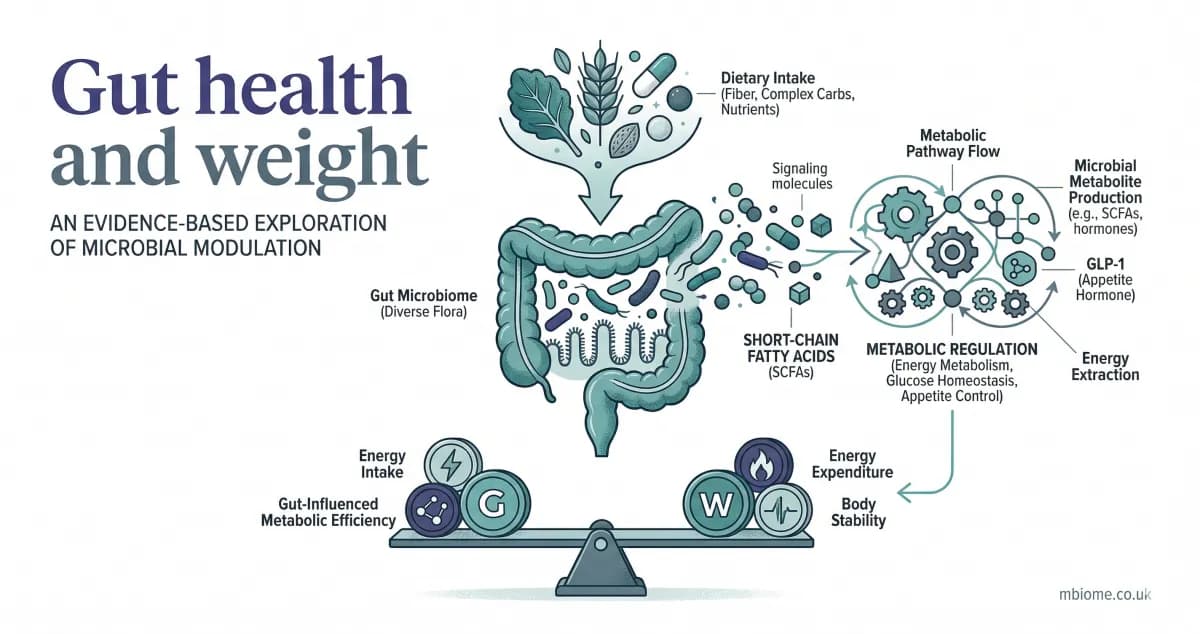
The Microbiome and Weight: What Science Really Says About Gut Bacteria and Body Weight
Research increasingly links the gut microbiome to weight regulation, but the relationship is complex. We examine the evidence — from landmark mouse studies to human trials — and separate proven mechanisms from premature claims.
Explore Other Topics
Related articles from across mbiome
The Mediterranean Diet and the Microbiome: Why It Keeps Topping the Evidence
The Mediterranean diet is the most studied dietary pattern in microbiome research, consistently linked to greater microbial diversity, reduced inflammation, and better metabolic health. Here's what the science shows and how to apply it.
Probiotics & PrebioticsProbiotics: What the Evidence Actually Says
Probiotics are a billion-pound industry, but which strains have genuine clinical evidence behind them? We break down the research by condition and strain.
Probiotics & PrebioticsBest Probiotics for IBS: What the Research Shows
Not all probiotics help IBS, and many popular products have no clinical evidence for it. Here are the specific strains with genuine research behind them — and the honest limitations of the evidence.
Key Terms
Glossary terms mentioned in this article
Faecal Microbiota Transplant (FMT)
A medical procedure that transfers stool from a healthy donor into a patient's gut to restore microbial diversity. Currently approved primarily for recurrent Clostridioides difficile infection, with research ongoing for other conditions.
Short-Chain Fatty Acids (SCFAs)
Metabolites produced when gut bacteria ferment dietary fibre. The three main SCFAs — butyrate, propionate, and acetate — are critical for colon health, immune regulation, and energy metabolism.
Clostridioides difficile
A bacterium that can cause severe diarrhoea and colitis, typically after antibiotic use disrupts the normal gut flora. C. difficile infection is one of the clearest examples of how microbiome disruption leads to disease.
Lactobacillus rhamnosus
One of the most extensively studied probiotic species. The strain L. rhamnosus GG has strong evidence for preventing antibiotic-associated diarrhoea and acute gastroenteritis in children. The strain L. rhamnosus JB-1 has shown anxiolytic effects in animal models via the vagus nerve, though human trials have been less conclusive.
Bifidobacterium longum
A beneficial bacterial species naturally abundant in the human gut from infancy. The strain B. longum 1714 has been studied for its effects on stress and cognitive function, showing modest benefits in human trials. B. longum subsp. infantis is particularly important for infant gut health and breast milk digestion.
Bifidobacterium
A genus of beneficial bacteria that dominates the infant gut and remains important throughout life. Various species (B. longum, B. infantis, B. breve) are among the most studied probiotics, with evidence for IBS, immunity, and infant health.
Gut-Brain Axis
The bidirectional communication system between the gastrointestinal tract and the central nervous system, involving neural, hormonal, and immune pathways. The microbiome plays a central role in this communication.
Lactobacillus
A genus of lactic acid-producing bacteria found naturally in the gut, mouth, and vaginal tract. Certain strains (L. rhamnosus GG, L. plantarum 299v) have strong clinical evidence for specific health benefits. Now reclassified into multiple genera including Lacticaseibacillus and Limosilactobacillus.